
🇬🇧 – 🇮🇹
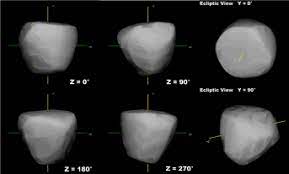
In 1850 the astronomer Annibale de Gasparis (director of the Capodimonte Astronomical Observatory) discovered the asteroid 11 Parthenope, which earned him the gold medal of the Royal Astronomical Society of London. This large main-belt asteroid is a mixture of metallic nickel-iron and magnesium-iron silicates. It was named in honor of Partenope, one of the sirens in Greek mythology, who according to legend founded the city of Naples.
Nel 1850 L’astronomo Annibale de Gasparis (direttore dell’Osservatorio Astronomico di Capodimonte) scopre l’asteroide 11 Parthenope, che gli valse la medaglia d’oro della Royal Astronomical Society di Londra. Questo grande asteroide della Fascia principale è una miscela di nichel e ferro allo stato metallico e silicati di magnesio e ferro. Fu battezzato così in onore di Partenope, una delle sirene nella mitologia greca, che secondo la leggenda fondò la città di Napoli.

In 1871 the astronomer John Herschel son of Sir William died. He discovered that the Magellanic clouds are made up of stars and in 1834 he discovered the cluster NGC 2018 (see photo of the Digital Sky Survey) inside the Magellanic clouds. He published several catalogs and introduced the Julian date into astronomy.
Nel 1871 muore l’astronomo John Herschel figlio di Sir William. Scoprì che le nubi di Magellano sono formate da stelle e nel 1834 scoprì l’ammasso NGC 2018 (vedi foto del Digital Sky Survey) all’interno delle nubi di Magellano. Pubblicó diversi cataloghi e introdusse la data giuliana nell’astronomia.
In 1916 Albert Einstein enunciated the theory of General Relativity.
Nel 1916 Albert Einstein enuncia la teoria della Relatività Generale.
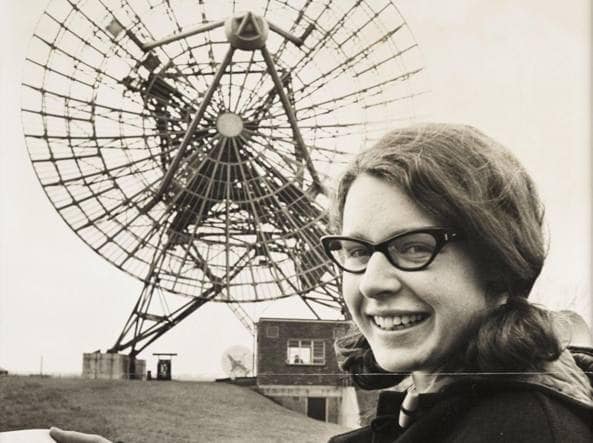
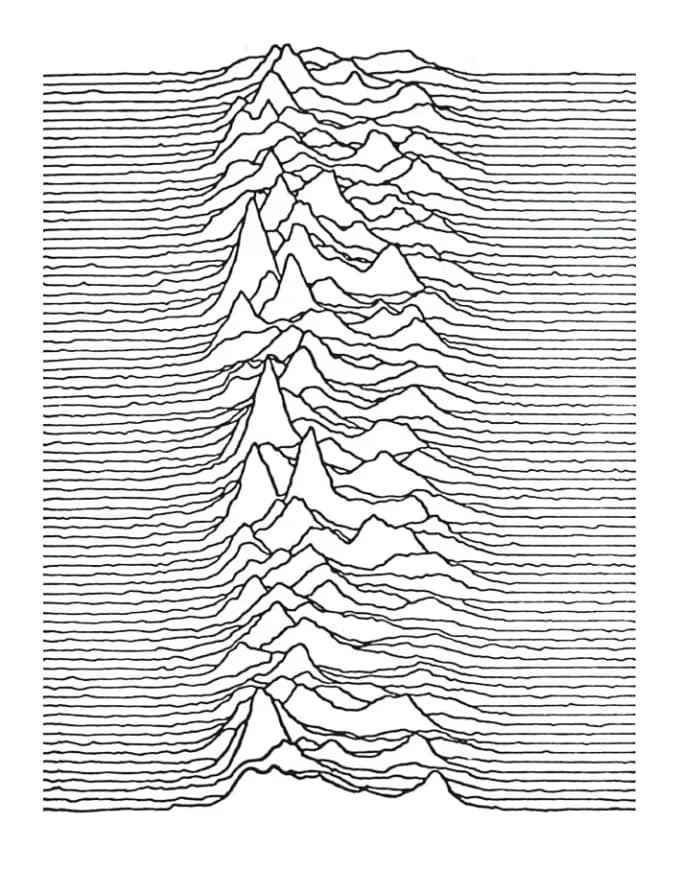
In 1924 the British astronomer Antony Hewish was born, winner of the Nobel Prize for physics in 1974, shared with Martin Ryle, for his contribution to the development of radio astronomy and for his role in the discovery of pulsars (which in reality belonged to Jocelyn Bell, see photo, PhD student who took a back seat ..). Fun fact: the first pulsar CP1919 was used for the cover of Joy Division’s 1979 album Unknown Pleasure.
Nel 1924 nasce l’astronomo britannico Antony Hewish, vincitore del Premio Nobel per la fisica nel 1974, condiviso con Martin Ryle, per il suo contributo allo sviluppo della radioastronomia e per il suo ruolo nella scoperta delle pulsar (che poi in realtà fu di Jocelyn Bell, vedi foto, dottoranda di ricerca la quale passó in secondo piano..). Curiosità: la prima pulsar CP1919 fu usata per la cover dell’album dei Joy Division nel 1979 Unknown Pleasure.

In 1918, the great American physicist and science popularizer Richard Feynman (1918-1988), Nobel Prize in Physics in 1965 for the elaboration of quantum electrodynamics, was born.
Nel 1918 nasce il grande fisico e divulgatore scientifico statunitense Richard Feynman (1918-1988), Premio Nobel per la fisica nel 1965 per l’elaborazione dell’elettrodinamica quantistica.
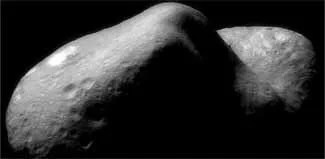
In 2004, 2004 JG6 was discovered, the second asteroid with an internal orbit
Nel 2004 viene scoperto 2004 JG6, secondo asteroide con orbita interna
In 1956 the American astronomer Walter Adams died, he worked in the field of solar spectroscopy, and was co-discoverer of a relationship between the relative intensities of some spectral lines and the absolute magnitude of a star. It is also known for measuring the speed and distance of thousands of stars.
Nel 1956 muore l’astronomo statunitense Walter Adams, lavoró nel campo della spettroscopia solare, e fu co-scopritore di una relazione tra le intensità relative di alcune linee spettrali e la magnitudine assoluta di una stella. È noto anche per la misurazione della velocità e distanza di migliaia di stelle.
In 2009 STS-125 departs for the last HST service mission
Nel 2009 parte la STS-125 per l’ultima missione di servizio di HST
Fonti: Wikipedia
 Astronomy Bulletin Of the Day