
🇬🇧 – 🇮🇹
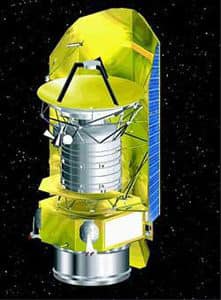
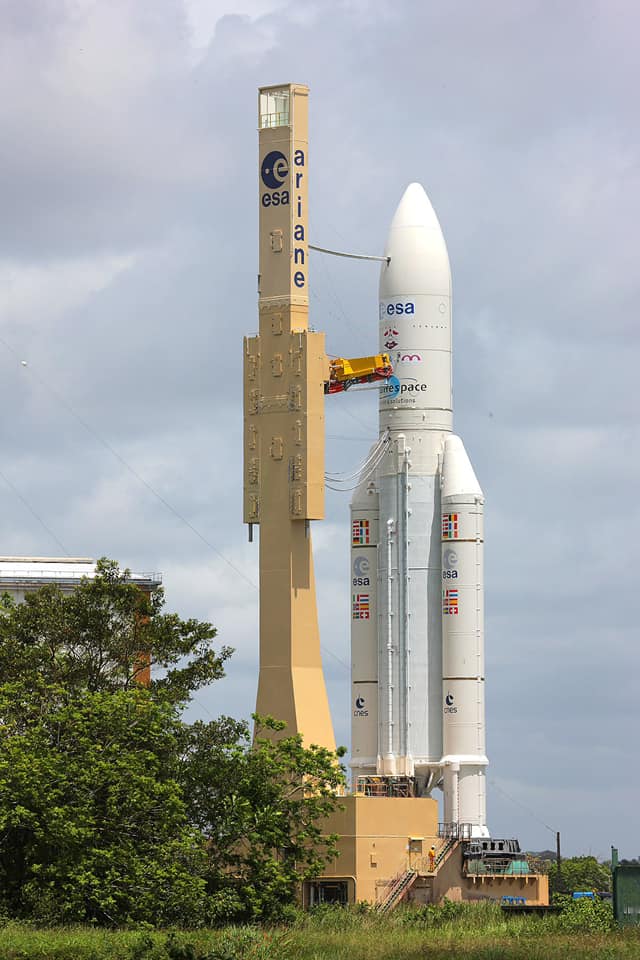
In 2009 the Ariane 5 rocket with the Herschel and Planck space observatories was rolled out. Let’s find out more about ESA’s so-called ‘Cornerstone Missions’, part of the Horizon 2000 scientific program, namely the Herschel Space Observatory and Planck Surveyor. Today we report an insight into the Herschel space telescope (taken from wikipedia and inaf), and we will continue with Planck in tomorrow’s bulletin connected to the launch.
Nel 2009 è stato portato sulla rampa di lancio (roll out) il razzo Ariane 5 che lancerà gli osservatori spaziali Herschel e Planck. Vediamo di approfondire qualcosa sulle cosiddette ‘Cornerstone Missions’ dell’ESA, parte del programma scientifico Horizon 2000 ovvero sull’ Herschel Space Observatory e Planck Surveyor. Oggi riportiamo un approfondimento sul telescopio spaziale Herschel (tratto da wikipedia ed inaf), e continueremo con Planck nel bollettino di domani collegato al lancio.
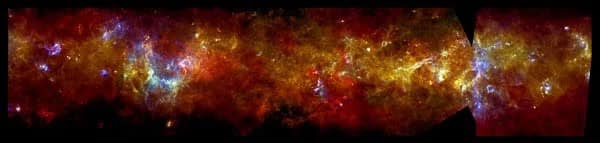
Herschel Space Observatory: The telescope 1.5 million kilometers away from Earth on a Lissajous orbit in the second Lagrange point of the Sun-Earth system, has collected information about the appearance of the universe in the infrared. The objectives were as follows: to study the formation of galaxies in the early universe and their subsequent evolution, to study the formation of stars and their interaction with interstellar dust, to observe the chemical composition and the atmosphere and surface of comets, planets and satellites, examine the molecular chemistry of the Universe.
Herschel Space Observatory: Il telescopio a 1,5 milioni di chilometri di distanza dalla Terra su un’orbita di Lissajous nel secondo punto di Lagrange del sistema Sole-Terra, ha raccolto informazioni sull’aspetto dell’universo nell’infrarosso. Gli obiettivi erano i seguenti: studiare la formazione delle galassie nell’universo primordiale e l’evoluzione seguente, studiare la formazione delle stelle e la loro interazione con le polveri interstellari, osservare la composizione chimica e l’atmosfera e la superficie delle comete, dei pianeti e dei satelliti, esaminare la chimica molecolare dell’Universo.
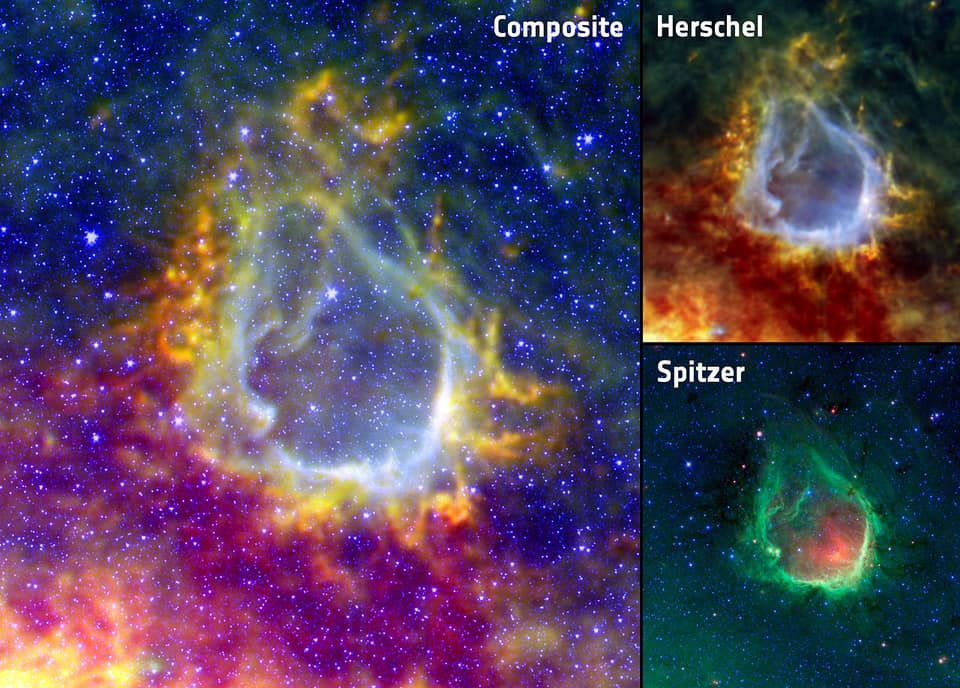
Equipped with a 3.5-metre telescope, Herschel was the largest space observatory ever put into orbit now surpassed by the now-in-orbit James Webb Telescope and of which we await huge surprises (and we can’t wait!). The three instruments at the focal plane, the Pacs and Spire spectrophotometric cameras and the HiFi high-resolution spectrometer, have allowed the exploration of the infrared sky on a scale of distances ranging from the Solar System to the high-redshift Universe. The participation of the National Institute of Astrophysics was important, with the development of the on-board software for the three instruments, the production of the acousto-optic filter and with a considerable scientific commitment in the observational “key projects”. Herschel peered into the glow of cool cosmic dust embedded in clouds of interstellar gas providing astronomers with an unprecedented window into stellar incubators in our galaxy. Precisely thanks to this enormous and powerful telescope and to detectors cooled just above absolute zero, the satellite was able to perform observations with a unique sensitivity, going beyond the gaseous tangle of the clouds where stars form. All this is possible only thanks to infrared. Herschel was also able to trace the presence of water in extrasolar planetary systems, detecting this crucial molecule in star-forming clouds, identifying for the first time the process that brought water from interplanetary debris to the solar system. He was the first to detect water vapor within the Tw Hydrae protoplanetary disk, recording the abundance of water in the early stages of protoplanetary disk formation. I add a combination of photos from the Herschel/Spitzer space telescopes of the nebula RCW 120 called the “perfect nebula” HII region in Scorpius.
Suggested ESA videos (English): https://youtu.be/FoZnfgFMIOw and https://youtu.be/z0mpVrFYOMM
Equipaggiato con un telescopio di 3,5 metri, Herschel è stato il più grande osservatorio spaziale mai messo in orbita superato ora dal James Webb Telescope ora in orbita e di cui aspettiamo grandissime sorprese (e non vediamo l’ora!). I tre strumenti al piano focale, le camere spettrofotometriche Pacs e Spire e lo spettrometro ad alta risoluzione Hifi, hanno permesso l’esplorazione del cielo infrarosso su una scala di distanze che va dal Sistema solare all’Universo ad alto redshift. Importante è stata la partecipazione dell’Istituto nazionale di astrofisica, con lo sviluppo del software di bordo per i tre strumenti, la produzione del filtro acusto-ottico e con un notevole impegno scientifico nei “key projects” osservativi. Herschel ha scrutato il bagliore di polvere cosmica fredda incorporata nelle nubi di gas interstellare fornendo agli astronomi una finestra senza precedenti sulle incubatrici stellari nella nostra galassia. Proprio grazie a questo enorme e potente telescopio e a rivelatori raffreddati poco al di sopra dello zero assoluto, il satellite ha potuto eseguire osservazioni con una sensibilità unica, andando oltre il groviglio gassoso delle nubi dove si formano le stelle. Tutto questo è possibile solo grazie all’infrarosso. Herschel è riuscito anche a tracciare la presenza di acqua in sistemi planetari extrasolari, rilevando questa molecola cruciale nelle nubi di formazione stellare, identificando per la prima volta il processo che ha portato l’acqua dai detriti interplanetari al Sistema solare. È riuscito per primo a rilevare vapore d’acqua all’interno del disco protoplanetario di Tw Hydrae, registrando l’abbondanza dell’acqua nelle prime fasi di formazione del disco protoplanetario. Aggiungo una combinazione di foto dei telescopi spaziali Herschel/Spitzer della nebulosa RCW 120 detta “nebulosa perfetta” regione HII nello Scorpione. Video ESA suggeriti (inglese): https://youtu.be/FoZnfgFMIOw e https://youtu.be/z0mpVrFYOMM
Fonti: Wikipedia / INAF
 Astronomy Bulletin Of the Day