
🇬🇧 – 🇮🇹

In 1864 the fall of the Orgueil meteorite (see photo), in France, meteorite belonging to the important subgroup consisting of carbonaceous chondrites which contain carbon compounds and organic matter (such as hydrocarbons). Here an article by Carl Sagan translated on this topic: “Pasteur had a special drill built which, he hoped, would remove samples from inside the meteorite without contaminating them with microorganisms from the outside. Using sterile techniques, Pasteur inoculated an organic medium to look for the growth of any indigenous microorganisms that the interior of the meteorite might contain. The results were negative and have relevance today: Pasteur extracted his sample shortly after the meteorite fell and it was, of course, a very accurate experiment. The possibility of biological remains in the Orgueil stone resurfaced, however, a century later. At a meeting of the New York Academy of Sciences in March 1961, Bartholomew Nagy and Douglas J. Hennessy of the Department of Chemistry at the Graduate School of Arts and Sciences at Fordham University in the Bronx, and Warren G. Meinschein, a petroleum chemist al The Esso Research and Engineering Company of Linden, New Jersey, announced that it found “paraffinoid hydrocarbons” in a sample of the meteorite, similar in type and distribution to those that occur in animal products such as butter. From this, they concluded that “biogenic processes occur and that living forms exist in regions of the universe beyond the earth.” Most notably, Nagy and George Claus, a microbiologist at New York University Medical Center, said shortly thereafter that the samples from the Orgueil and Ivuna meteorites contained “organized elements” including structures “resembling fossil algae.” scientists, including JD Bernal, supported the microfossil theory, while most, including Philip Morrison and Harold Urey, were sceptical. Urey, however, admitted that it was possible that the microstructures of Orgueil and Ivuna were evidence of biogenic activity and that, if so, these meteorites could have come from the Moon which “has been contaminated temporarily with water and forms of life from Earth at the beginning of its history. “By 1975, Nagy himself had come to regard biological interpretation as a remote possibility”
Nel 1864 caduta della meteorite di Orgueil (vedi foto), in Francia, appartenente all’importante sottogruppo costituito dalle condriti carbonacee le quali contengono composti del carbonio e materia organica (come idrocarburi). Qui un articolo di Carl Sagan tradotto su questo argomento: “Pasteur fece costruire una speciale trivella che, sperava, avrebbe rimosso campioni dall’interno del meteorite senza contaminarli con microrganismi dall’esterno. Usando tecniche sterili, Pasteur ha inoculato un terreno organico per cercare la crescita di eventuali microrganismi indigeni che l’interno del meteorite potrebbe contenere. I risultati sono stati negativi e hanno rilevanza oggi: Pasteur ha estratto il suo campione poco dopo la caduta del meteorite ed è stato, ovviamente, un esperimento molto accurato. La possibilità di resti biologici nella pietra di Orgueil riemerse, tuttavia, un secolo dopo. In una riunione dell’Accademia delle scienze di New York nel marzo 1961, Bartholomew Nagy e Douglas J. Hennessy del Dipartimento di Chimica presso la Graduate School of Arts and Sciences della Fordham University nel Bronx, e Warren G. Meinschein, un chimico del petrolio al La Esso Research and Engineering Company di Linden, New Jersey, ha annunciato di aver trovato in un campione del meteorite “idrocarburi paraffinoidi”, simili per tipo e distribuzione a quelli che si verificano in prodotti animali come il burro. Da questo, hanno concluso che “si verificano processi biogenici e che le forme viventi esistono nelle regioni dell’universo oltre la terra “. In modo più notevole, Nagy e George Claus, un microbiologo presso il Centro medico della New York University, hanno affermato poco dopo che i campioni dei meteoriti di Orgueil e Ivuna contenevano “elementi organizzati” comprese strutture “simili ad alghe fossili”. gli scienziati, tra cui JD Bernal, hanno sostenuto la teoria dei microfossili, mentre la maggior parte, compresi Philip Morrison e Harold Urey, erano scettici. Urey, tuttavia, ha ammesso che era possibile che le microstrutture di Orgueil e Ivuna fossero la prova dell’attività biogenica e che, in tal caso, questi meteoriti potrebbero provenire dalla Luna che “è stata contaminata temporaneamente con l’acqua e le forme di vita dalla Terra all’inizio del suo storia. “Nel 1975, Nagy stesso era arrivato a considerare l’interpretazione biologica come una possibilità remota”
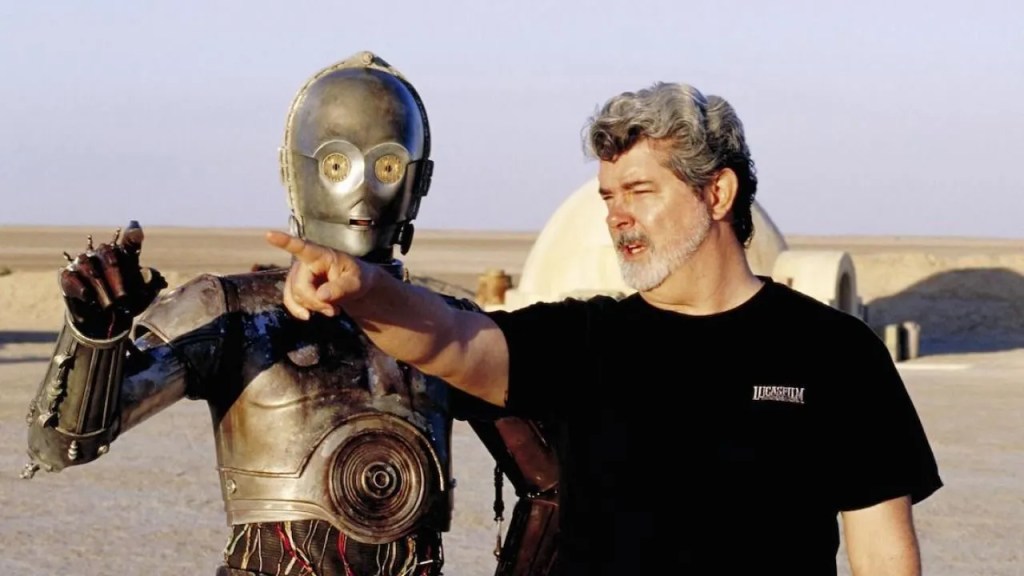
George Walton Lucas Jr. was born in 1944. American director, screenwriter, film producer and editor. Thanks to the Star Wars saga, many generations have become passionate about space!
Nasce nel 1944 George Walton Lucas Jr. regista, sceneggiatore, produttore cinematografico e montatore statunitense. Grazie alla saga di Star Wars, molte generazioni si sono appassionate allo spazio!
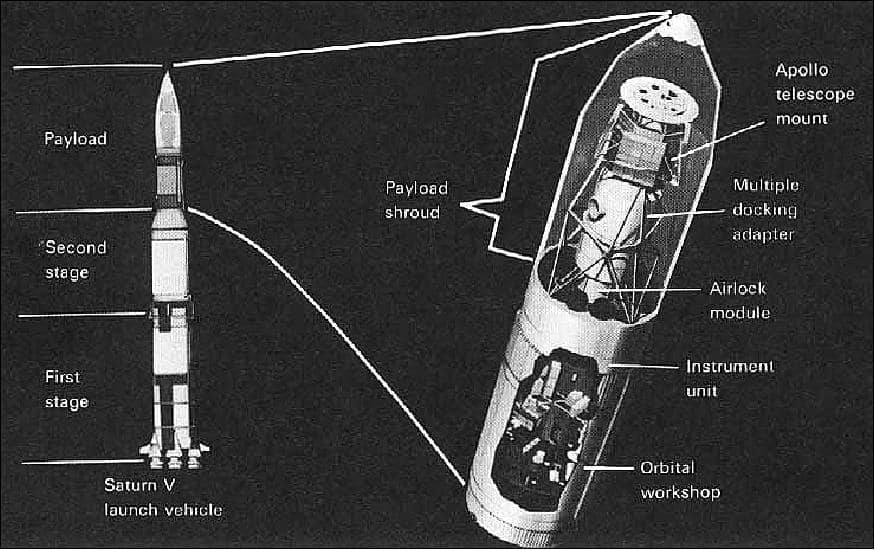
In 1973, Skylab, the first space station in the United States, was launched. The first mission, Skylab 1, put the station into orbit. The first manned mission with Skylab 2 consisted of astronauts Charles Conrad, Paul J. Weitz and Joseph P. Kerwin, two more missions followed. Over 2,000 hours of scientific and medical experiments were carried out in 171 days, with observations of the Sun and comet Kohoutek. The astronauts also performed ten extravehicular activities (EVAs), for a total of more than 42 hours spent outside the Skylab. It re-entered the atmosphere, disintegrating, on July 11, 1979.
Nel 1973 viene lanciata Skylab, la prima stazione spaziale degli Stati Uniti. La prima missione, Skylab 1, mise in orbita la stazione. La prima missione umana con Skylab 2 fu composta dagli astronauti Charles Conrad, Paul J. Weitz e Joseph P. Kerwin, altre due missioni seguirono. In 171 giorni totali furono effettuate oltre duemila ore di esperimenti scientifici e medici, con osservazioni sul Sole e sulla cometa Kohoutek. Gli astronauti effettuarono pure dieci attività extraveicolari (EVA), per un totale di oltre 42 ore trascorse all’esterno dello Skylab. Essa rientrò nell’atmosfera, disintegrandosi, l’11 luglio 1979.
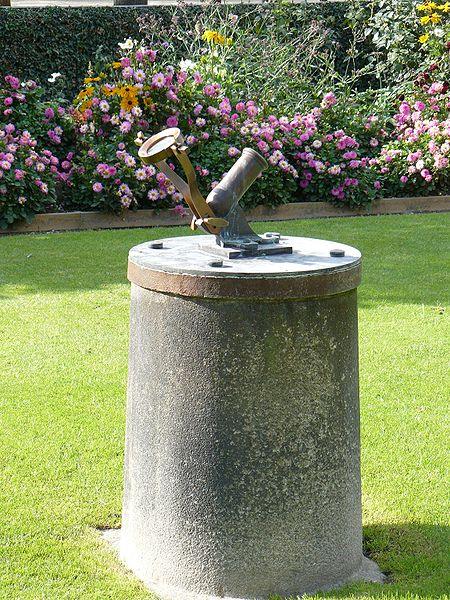
In 1975 Official inauguration, after the restoration carried out on the initiative of the Lions Club of Paris, of the cannon sundial located in the gardens of the Royal Palace of Paris (see photo). Coinciding with the local noon, the cannon fires a blank charge triggered by a lens perpendicular to the meridian line which lights a fuse, causing the cannon to fire.
Nel 1975 Inaugurazione ufficiale, dopo il restauro fatto eseguire per iniziativa del Lions Club di Parigi, della meridiana a cannoncino situata nei giardini del Palazzo Reale di Parigi (vedi foto). In coincidenza con il mezzogiorno locale il cannoncino spara una carica a salve innescata da una lente perpendicolare alla linea meridiana che accende una miccia, facendo sparare il cannoncino.
In 2009 at 15:09 CEST (13:09 UT) the scientific satellites Herschel and Planck were launched into orbit from Kourou (French Guiana) with an Ariane 5 rocket (on Herschel see yesterday’s bulletin), here on Planck instead:
Nel 2009 alle 15:09 CEST (13:09 UT) sono stati lanciati in orbita da Kourou (Guyana Francese) con un razzo Ariane 5 i satelliti scientifici Herschel e Planck (su Herschel vedere il bollettino di ieri), qui su Planck invece:
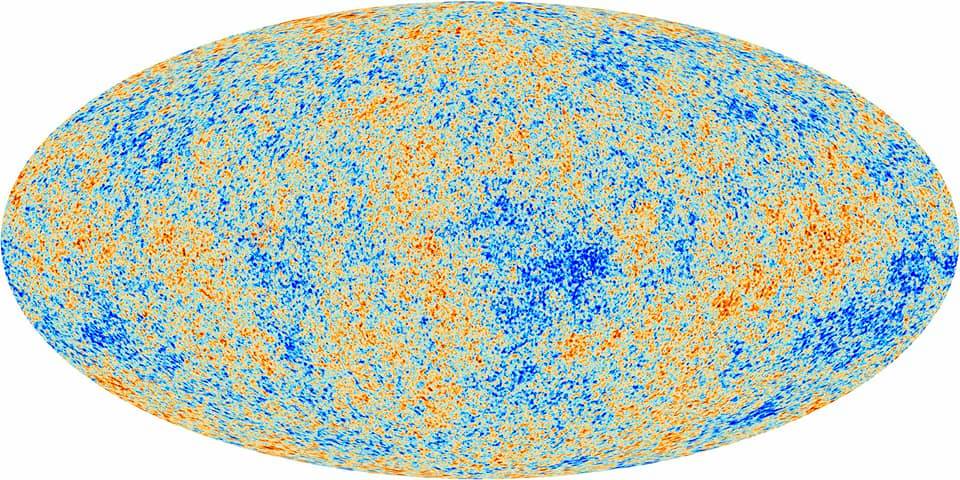
Planck Surveyor is the third medium-sized mission (M3) of the ESA Horizon 2000 Scientific Programme. It is designed to capture an image of the anisotropies of the cosmic microwave background (CMB). This radiation envelops the entire sky and the mission created an image of it, published in March 2013, with the highest angular precision and sensitivity ever obtained, providing a portrait of the Universe 380,000 years after the Big Bang. Planck will become the primary source of astronomical information to test theories about the formation of the Universe and the formation of its current structure. Planck was born from the merger of two projects, COBRAS (later to become the Low Frequency Instrument, LFI) and SAMBA (later to become the High Frequency Instrument, HFI). After the two projects were selected, they were merged into one satellite for reasons of efficiency and cost savings. The unified design was named after the German scientist Max Planck (1858-1947), winner of the Nobel Prize in physics in 1918. NASA is collaborating on the mission (mainly for the cryogenic part) and this mission will complement and improve the measurements made by the WMAP spacecraft. The instruments will be partially cooled to a temperature of 20 K (about 252 °C below zero). The radiation to be measured is equivalent to that of a black body (an ideal emitter of electromagnetic radiation) at a temperature of 2.7 K (about 270 °C below zero) but it was decided not to cool the telescope to this temperature due to problems technological. The need to cool the instrument arises from the fact that all bodies, therefore also instruments that capture electromagnetic radiation and telescopes, emit electromagnetic radiation, to an extent and with characteristics depending on their temperature. At too high temperatures the electromagnetic radiation emitted by the instrument would dazzle the instrument itself. The launch took place on May 14, 2009 aboard an Ariane 5 rocket together with the Herschel Space Observatory. After a few months of travel, the telescope reached the Lagrangian point L2 about 1.5 million kilometers from the Earth, opposite the position of the Sun. The Earth and the Moon thus shielded the satellite from solar interference . At the end of its mission, the Planck satellite was placed in a heliocentric orbit and the spacecraft was reclaimed by removing all the residual energy inside it in order to avoid dangers for future missions. The switch-off command was sent to the satellite on October 23, 2013. On 17 July 2018 the latest elaborations of the data collected were published by the agency. Main objectives: Measurement of the cosmic microwave background and its polarization, Testing of the cosmological inflation model, Good estimation of cosmological parameters, Study of galaxy clusters through the Sunyaev-Zel’dovich effect, Study of the interstellar medium of the Galaxy
Planck Surveyor è la terza missione di medie dimensioni (M3) del programma dell’ESA Horizon 2000 Scientific Programme. È progettato per acquisire un’immagine delle anisotropie della radiazione cosmica di fondo (CMB). Questa radiazione avvolge l’intero cielo e la missione ne ha realizzato una immagine, pubblicata nel marzo 2013, con la massima precisione angolare e sensibilità mai ottenuta, fornendo un ritratto dell’Universo a 380 000 anni dal Big Bang. Planck diventerà la fonte primaria di informazioni astronomiche per testare le teorie sulla formazione dell’Universo e sulla formazione della sua attuale struttura. Planck nasce dalla fusione di due progetti, COBRAS (poi diventato lo strumento Low Frequency Instrument, LFI) e SAMBA (poi diventato lo strumento High Frequency Instrument, HFI). Dopo che i due progetti sono stati selezionati, per motivi di efficienza e di risparmio dei costi sono stati riuniti in un unico satellite. Al progetto unificato è stato dato il nome dello scienziato tedesco Max Planck (1858-1947), vincitore del Premio Nobel per la fisica nel 1918. Alla missione collabora la NASA (principalmente per la parte criogenica) e questa missione completerà e migliorerà le misurazioni effettuate dalla sonda WMAP. Gli strumenti saranno raffreddati in parte a una temperatura di 20 K (circa 252 °C sotto zero). La radiazione da misurare è equivalente a quella di un Corpo nero (un emettitore ideale di radiazione elettromagnetica) a una temperatura di 2,7 K (circa 270 °C sotto zero) ma si è deciso di non raffreddare il telescopio a tale temperature per problemi tecnologici. La necessità di raffreddare lo strumento nasce dal fatto che tutti i corpi, dunque anche gli strumenti che captano la radiazione elettromagnetica e i telescopi, emettono radiazione elettromagnetica, in misura e con caratteristiche dipendenti dalla loro temperatura. A temperature troppo alte la radiazione elettromagnetica emessa dallo strumento abbaglierebbe lo strumento stesso. Il lancio è avvenuto il 14 maggio 2009 a bordo di un razzo Ariane 5 insieme all’Herschel Space Observatory. Dopo alcuni mesi di viaggio, il telescopio ha raggiunto il punto lagrangiano L2 a circa 1,5 milioni di chilometri dalla Terra, in posizione opposta rispetto a quella del Sole. La Terra e la Luna hanno fatto così da schermo al satellite dall’interferenza solare. Al termine della sua missione, il satellite Planck è stato inserito in un’orbita eliocentrica e la navicella è stata bonificata rimuovendo tutta l’energia residua al suo interno al fine di evitare pericoli per missioni future. Il comando di switch-off è stato inviato al satellite il 23 ottobre 2013. Il 17 luglio 2018 sono state pubblicate dall’agenzia le ultime elaborazioni dei dati raccolti. Obiettivi principali: Misura della radiazione cosmica di fondo e della sua polarizzazione, Test del modello dell’inflazione cosmologica, Buona stima dei parametri cosmologici, Studio degli ammassi di galassie attraverso l’effetto Sunyaev-Zel’dovich, Studio del mezzo interstellare della Galassia
Text source: Wikipedia
Sostieni anche tu Wikipedia
Google translate
 Astronomy Bulletin Of the Day
Un commento
I commenti sono chiusi.