
🇬🇧 – 🇮🇹

Ruggero Giuseppe Boscovich (astronomer, mathematician, physicist, Jesuit, philosopher, diplomat and poet from Ragusa) was born in 1711. Known for studying the shape of the Earth; he was the first to provide a procedure for calculating the orbit of a planet based on three observations of its position, and he also gave a procedure for determining a planet’s equator. Furthermore, he formulated what is now called Boscovich’s hypothesis and is the basis of the physical definition of a rigid body. His most important works: De viribus vivis (1745), De lumine (1748) and De centro gravitatis (1751), Philosophiae naturalis theoria (1758). He was one of the first in continental Europe to accept Isaac Newton’s gravitational theories and was the author of 70 papers on optics, astronomy, gravitation, meteorology and trigonometry.
Nel 1711 nasce Ruggero Giuseppe Boscovich (astronomo, matematico, fisico, gesuita, filosofo, diplomatico e poeta raguseo). Noto per lo studio della forma della Terra; fu il primo a fornire una procedura per il calcolo dell’orbita di un pianeta sulla base di tre osservazioni della sua posizione e diede anche una procedura per determinare l’equatore di un pianeta. Inoltre, formulò quella che oggi è chiamata ipotesi di Boscovich ed è alla base della definizione fisica di corpo rigido. Le sue opere più importanti: De viribus vivis (1745), De lumine (1748) e De centro gravitatis (1751), Philosophiae naturalis theoria (1758). È stato uno dei primi nell’Europa continentale ad accettare le teorie gravitazionali di Isaac Newton ed è stato autore di 70 scritti sull’ottica, astronomia, gravitazione, meteorologia e trigonometria.
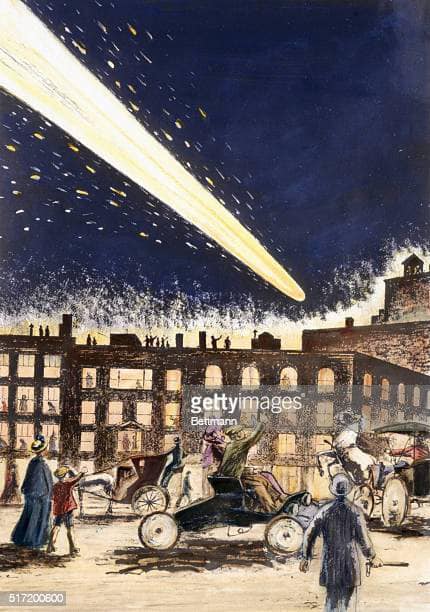
In 1910, the Earth passes through the tail of Halley’s Comet. Technology in that era does not allow us to understand the phenomenon that spreads panic on the basis of some theses on its toxicity and media articles which, to increase sales, underline the catastrophic aspects of a probable and imminent end of the world.
Nel 1910 La Terra passa attraverso la coda della Cometa di Halley. La tecnologia in quell’epoca non permette di capire bene il fenomeno che diffonde il panico in base ad alcune tesi sulla sua tossicità e agli articoli dei media che, per incrementare le vendite, sottolineano gli aspetti catastrofici di una probabile e imminente fine del mondo.
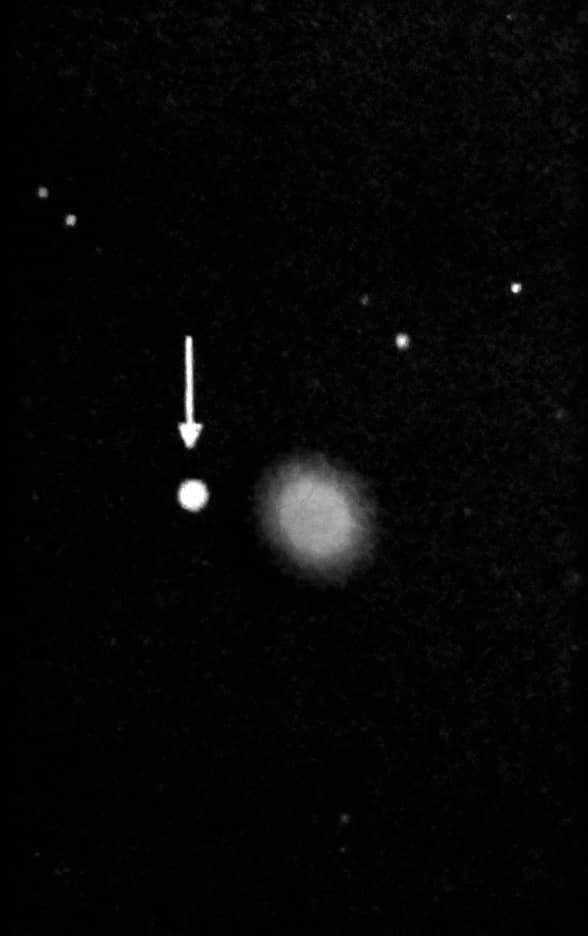
In 1957 Giuliano Romano, Italian astronomer and science popularizer, discovered an extragalactic supernova SN1957b from his private observatory located in Treviso by examining a couple of plates obtained with a double astrograph. The scientist discovered the supernova about 1°.5 north of the galaxy NGC 4374; its photographic magnitude at the time of discovery was +12.2. In the following days the object was also followed by the Asiago Astrophysical Observatory (see photo with the 120 cm telescope, credits Asiago Observatory).
Nel 1957 Giuliano Romano, astronomo e divulgatore scientifico italiano, scopre una supernova extragalattica SN1957b dal suo osservatorio privato ubicato a Treviso esaminando un paio di lastre ottenute con un astrografo doppio. Lo scienziato scoprì la supernova a circa 1°.5 a nord della galassia NGC 4374; la sua magnitudine fotografica al momento della scoperta era di +12.2. Nei giorni successivi l’oggetto venne seguito anche dall’Osservatorio astrofisico di Asiago (vedi foto con il telescopio di 120 cm, credits Osservatorio di Asiago).
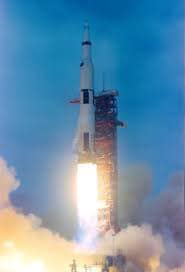
In 1969, Apollo 10 was launched with astronauts T. Stafford, J. Young, E. Cernan on board. The release of the LEM from its shell, the docking of the LEM with the command module and all the fundamental operations to bring the mission to the Moon were tested.
Nel 1969 lancio dell’Apollo 10 con a bordo gli astronauti T. Stafford, J. Young, E. Cernan. Venne testato lo sgancio del LEM dal suo guscio, l’attracco del LEM col modulo di comando e tutte le operazioni fondamentali per portare la missione verso la Luna.
In 2014, Wubbo Ockels (1946-2014) died. He was an ESA’s European astronaut trainer and second ESA astronaut; the first Dutchman to fly in space in 1985 for the Spacelab-D1 mission, in which he orbited to Earth 110 times in 168 hours.
Nel 2014 morì in un ospedale olandese Wubbo Ockels (1946-2014), preparatore degli astronauti europei dell’ESA e secondo astronauta dell’ESA, primo olandese a volare nello spazio nel 1985, durante la missione Spacelab-D1, con la quale orbitò attorno alla Terra 110 volte in 168 ore.
Text source: Wikipedia
Sostieni anche tu Wikipedia
Google translate
 Astronomy Bulletin Of the Day