🇬🇧 – 🇮🇹

In 1610 Galileo Galilei wrote a letter (see image) to Belisario Vinta (Secretary of State of the Grand Duchy of Tuscany) regarding the observations of Saturn through his telescope (between 25 – 30 July 1610) noting that it is composed of three bodies like can be seen from the schematic sketch. Only later did Christiaan Huygens (1629-1695) discover that it was a ring around the body of the planet. See also the July 19 bulletin.
Nel 1610 Galileo Galilei scrive una lettera (vedi immagine) a Belisario Vinta (Segretario di Stato del Granducato di Toscana) in merito alle osservazioni su Saturno attraverso il suo cannocchiale (tra il 25 – 30 luglio 1610) notando che è composto da tre corpi come si evince dallo schizzo schematico. Solo piú tardi Christiaan Huygens (1629-1695) scoprirà che si trattava di un anello attorno al corpo del pianeta. Vedi anche il bollettino del 19 luglio.
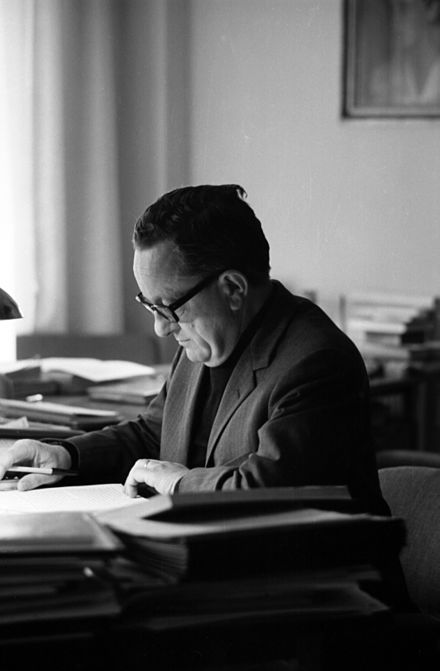
In 1910 the astrophysicist Livio Gratton was born in Trieste, author of more than 200 scientific papers, he revives the Italian astronomy after the Second World War. He was interested in stellar astrophysics, with particular attention to stellar spectroscopy, as well as astrophysics theoretical and spatial. The asteroid 5987 Liviogratton was named after him, a main belt asteroid discovered in 1975 which has an orbit characterized by a semimajor axis equal to 2.4325892 AU and an eccentricity of 0.1573057, inclined by 5.41728° with respect to the ecliptic. Visit Nasa website to obtain info of solar system objects: https://ssd.jpl.nasa.gov/
Nel 1910 nasce a Trieste l’astrofisico Livio Gratton, autore di più di 200 lavori scientifici, artefice della rinascita dell’astronomia italiana nel secondo dopoguerra e che si interessò all’astrofisica stellare, con particolare attenzione alla spettroscopia stellare, come pure all’astrofisica teorica e spaziale. Gli è stato dedicato l’asteroide 5987 Liviogratton, un asteroide della fascia principale scoperto nel 1975 che presenta un’orbita caratterizzata da un semiasse maggiore pari a 2,4325892 UA e da un’eccentricità di 0,1573057, inclinata di 5,41728° rispetto all’eclittica. Visita il sito Web della Nasa per ottenere informazioni sugli oggetti del sistema solare: https://ssd.jpl.nasa.gov/
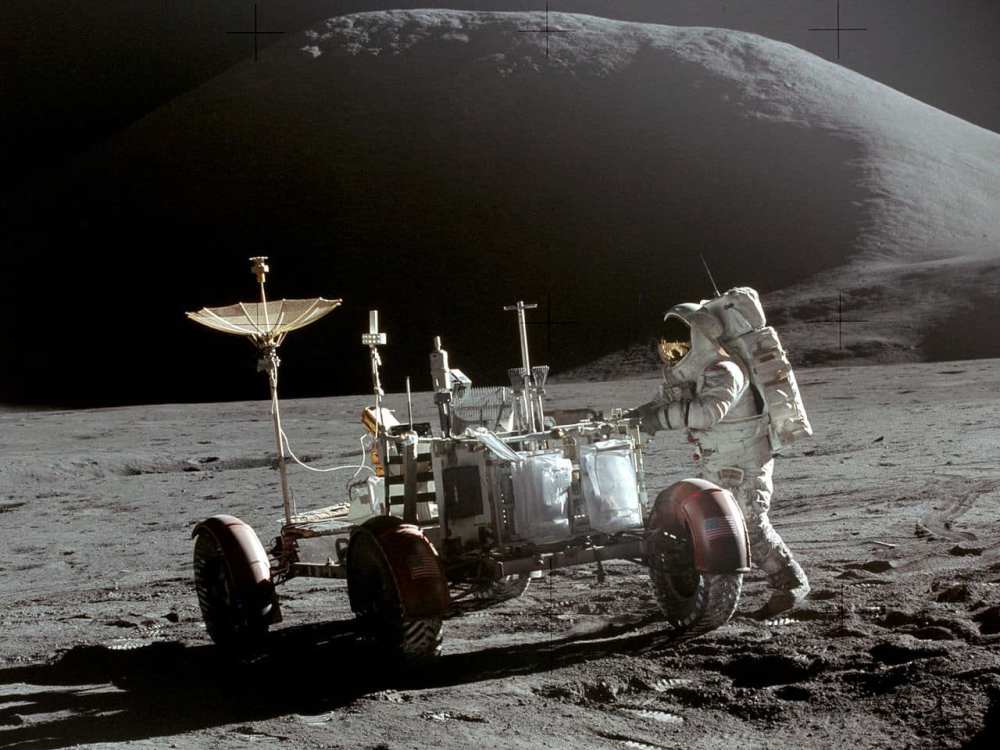
In 1971 Apollo 15 landed on the Moon in the area called Mare Imprium (the launch is reported in the bulletin of July 26th). Commander David Scott and lunar module pilot James Irwin descended near the Hadley rim and explored the surroundings using the rover, which allowed them to travel farther from the lunar module than had been possible on previous missions. The astronauts spent 18 and a half hours in extravehicular activity (EVA) on the lunar surface, during which they collected 77 kg of material. Video NASA (5 min.) :
Nel 1971 l’Apollo 15 atterra sulla Luna nella zona denominata Mare Imprium (nel bollettino del 26/7 viene riportato il lancio). Il comandante David Scott e il pilota del modulo lunare James Irwin scesero vicino alla rima di Hadley ed esplorarono i dintorni grazie all’utilizzo del rover, che permise loro di viaggiare più lontano dal modulo lunare rispetto a quanto fosse stato possibile nelle precedenti missioni. Gli astronauti trascorsero 18 ore e mezza in attività extraveicolare (EVA) sulla superficie lunare, durante le quali raccolsero 77 kg di materiale. Video NASA di 5 min. ca (sottotitoli in italiano):
To receive the Astronomy Bulletin Of the Day in your inbox, please put your email address on the contact form: https://abod.blog/contacts/
Per ricevere il bollettino per gli astronaviganti giornaliero nella tua posta elettronica, inserisci la tua mail nel form contatti: https://abod.blog/contacts/
Text and video source: Wikipedia, NASA, YouTube
Sostieni anche tu Wikipedia
Google translate
 Astronomy Bulletin Of the Day
3 commenti
I commenti sono chiusi.