
🇬🇧 – 🇮🇹

In 1544 Urbano Monti or Monte was born, known for his geographical treatise entitled Universal Treaty. Description and site of all the Earth known up to now, important not so much for the descriptive content (similar to that of other similar works of the time), but for the titanic circular planisphere included in it, divided into sixty tables that can be assembled and richly detailed and decorated (see photos). The planisphere uses an azimuthal projection, with the North Pole as the central point and Antarctica distributed in the outer ring, a very unusual feature for the time (in fact, Mercator’s was used). Three copies of this treatise survive: one is kept in the Valentini collection of the library of the archiepiscopal seminary of Milan (at Venegono Inferiore), and an identical version was acquired by David Rumsey, a private collector, at a London auction at the end of the 1960s. 1980; the third, following the others by several years, is owned by the Biblioteca Ambrosiana; in this last copy Monti modified the projection so that, assembled, it was no longer round but quadrilobate, probably to reduce the distortion of the lands below the equator. The map resulting from the union of all the tables is a square of about 275 centimeters per side.
Nel 1544 nasce Urbano Monti o Monte noto per il suo trattato geografico intitolato Trattato universale. Descrittione et sito de tutta la Terra sin qui conosciuta, importante non tanto per il contenuto descrittivo (simile a quello di altre opere analoghe dell’epoca), quanto per il titanico planisfero circolare in essa incluso, suddiviso in sessanta tavole assemblabili e riccamente dettagliato e decorato (vedi foto). Il planisfero utilizza una proiezione azimutale, con il Polo Nord come punto centrale e l’Antartide distribuito nell’anello esterno, una caratteristica molto insolita per l’epoca (si usava infatti quella di Mercatore). Di questo trattato sopravvivono tre copie: una è custodita nel fondo Valentini della biblioteca del seminario arcivescovile di Milano (a Venegono Inferiore), e una versione identica è stata acquistata da David Rumsey, un collezionista privato, ad un’asta londinese a fine degli anni 1980; la terza, successiva alle altre di parecchi anni, è di proprietà della Biblioteca Ambrosiana; in quest’ultima copia Monti modificò la proiezione in modo che, assemblata, non risultasse più rotonda ma quadrilobata, probabilmente per ridurre la distorsione delle terre al di sotto dell’equatore. La cartina risultante dall’unione di tutte le tavole è un quadrato di circa 275 centimetri per lato.

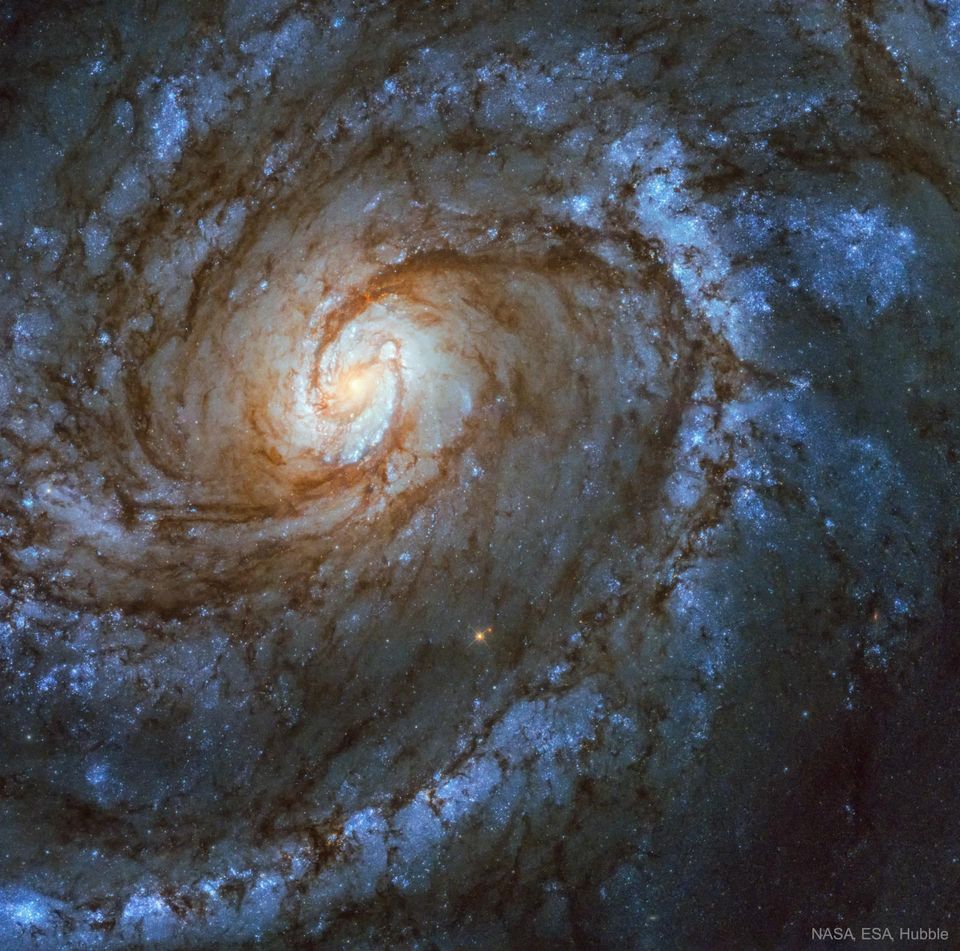
In 1744, the French astronomer Pierre Méchain was born, assistant to Charles Messier with whom he discovered comet C/1785 E1. Among the other discoveries: comet 8P/Tuttle in 1790 see photo (which, however, given the short period of visibility and therefore the insufficient number of observations, did not allow us to recognize the periodic behavior of the comet, which today does not bear its name), the galaxy M100 (see photo) in 1781 and inserted by his friend Charles Messier in his catalog a few weeks later (the latter determined its coordinates and also provided a brief description). The asteroid 21785 Méchain was named in his honor.
Nel 1744 nasce l’astronomo francese Pierre Méchain, assistente di Charles Messier con il quale scopre la cometa C/1785 E1. Tra le altre scoperte si evidenziano: la cometa 8P/Tuttle nel 1790 vedi foto (che però, dato il breve periodo di visibilità e quindi il numero di osservazioni insufficienti, non permise di riconoscere il comportamento periodico della cometa, che oggi non porta il suo nome), la galassia M100 (vedi foto) nel 1781 e inserita dall’amico Charles Messier nel suo catalogo qualche settimana più tardi (quest’ultimo ne determinò le coordinate e ne fornì pure una breve descrizione). L’asteroide 21785 Méchain è stato così nominato in suo onore.
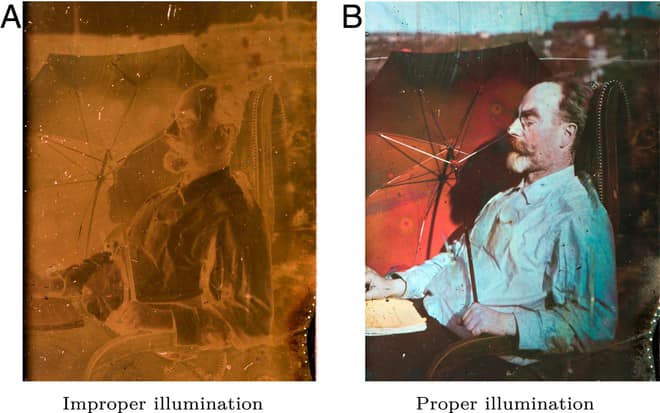
In 1921 Gabriel Jonas Lippmann was born, a French physicist who we can consider as the creator of holograms (see photo). Lippmann is remembered in particular for his innovative method for obtaining color photographs, for his studies he was awarded the Nobel prize for physics in 1908. In particular, Lippmann succeeded in producing a color photographic plate by exploiting the interference of the waves of the image with their own reflection on a mercury mirror placed behind the sensitive emulsion. Each ray of light impresses the emulsion in points whose distance is linked to its wavelength, therefore to its colour. By illuminating the plate obtained in a particular way, the rays that generated the plate can be reconstituted for a fairly small angle of view. Lippmann made his invention public to the Academy of Sciences on February 2, 1891. Lippmann’s method for color photography had no commercial following, as it was supplanted by the Lumière brothers’ trichromatic method but is now appreciated for holographic vision if so it can be said about his studio!
Nel 1921 nasce Gabriel Jonas Lippmann, un fisico francese che possiamo considerare come l’ideatore degli ologrammi (vedi foto). Lippmann è ricordato in particolare per il suo innovativo metodo per ottenere delle fotografie a colori, per i suoi studi divenne premio nobel per la fisica nel 1908. In particolare, Lippmann riuscì a produrre una lastra fotografica a colori sfruttando l’interferenza delle onde dell’immagine con la loro stessa riflessione su uno specchio di mercurio posto dietro l’emulsione sensibile. Ogni raggio di luce impressiona l’emulsione in punti la cui distanza è legata alla sua lunghezza d’onda, dunque al suo colore. Illuminando la lastra ottenuta in modo particolare, si possono ricostituire, per un angolo di vista abbastanza ridotto, i raggi che hanno generato la lastra. Lippmann rese pubblica la sua invenzione all’Accademia delle Scienze il 2 febbraio 1891. Il metodo di Lippmann per la fotografia a colori non ebbe seguito commerciale, in quanto soppiantato dal metodo tricromatico dei fratelli Lumière ma ora lo si apprezza per la visione olografica se così si può dire del suo studio! Uno studio attuale in questo link: https://www.hdblog.it/…/fotografia-colori-lippmann…/

Stuart Allen Roosa, an American astronaut, was born in 1994. He was the command module pilot on the Apollo 14 mission. The mission ran from January 31 to February 9, 1971, and was the third to land on the moon with astronauts Alan Shepard and Edgar Mitchell. While Shepard and Mitchell remained on the Moon for two full days, Roosa orbited the satellite piloting the “Kitty Hawk” command module and performing several experiments. See also bulletin of August 6th.
Nel 1994 nasce Stuart Allen Roosa un astronauta statunitense. Fu il pilota del modulo di comando della missione di Apollo 14. La missione si svolse dal 31 gennaio al 9 febbraio 1971 e fu la terza ad allunare con gli astronauti Alan Shepard ed Edgar Mitchell. Mentre Shepard e Mitchell rimasero sulla Luna per due interi giorni, Roosa orbitò intorno al satellite pilotando il modulo di comando “Kitty Hawk” ed eseguendo diversi esperimenti. Vedi anche il bollettino del 6 agosto
To receive the Astronomy Bulletin Of the Day in your inbox, please put your email address on the contact form: https://abod.blog/contacts/
Per ricevere il bollettino per gli astronaviganti giornaliero nella tua posta elettronica, inserisci la tua mail nel form contatti: https://abod.blog/contacts/
Text and video source: Wikipedia, NASA, YouTube
Sostieni anche tu Wikipedia
Google translate
 Astronomy Bulletin Of the Day