
🇬🇧 – 🇮🇹


In 1965 the launch of Gemini 5 (with Conrad and Cooper on board) took place, which orbited the Earth 120 times. The logo features a pioneer wagon symbolizing new space missions with previously untried orbit shifting and positioning maneuvers. The inscription “8 Days or Bust” is the motto of the mission which meant eight days in orbit respecting the program or failure. Logos are becoming more and more representative in space missions and with the Apollo missions they will be much more sought after.
Nel 1965 avviene il lancio della Gemini 5 (con a bordo Conrad e Cooper) che orbitò attorno alla Terra per 120 volte. Il logo rappresenta un carro da pionieri che simboleggia le nuove missioni spaziali con manovre di spostamento di orbita e posizionamento mai provate fino ad allora. La scritta ” 8 Days or Bust” è il motto della missione che significava otto giorni in orbita rispettando il programma o il fallimento. I loghi stanno diventando sempre più rappresentativi nelle missioni spaziali e con le missioni Apollo saranno molto più ricercati.
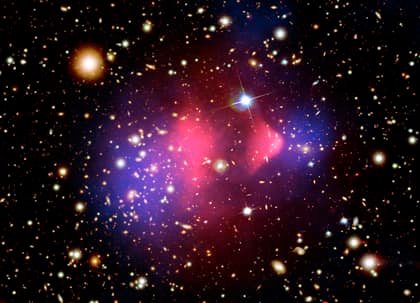
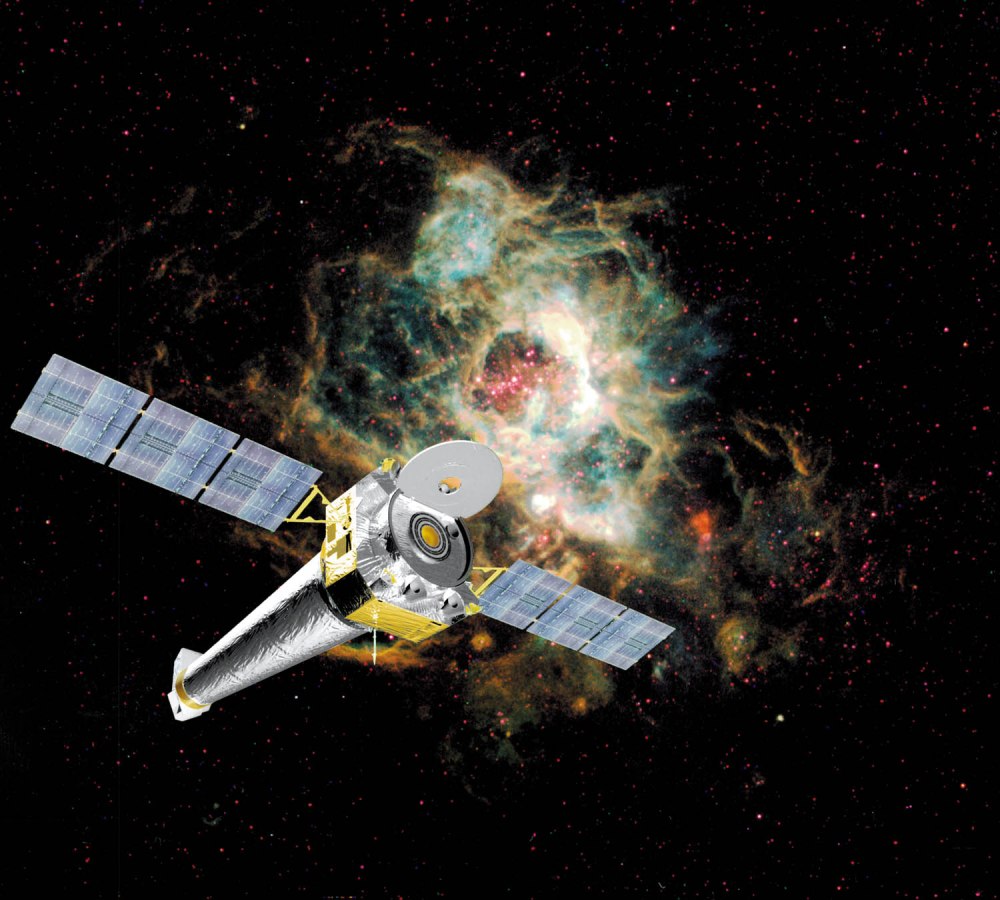
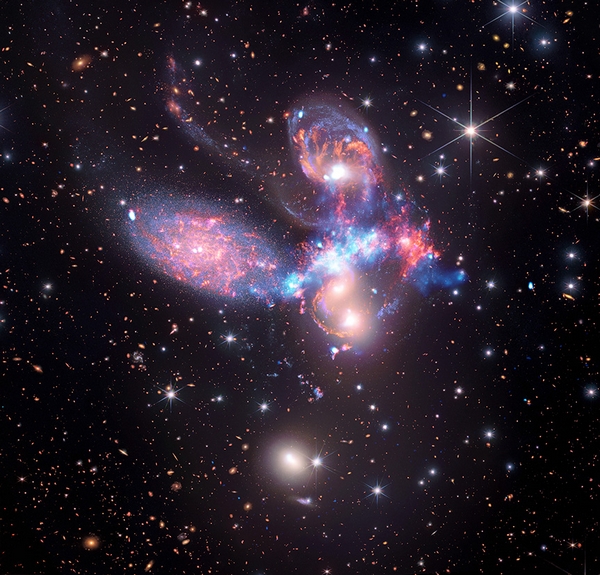
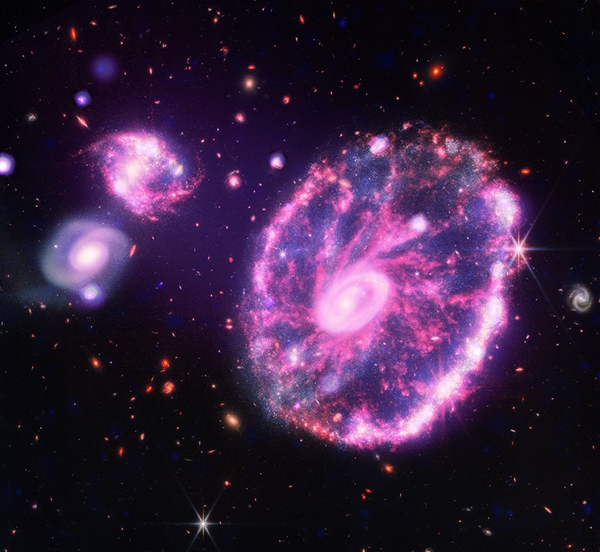
In 2006 NASA issued a press release according to which the Chandra X-Ray Observatory would have found direct evidence of the existence of dark matter in the collision between two clusters of galaxies (see photo above). We share the official release from NASA (click here) and the photo of the galaxy cluster 1E 0657-56, also known as the “bullet cluster”. Recently, the James Webb infrared space telescope collaborated with the Chandra space telescope, emphasizing how the power of any of these telescopes is enhanced when combined with others. Here we see the result of this collaboration:
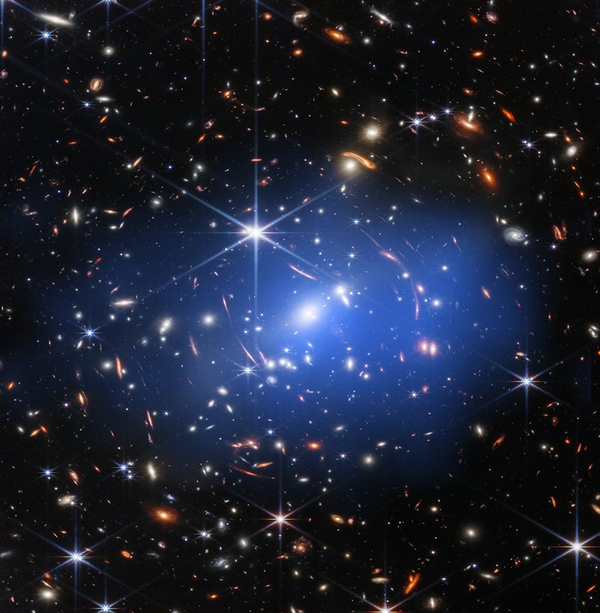
Cover Photo analysis and evidence of dark matter: The hot gas Chandra detected in the X-rays is seen as two pink clusters in the image and contains most of the “normal” or baryonic matter in the two clusters. The bullet-shaped cluster on the right is hot gas from one cluster, which passed through hot gas from the other, larger cluster during the collision. The blue areas in this image show where astronomers find the most mass in the clusters. The mass concentration is determined using the so-called gravitational lensing effect, in which the light of distant objects is distorted by intervening matter. Most matter in clusters (blue) is clearly separated from normal matter (pink), giving direct evidence that nearly all matter in clusters is dark.
The hot gas in each cluster was slowed by a drag force, similar to air resistance, during the collision. In contrast, the dark matter was not slowed down by the impact because it doesn’t interact directly with itself or with the gas except by gravity. Thus, during the collision, the dark matter clumps of the two clusters moved in front of the hot gas, causing the dark matter to separate from the normal matter seen in the image. If hot gas were the most massive component of the clusters, as proposed by alternative theories of gravity, this effect would not be seen. Instead, this result shows that dark matter is needed.
How curious are you to discover the potential of the recently launched Euclid telescope (ESA / NASA) in search of energy and dark matter? Stay tuned!
Nel 2006 la NASA rilascia un comunicato stampa secondo cui il telescopio spaziale Chandra avrebbe trovato prove dirette dell’esistenza della materia oscura nello scontro tra due ammassi di galassie (vedi foto sopra). Condividiamo il comunicato ufficiale della Nasa (clicca qui) e la foto dell’ammasso di galassie 1E 0657-56, noto anche come “ammasso proiettile”. Recentemente il telescopio spaziale James Webb ad infrarossi ha collaborato con il telescopio spaziale Chandra sottolineando come la potenza di uno qualsiasi di questi telescopi venga potenziata se unito ad altri. Qui vediamo il risultato di questa collaborazione:
Analisi della foto in copertina e la prova della materia oscura: Il gas caldo rilevato da Chandra nei raggi X è visto come due ammassi rosa nell’immagine e contiene la maggior parte della materia “normale” o barionica nei due ammassi. Il gruppo a forma di proiettile sulla destra è il gas caldo di un ammasso, che è passato attraverso il gas caldo dell’altro ammasso più grande durante la collisione. Le aree blu in questa immagine mostrano dove gli astronomi trovano la maggior parte della massa negli ammassi. La concentrazione di massa viene determinata utilizzando l’effetto della cosiddetta lente gravitazionale, in cui la luce degli oggetti distanti viene distorta dalla materia interposta. La maggior parte della materia negli ammassi (blu) è chiaramente separata dalla materia normale (rosa), dando prova diretta che quasi tutta la materia negli ammassi è scura.
Il gas caldo in ogni ammasso è stato rallentato da una forza di resistenza, simile alla resistenza dell’aria, durante la collisione. Al contrario, la materia oscura non è stata rallentata dall’impatto perché non interagisce direttamente con se stessa o con il gas se non per gravità. Pertanto, durante la collisione, gli ammassi di materia oscura dei due ammassi si sono spostati davanti al gas caldo, producendo la separazione della materia oscura da quella normale vista nell’immagine. Se il gas caldo fosse il componente più massiccio degli ammassi, come proposto da teorie alternative della gravità, tale effetto non si vedrebbe. Invece, questo risultato mostra che è necessaria la materia oscura.
Nda: Quanto siete curiosi di scoprire le potenzialità del telescopio Euclid (ESA / NASA) da poco lanciato e a caccia di energia e materia oscura? Stay tuned!
To receive the Astronomy Bulletin Of the Day in your inbox, please put your email address on the contact form: https://abod.blog/contacts/
Per ricevere il bollettino per gli astronaviganti giornaliero nella tua posta elettronica, inserisci la tua mail nel form contatti: https://abod.blog/contacts/
Text, images and video source: Wikipedia, NASA, YouTube, Hwupgrade
Sostieni anche tu Wikipedia
Google translate


Un commento
I commenti sono chiusi.