
🇬🇧 – 🇮🇹
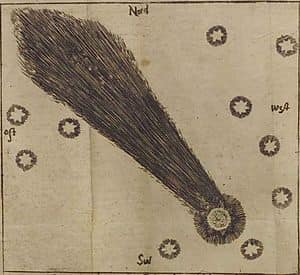
In 1623, Stanisław Lubieniecki was born, a Polish theologian, astronomer and historian. When the Great Comet C/1664 W1 (see graphic of the time) appeared in Hamburg in 1664 it collected information in three texts with the overall title of Theatrum Cometicum. The first volume with correspondence on the comet; the second part contains a detailed description of 415 comets from the “Great Flood” to 1665; in the third the astrological meanings of comets in which, among other things, he described the star of Bethlehem as a comet and represented the great fire of London as a divine punishment announced by the Great Comet of 1664.
Nel 1623 nasce Stanisław Lubieniecki, un teologo, astronomo e storico polacco. Quando la Grande Cometa C/1664 W1 (vedi grafica dell’epoca) apparve ad Amburgo nel 1664 raccolse informazioni in tre testi dal titolo complessivo di Theatrum Cometicum. Il primo volume con carteggio sulla cometa; la seconda parte contiene una dettagliata descrizione di 415 comete dal “Diluvio Universale” al 1665; nella terza i significati astrologici delle comete in cui, tra l’altro, descrisse la stella di Betlemme come una cometa e rappresentò il grande incendio di Londra come una punizione divina annunciata dalla Grande Cometa del 1664.
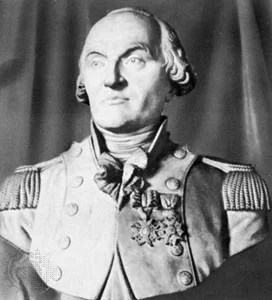
In 1736 Charles Augustin de Coulomb, a French physicist and engineer, founder of the mathematical theory of electricity and magnetism, died. He is known for having formulated the law that bears his name, and which consists of the force exerted by an electric field on an electric charge or a force that acts between electrically charged objects and is operationally defined by the value of the interaction between two point electric charges and stuck in the void. The SI unit of electric charge is named after him. He also made fundamental contributions in the field of theoretical mechanics (the concept of tangential tension and the laws of friction) and applied (resistance of materials and geotechnics).
Nel 1736 muore Charles Augustin de Coulomb, un fisico e ingegnere francese, fondatore della teoria matematica dell’elettricità e del magnetismo. È noto per aver formulato la legge che porta il suo nome, e che consiste nella forza esercitata da un campo elettrico su una carica elettrica ovvero una forza che agisce tra oggetti elettricamente carichi ed è operativamente definita dal valore dell’interazione tra due cariche elettriche puntiformi e ferme nel vuoto. L’unità di misura della carica elettrica nel Sistema internazionale porta il suo nome. Diede anche fondamentali contributi nel campo della meccanica teorica (il concetto di tensione tangenziale e le leggi dell’attrito) e applicata (resistenza dei materiali e geotecnica).

In 1927 Ľubor Kresák was born, a Slovak astronomer, discoverer of two comets: the periodic comet 41P/Tuttle-Giacobini-Kresák (see photo) and the non-periodic C/1954 M2 Kresak-Peltier. In 1978 he suggested that the Tunguska event could have been caused by the impact of a fragment of Encke’s comet. The asteroid 1849 Kresák was named after him.
Nel 1927 nasce Ľubor Kresák, un astronomo slovacco, scopritore di due comete: la cometa periodica 41P/Tuttle-Giacobini-Kresák (vedi foto) e la non-periodica C/1954 M2 Kresak-Peltier. Nel 1978 suggerì che l’evento di Tunguska potesse essere stato causato dall’impatto di un frammento della cometa di Encke. A lui è stato dedicato l’asteroide 1849 Kresák.
In 1949 Zoran Knežević was born, a Serbian astronomer, to whom the Minor Planet Center credits him with the discovery of the asteroid 3176 Paolicchi in 1980. The asteroid 3900 Knežević was dedicated to him.
Nel 1949 nasce Zoran Knežević, un astronomo serbo, al quale il Minor Planet Center gli accredita la scoperta dell’asteroide 3176 Paolicchi nel 1980. Gli è stato dedicato l’asteroide 3900 Knežević.
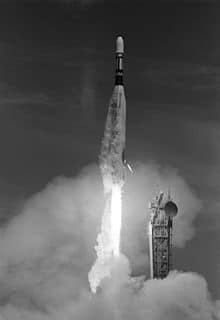
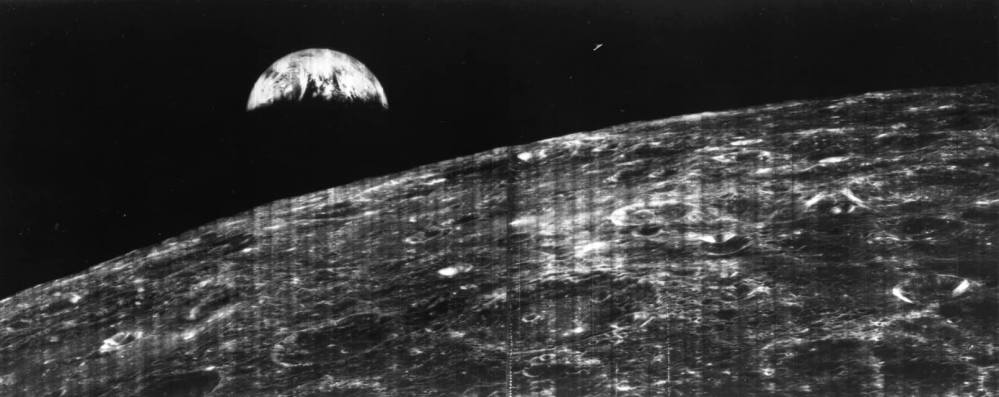
In 1966, Lunar Orbiter 1 took the first photographs of the Earth from an orbit around the Moon. See photos of the launch and the photograph of the Earth as originally shown to the public, with numerous defects and streaks that make it real and special 🤩! Read also the bulletin of last August 10th!
Nel 1966 il Lunar Orbiter 1 scatta le prime fotografie della Terra da un’orbita attorno alla Luna. Vedi foto del lancio e la fotografia della Terra così come originariamente mostrata al pubblico, con numerosi difetti e strisce che però la rende vera e speciale  ! Vedi anche il bollettino del 10 agosto
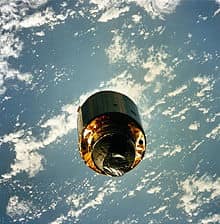
In 1973, the Intelsat telecommunications satellite was launched (see photo).
Nel 1973 viene lanciato il satellite per telecomunicazioni Intelsat (vedi foto).
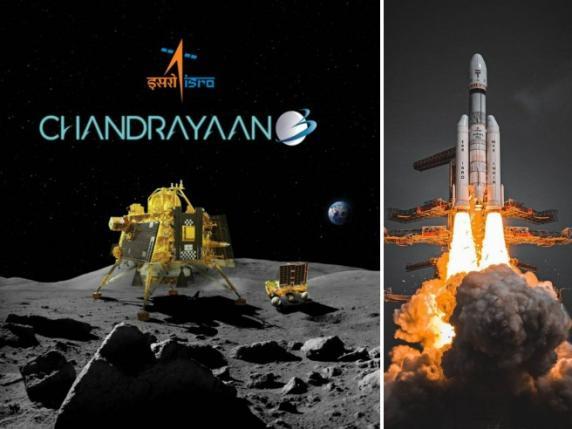
In 2023 the Indian probe Chandrayaan-3 reaches the lunar surface near the South Pole. Today’s mission marks the first soft landing on the lunar surface by an Indian spacecraft and makes India the fourth country ever to accomplish such a feat, together with the United States, China and Russia, so far the only nations to have performed controlled moon landings of spacecraft. Watch the live!
Nel 2023 alle ore 14.34 la sonda indiana Chandrayaan-3 raggiunge il suolo lunare nei pressi del Polo sud. La missione di oggi segna il primo allunaggio morbido sulla superficie lunare da parte di un veicolo spaziale indiano e rende l’India il quarto Paese in assoluto a compiere un’impresa del genere, insieme agli Stati Uniti, alla Cina e alla Russia, finora le uniche nazioni ad aver effettuato allunaggi controllati di veicoli spaziali. Guarda il video della diretta
To receive the Astronomy Bulletin Of the Day in your inbox, please put your email address on the contact form: https://abod.blog/contacts/
Per ricevere il bollettino per gli astronaviganti giornaliero nella tua posta elettronica, inserisci la tua mail nel form contatti: https://abod.blog/contacts/
Text, images and video source: Wikipedia, NASA, YouTube
Sostieni anche tu Wikipedia
Google translate
 Astronomy Bulletin Of the Day