
🇬🇧 – 🇮🇹
In 1866 the astronomer Schiaparelli published the cometary nature of meteors, see also exchange of letters with Father Angelo Secchi @divulgazione uai: https://divulgazione.uai.it/images/Lettere_Schiaparelli_Secchi_su_meteore.pdf?fbclid=IwAR2c-Fh-nXF9jtIj2NWUhnAhqUd5WKNk4HPbE 6VncTbKhaTXNTyp7RrkAwM
Nel 1866 l’astronomo Schiaparelli pubblica la natura cometaria delle meteore, vedi anche scambio epistolare con padre Angelo Secchi @divulgazione uai: http://divulgazione.uai.it/images/Lettere_Schiaparelli_Secchi_su_meteore.pdf?fbclid=IwAR2c-Fh-nXF9jtIj2NWUhnAhqUd5WKNk4HPbE6VncTbKhaTXNTyp7RrkAwM
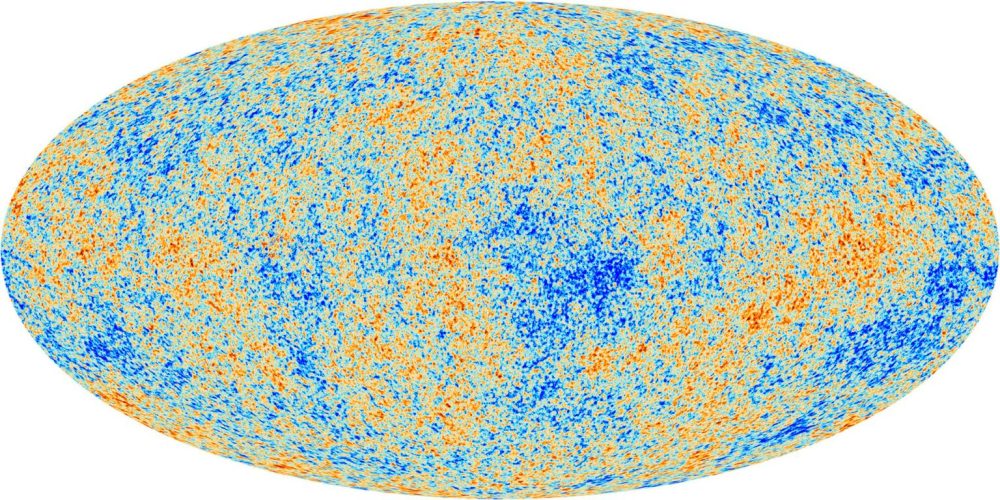
Alexander Friedmann, known for having proposed a solution to the field equations of general relativity, such as to describe the expansion of the universe today known as the Big Bang, died in 1925.
Nel 1925 muore Alexander Friedmann noto per aver proposto una soluzione alle equazioni di campo della relatività generale, tale da descrivere l’espansione dell’universo oggi conosciuta come Big Bang.
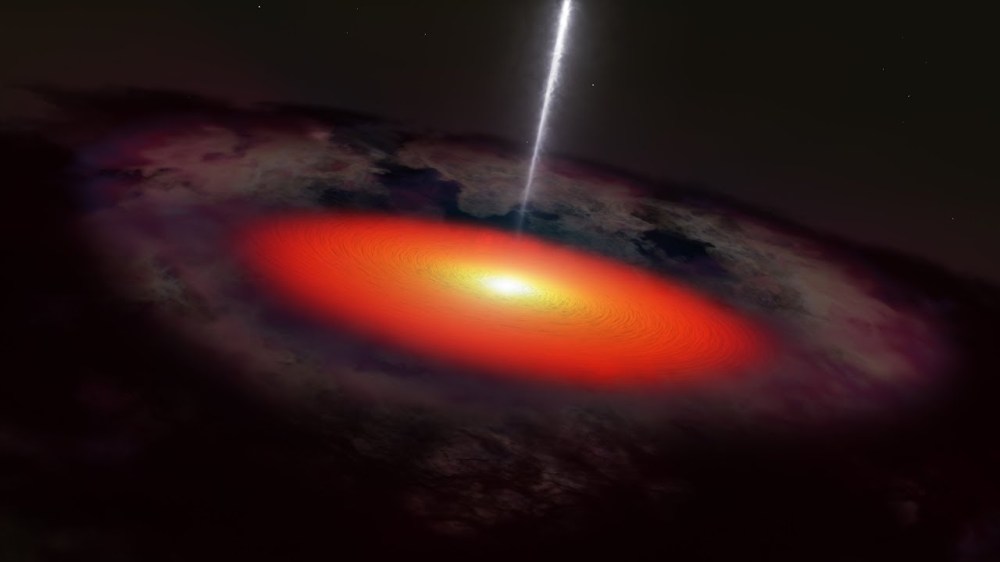
In 2008 at 00:13 the Fermi / GLAST gamma ray satellite (international collaboration ASI, INFN and INAF) recorded a very high energy gamma ray burst (Gamma Ray Burst, GRB, see graphic image) in the southern constellation of Carina cosmic catastrophe or the collapse of a star and the consequent formation of a black hole as described by Ronaldo Bellazzini, head of the Fermi experiment for the INFN: “A jet of highly ionized matter propagated in the cosmos at a speed close to that of light, the speed reached by the plasma of matter at very high temperatures is comparable to that which will be reached by the protons inside the ring of the LHC, the super accelerator at CERN in Geneva. But with a difference: in the case of the flash spotted by Fermi, it was not packets of sub-atomic particles that were accelerated all together to a speed no less than 99.9999 percent of that of light, as happens in accelerators, but an enormous quantity of matter. For a couple of minutes, the flash was brighter not only than any other source, but even the universe itself in the gamma-ray band.” At the end of this activity which lasted a few minutes, the source went out leaving only a very faint echo which for a few days was detectable only by the most sensitive terrestrial and space telescopes.
Nel 2008 alle 00:13 il satellite per raggi gamma Fermi / GLAST (collaborazione internazionale ASI, INFN e INAF) ha registrato nella costellazione australe della Carena un lampo gamma di altissima energia (Gamma Ray Burst, GRB, vedi immagine grafica) prodotto da una catastrofe cosmica ovvero un collasso di una stella e dalla conseguente formazione di un buco nero così descritto dal responsabile Ronaldo Bellazzini, responsabile dell’esperimento Fermi per l’INFN: “Un getto di materia altamente ionizzato si è propagato nel cosmo a una velocità prossima a quella della luce, la velocità raggiunta dal plasma di materia ad altissima temperatura è paragonabile a quella che sarà raggiunta dai protoni all’interno dell’anello di LHC, il super acceleratore al Cern di Ginevra. Ma con una differenza: nel caso del lampo avvistato da Fermi a essere accelerata tutta insieme a una velocità non inferiore al 99,9999 per cento di quella della luce non sono stati pacchetti di particelle sub-atomiche, come accade negli acceleratori, ma una enorme quantità di materia. Per un paio di minuti, il lampo è stato più luminoso non solo di qualsiasi altra sorgente, ma anche dello stesso universo nella banda dei raggi gamma”. Alla fine di questa attività che è durata qualche minuto, la sorgente si è spenta lasciando solo una debolissima eco che per alcuni giorni è stata rivelabile solo dai più sensibili telescopi terrestri e spaziali.

In 2012, after the return on the Soyuz TMA-04M of the Expedition 32 mission, on board the International Space Station (ISS), the Expedition 33 mission began, led by the female commander Sunita Williams (USA) and with Yurij Malenchenko (Russia) and Akihiro Hoshide (Japan) completing several experiments.
Nel 2012 dopo il rientro sulla Soyuz TMA-04M della missione Expedition 32, a bordo dell’International Space Station (ISS), inizia la missione Expedition 33, condotto dalla comandante donna Sunita Williams (USA) e con Yurij Malenchenko (Russia) e Akihiro Hoshide (Giappone) portando a termine diversi esperimenti.


In 2021 with Inspiration4 after the Apollo lunar missions, man finally returns to space, bringing space tourists into Earth orbit with this launch of the Falcon 9. Docu-film: https://www.netflix.com/it/title/81441273
Nel 2021 con Inspiration4 dopo le missioni lunari Apollo, l’uomo ritorna finalmente nello spazio portando con questo lancio del Falcon 9 dei turisti spaziali in orbita terrestre. Docu-film: https://www.netflix.com/it/title/81441273
To receive the Astronomy Bulletin Of the Day in your inbox, please put your email address on the contact form: https://abod.blog/contacts/
Per ricevere il bollettino per gli astronaviganti giornaliero nella tua posta elettronica, inserisci la tua mail nel form contatti: https://abod.blog/contacts/
Text, images and video source: Wikipedia, NASA, YouTube
Sostieni anche tu Wikipedia
Google translate
 Astronomy Bulletin Of the Day