
🇬🇧 – 🇮🇹

In 1804 the French astronomer Pierre Méchain died, who with Jean Baptiste Joseph Delambre worked on the triangulation along the Paris meridian up to Barcelona, with the main aim of fixing the metric unit of measurement. The asteroid 21785 Méchain was named in his honor. Great discoverer of comets and non-stellar objects, as well as collaborator of Charles Messier. See cover image of the M100, a galaxy discovered by Pierre Méchain.
Nel 1804 muore l’astronomo francese Pierre Méchain, che con Jean Baptiste Joseph Delambre si occupó della triangolazione lungo il meridiano di Parigi fino a Barcellona, con il principale scopo di fissare l’unità metrica di misura. L’asteroide 21785 Méchain è stato così nominato in suo onore. Grande scopritore di comete e oggetti non stellari, oltre che collaboratore di Charles Messier. In copertina l’immagine della galassia M100 da lui scoperta.
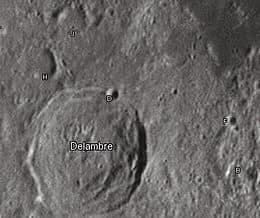
In 1873 the Italian astronomer Giovanni Battista Donati died, an astronomer and mathematician known for his observations on stellar spectra which were the first astrophysics studies carried out in Florence and among the first in the world. Discoverer or codiscoverer of 5 comets: C/1855 L1 (Donati), C/1857 V1 (Donati-van Arsdale), C/1858 L1 (Donati), the most famous, known as Comet Donati, C/1864 O1 (Donati -Toussaint) and C/1864 R1 (Donati). The Donati crater on the Moon and the asteroid 16682 Donati were named in his honor.
Nel 1873 muore l’astronomo italiano Giovanni Battista Donati, astronomo e matematico noto per le sue osservazioni sugli spettri stellari che furono i primi studi di carattere astrofisico compiuti a Firenze e tra i primi nel mondo. Scopritore o coscopritore di 5 comete: C/1855 L1 (Donati), C/1857 V1 (Donati-van Arsdale), C/1858 L1 (Donati), la più famosa, conosciuta come la Cometa Donati, C/1864 O1 (Donati-Toussaint) e C/1864 R1 (Donati). Il cratere Donati sulla Luna e l’asteroide 16682 Donati sono stati così chiamati in suo onore.
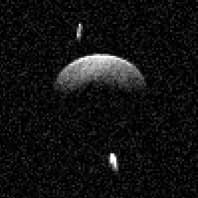
In 2001, the first triple asteroid was discovered, NEA 2001 SN263 see photo, classified as a near-Earth object and a former potentially dangerous asteroid of the Amor group, approximately 2.6 km in diameter. It was discovered by the Lincoln Near-Earth Asteroid Research Project at Lincoln Lab’s Experimental Test Site in New Mexico on September 20, 2001. The two synchronous moons of the minor planets measure approximately 770 and 430 meters and have an orbital period of 16.46 respectively. and 150 hours.
Nel 2001 fu scoperto il primo asteroide triplo, il NEA 2001 SN263 vedi foto, classificato come oggetto vicino alla Terra ed ex asteroide potenzialmente pericoloso del gruppo Amor, di circa 2,6 km di diametro. È stato scoperto dal progetto Lincoln Near-Earth Asteroid Research presso il Lincoln Lab’s Experimental Test Site in New Mexico, il 20 settembre 2001. Le due lune sincrone dei pianeti minori misurano circa 770 e 430 metri e hanno un periodo orbitale rispettivamente di 16,46 e 150 ore.
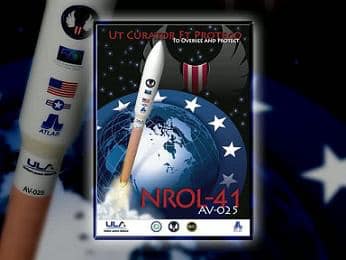
In 2010, the NROL-41 satellite (see image) was launched with intelligence functions on behalf of the National Reconnaissance Office (NRO).
Nel 2010 lancio del satellite NROL-41 (vedi immagine) con funzioni di intelligence per conto del National Reconnaissance Office (NRO).
To receive the Astronomy Bulletin Of the Day in your inbox, please put your email address on the contact form: https://abod.blog/contacts/
Per ricevere il bollettino per gli astronaviganti giornaliero nella tua posta elettronica, inserisci la tua mail nel form contatti: https://abod.blog/contacts/
Text, images and video source: Wikipedia, NASA
Sostieni anche tu Wikipedia
Google translate
 Astronomy Bulletin Of the Day