
🇬🇧 – 🇮🇹
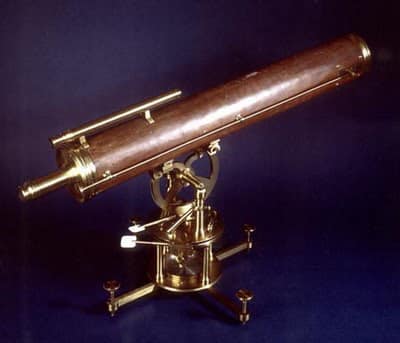
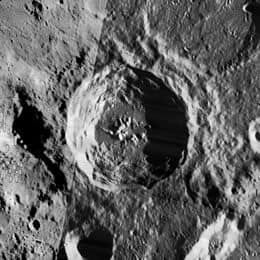
In 1670, the Italian astronomer Niccolò Zucchi, known for having designed one of the first reflecting telescopes, died; thanks to one of these he managed to observe the bands on Jupiter’s atmosphere on May 17, 1630 and the spots on the surface of Mars. A lunar crater was dedicated to him
Nel 1670 muore l’astronomo italiano Niccolò Zucchi noto per aver progettato uno dei primi telescopi a riflessione; grazie ad uno di questi riuscì ad osservare le fasce sull’atmosfera di Giove il 17 maggio 1630 e le macchie sulla superficie di Marte. Un cratere lunare gli venne dedicato

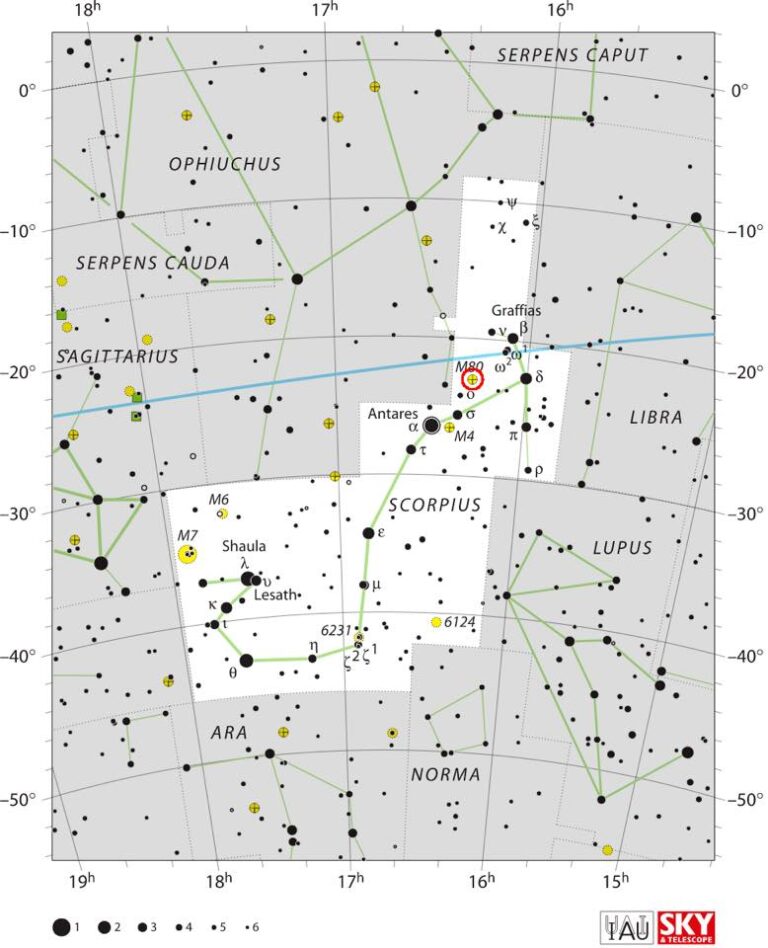
In 1860 sighted in the constellation Scorpius (see localization T Scorpii circled @Sky telescope) a nova by Arthur Von Auwers (1838-1915) in Berlin in the globular cluster M80, an extremely rare event. Among other things Auwers from 1879 to 1883 elaborated its fundamental catalog of stars, which served as the basis for the large catalog of the Astronomische Gesellschaft.
Nel 1860 avvistata nella costellazione dello Scorpione (vedi localizzazione T Scorpii cerchiato @Sky telescope) una nova da Arthur Von Auwers (1838-1915) a Berlino nell’ammasso globulare M80, evento questo rarissimo. Tra l’altro Auwers dal 1879 al 1883 elaborò il suo catalogo fondamentale di stelle, che è servito di base al grande catalogo della Astronomische Gesellschaft.
In 1947, the Slovak amateur astronomer Teodor Pinter (1947-2016) was born. He was director of the Slovak Central Observatory in Hurbanovo, active in solar and meteor observations. Related articles: https://www.researchgate.net/scientific-contributions/T-Pinter-2004608705
Nel 1947 nasce l’astrofilo slovacco Teodor Pinter (1947-2016). Fu direttore dello Slovak Central Observatory a Hurbanovo, attivo nelle osservazioni solari e di meteore
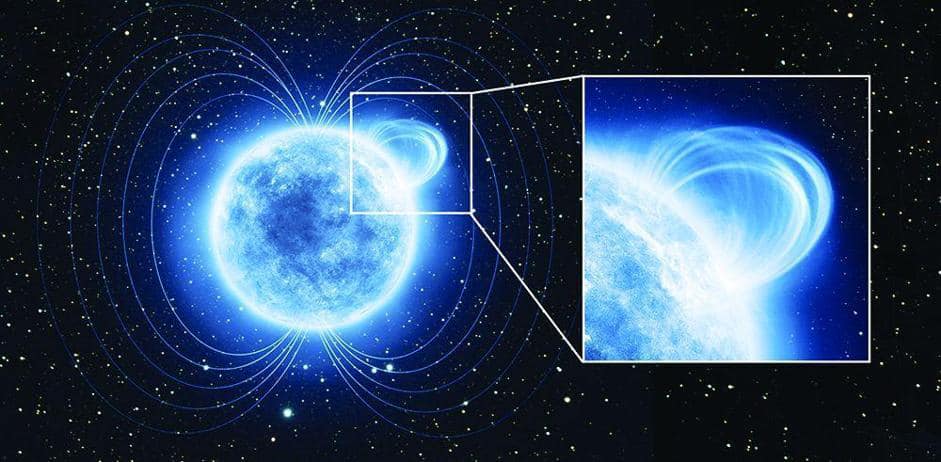
In 1998 Robert Duncan and Christopher Thompson announce the discovery of magnetars. What is it about? A magnetar (contraction of the English terms “magnetic star”) is a neutron star which possesses an enormous magnetic field, billions of times that of the earth, whose decay generates intense and abundant electromagnetic emissions, in particular X-rays, gamma and (very rarely) also radio frequencies. In the following decade, the magnetar hypothesis was widely accepted as a possible physical explanation for particular objects known as soft gamma repeaters (recurring sources of soft gamma rays) and anomalous X-ray pulsars.
Nel 1998 Robert Duncan e Christopher Thompson annunciano la scoperta delle magnetar. Di che cosa si tratta? Una magnetar (contrazione dei termini inglesi magnetic star, letteralmente “stella magnetica”) è una stella di neutroni che possiede un enorme campo magnetico, miliardi di volte quello terrestre, il cui decadimento genera intense ed abbondanti emissioni elettromagnetiche, in particolare raggi X, raggi gamma e (molto raramente) anche radiofrequenze. Nel decennio seguente l’ipotesi della magnetar è stata largamente accettata come una possibile spiegazione fisica per particolari oggetti conosciuti come soft gamma repeater (sorgenti ricorrenti di raggi gamma morbidi) e pulsar anomale a raggi X.
Text source: Wikipedia
Sostieni anche tu Wikipedia
Google translate
 Astronomy Bulletin Of the Day