🇬🇧 – 🇮🇹
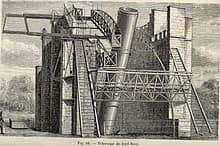
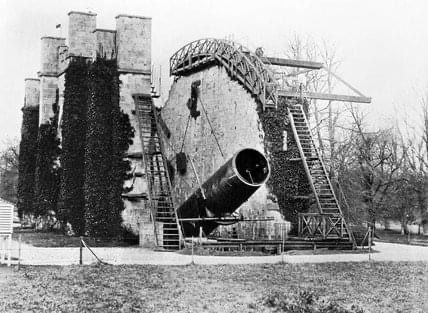
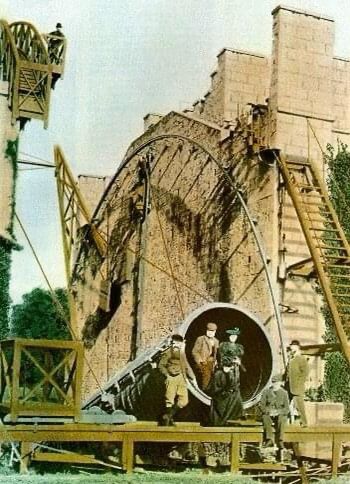

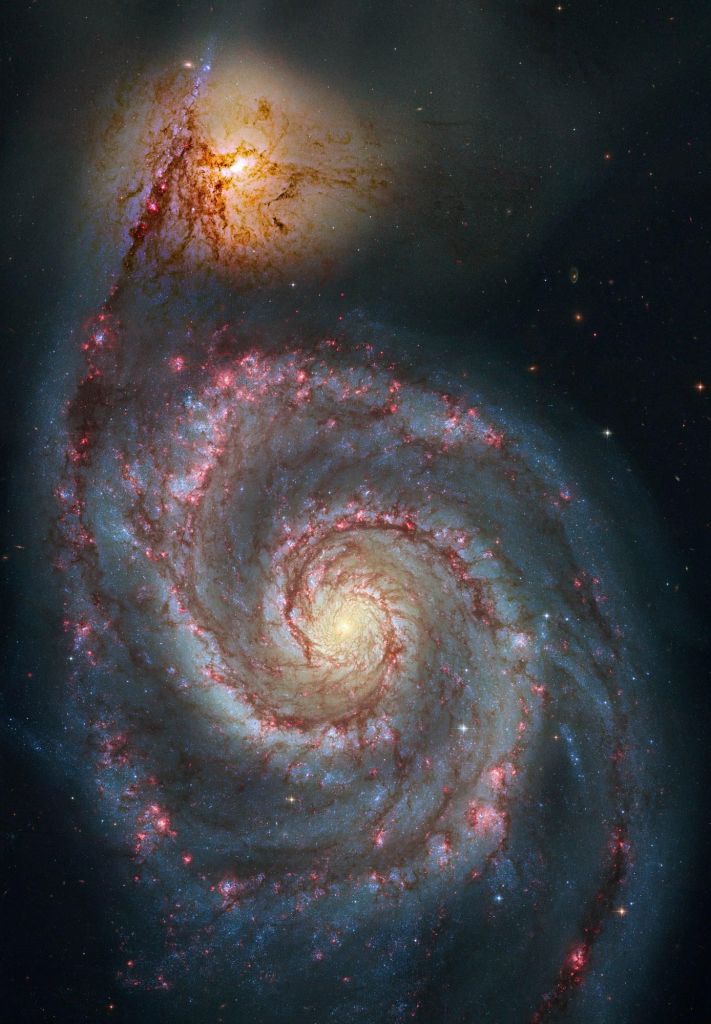
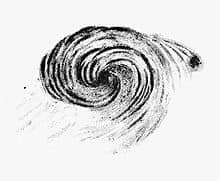
William Parsons Rosse was born in 1800, known for having built his Leviathan of Parsonstow, a 182cm diameter telescope, which was for many decades the largest telescope in the world. With this instrument it was possible for the first time to observe stars down to the 18th magnitude. Fun fact: the first spiral galaxy he discovered was M51 (Whirlpool Galaxy) of which we see the sketch, he also gave the name of the Crab Nebula M1, based on an earlier drawing made using his old 91cm telescope, in which it looked like a crab (above we see the photo of the nebula and the vortex galaxy taken by the Hubble Space Telescope).
Nel 1800 nasce William Parsons Rosse, noto per aver costruito il suo Leviatano di Parsonstow, un telescopio da 182 centimetri di diametro, che fu per molti decenni il più grande telescopio del mondo. Con questo strumento fu possibile per la prima volta osservare le stelle fino alla 18ª magnitudine. Curiosità: la prima galassia a spirale che scoprì fu M51 (Galassia vortice) di cui vediamo lo schizzo, inoltre diede il nome alla Nebulosa del Granchio M1, basandosi su un precedente disegno fatto usando il suo vecchio telescopio da 91 centimetri, nel quale assomigliava ad un granchio (qui sopra vediamo la foto della nebulosa e della galassia vortice riprese dal telescopio spaziale Hubble).
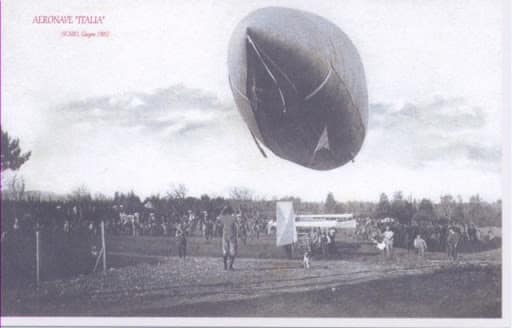
In 1905 flight of the first Italian airship: About 150,000 lire, the amount needed by the scientist Almerico da Schio to put the pieces together, brought in from various parts of Europe, with which he built the Airship Italy, the first Italian airship to rise in flight.
Nel 1905 volo del primo dirigibile italiano: Circa 150 mila lire, la cifra che occorse allo scienziato Almerico da Schio per mettere assieme i pezzi, fatti arrivare da varie parti d’Europa, con cui costruì l’Aeronave Italia, primo dirigibile italiano ad alzarsi in volo.
Text source: Wikipedia, Nasa
Sostieni anche tu Wikipedia
Google translate
 Astronomy Bulletin Of the Day