
🇬🇧 – 🇮🇹

In 1966, the launch of Luna 11 (see stamp image) was the second attempt by the USSR, crowned with success, to place an artificial satellite in lunar orbit.
Nel 1966 lancio di Luna 11 (vedi immagine francobollo) il secondo tentativo da parte dell’URSS, coronato da successo, di porre in orbita lunare un satellite artificiale.
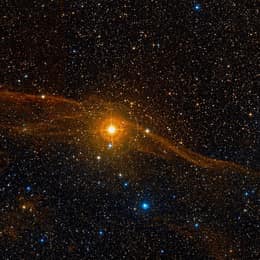

In 1953 Attilio Colacevich (1906-1953), one of the most active European astronomers, died. He obtained the spectrograms of the eclipse system with extended atmosphere 32 Cygni (see photo) and during the solar eclipse of February 25, 1952, observed in Sudan, he obtained for the first time the diurnal spectrum of the sky. In 1955, the Accademia dei Lincei awarded him the National Prize of the President of the Republic for Astronomy, Geodesy and Geophysics. See publication: https://adsabs.harvard.edu/full/1952MmSAI..23…55C
Nel 1953 muore Attilio Colacevich (1906-1953), uno dei più attivi astronomi europei. Ottenne gli spettrogrammi del sistema a eclisse con atmosfera estesa 32 Cygni (vedi foto) e durante l’eclissi solare del 25 febbraio 1952, osservata in Sudan, ottenne per la prima volta lo spettro diurno del cielo. L’accademia dei Lincei gli conferì nel 1955 alla memoria il Premio Nazionale del Presidente della Repubblica per l’Astronomia, Geodesia e Geofisica. Vedi la pubblicazione: https://adsabs.harvard.edu/full/1952MmSAI..23…55C

Giorgio Abetti, known for his studies on the Sun, died in 1982. In 1921, as director of the Astronomical Observatory of Arcetri, he had the Solar Tower built to equip the institute with an avant-garde instrument for research.
Nel 1982 muore Giorgio Abetti, noto per i suoi studi sul Sole. Nel 1921 in qualità di direttore dell’Osservatorio Astronomico di Arcetri fece costruire la Torre solare per dotare l’istituto di uno strumento di avanguardia per la ricerca.

In 1989 the Voyager 2 space probe passes Neptune, see image. Read also bulletins of Voyager: August 15th , August 20th, August 22nd,
Nel 1989 la sonda spaziale Voyager 2 oltrepassa Nettuno, vedi immagine. Interessante video del tg dell’epoca: https://youtu.be/jEQUl3AtXzA

In 2003 the Voyager 2 probe, 71 astronomical units away from the Earth, was exiting the Solar System at a speed of about 3.3 AU per year (about 15 km/s). Within 40,000 years Voyager 2 will reach another planetary system.
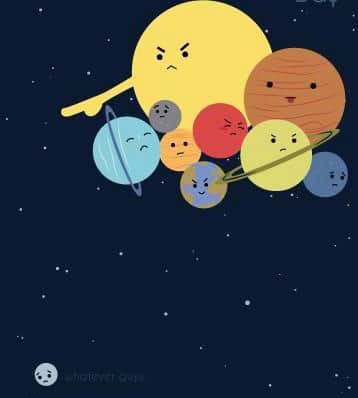
In 2006 the International Astronomical Union downgraded Pluto to a dwarf planet, what a disappointment! But there is a reasonable reason after all: Pluto does not enjoy one of the distinguishing characteristics of the planets, namely that of “Orbital Dominance” as its mass is only 0.07 times that of the other objects in its orbital zone.
Nel 2006 l’Unione Astronomica Internazionale declassa Plutone a pianeta nano, che delusione! Ma c’è un ragionevole motivo dopotutto: Plutone non gode di una delle caratteristiche distintive dei pianeti, ovvero quella della “Dominanza orbitale” in quanto la sua massa è solo 0,07 volte quella degli altri oggetti della sua zona orbitale.
To receive the Astronomy Bulletin Of the Day in your inbox, please put your email address on the contact form: https://abod.blog/contacts/
Per ricevere il bollettino per gli astronaviganti giornaliero nella tua posta elettronica, inserisci la tua mail nel form contatti: https://abod.blog/contacts/
Text, images and video source: Wikipedia, NASA, YouTube, Harvard.edu
Sostieni anche tu Wikipedia
Google translate
 Astronomy Bulletin Of the Day