🇬🇧 – 🇮🇹
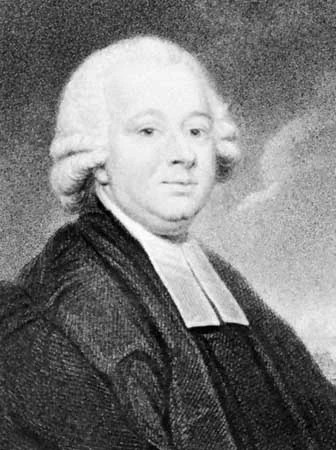
In 1732, the English astronomer Nevil Maskelyne (1732-1811) was born, known for the task he received from the Royal Society on the calculation of the distance of the Earth from the Sun, to determine the scale of the solar system and the development of a method for determining longitude using the position of the Moon, called the lunar distance method.
Nel 1732 nasce l’astronomo inglese Nevil Maskelyne (1732-1811) noto per l’incarico ricevuto dalla Royal Society sul calcolo della distanza della Terra dal Sole, per determinare la scala del sistema solare e lo sviluppo di un metodo per la determinazione della longitudine utilizzando la posizione della Luna, chiamato il metodo della distanza lunare.
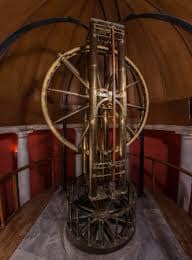
Jesse Ramsden, one of the most famous English makers of scientific instruments of the second half of the 18th century, was born in 1735. Ramsden was responsible for the invention in 1775 of one of the first machines capable of tracing graduated scales on sextants and other nautical and astronomical instruments (a machine for dividing circles was built in Florence in 1762 and we remember among its most important instruments the great astronomical circle of the Palermo Observatory, see photo).
Nel 1735 nasce Jesse Ramsden, uno dei più famosi costruttori inglesi di strumenti scientifici della seconda metà del XVIII secolo. A Ramsden si deve l’invenzione nel 1775 di una delle prime macchine capace di tracciare le scale graduate su sestanti e su altri strumenti nautici e astronomici (una macchina per dividere i cerchi fu costruita a Firenze nel 1762 e ricordiamo tra i suoi più importanti strumenti il grande cerchio astronomico dell’Osservatorio di Palermo, vedi foto).

Riccardo Giacconi was born in Genoa in 1931, co-winner of the Nobel Prize for Physics in 2002 “for his pioneering contributions to astrophysics, which led to the discovery of cosmic sources of X-rays”. Read article: https://www.nobelprize.org/prizes/physics/2002/giacconi/facts/
Nel 1931 nasce a Genova Riccardo Giacconi co-vincitore del Premio Nobel per la fisica nel 2002 “per i contributi pionieristici all’astrofisica, che hanno portato alla scoperta di sorgenti cosmiche di raggi X”. https://www.nobelprize.org/prizes/physics/2002/giacconi/facts/
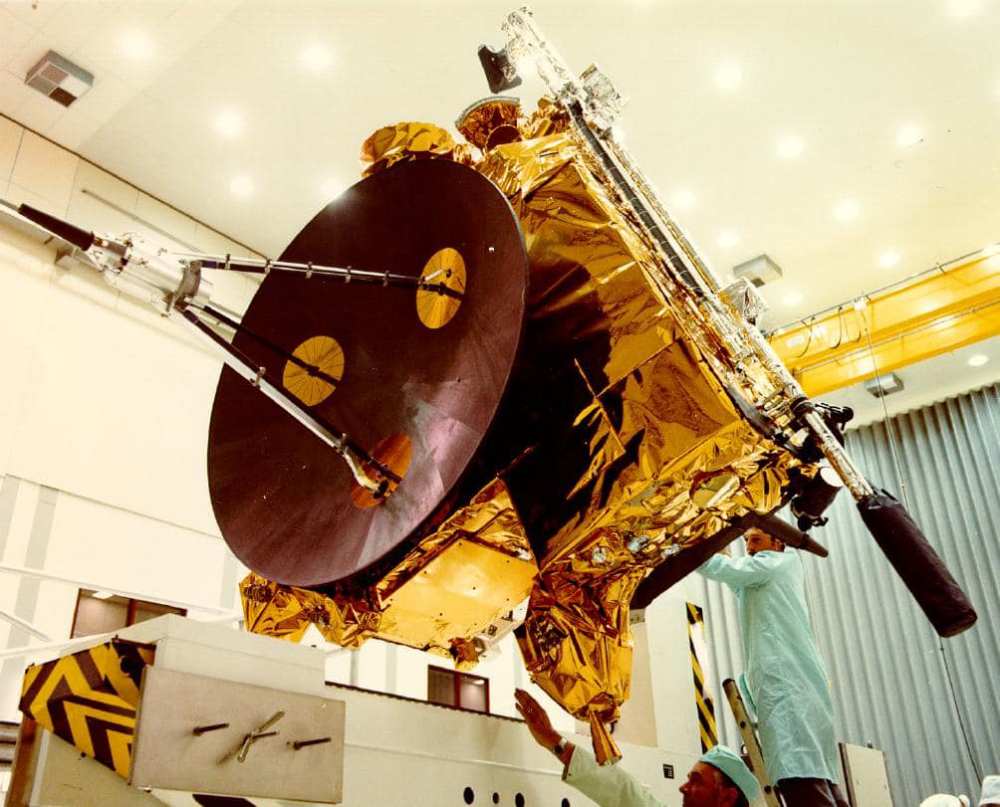
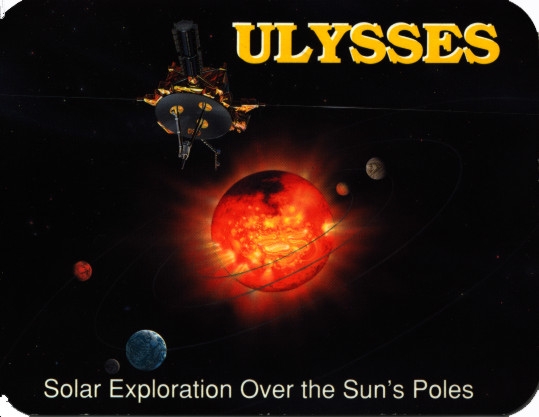
In 1990, launch of the Ulysses space probe (see photo) from the Space Shuttle Discovery (mission STS-41) towards the Sun; a mission developed by the European Space Agency and NASA to study the Sun and the heliosphere from an orbit with a high inclination to the ecliptic plane. Ulysses made it possible to observe the solar poles for the first time.
Nel 1990 lancio della sonda spaziale Ulysses (vedi foto) dallo Space Shuttle Discovery (missione STS-41) verso il Sole; una missione sviluppata dall’Agenzia Spaziale Europea e dalla NASA per lo studio del Sole e della eliosfera da un’orbita ad elevata inclinazione rispetto al piano dell’eclittica. Ulysses ha permesso di osservare per la prima volta i poli solari.
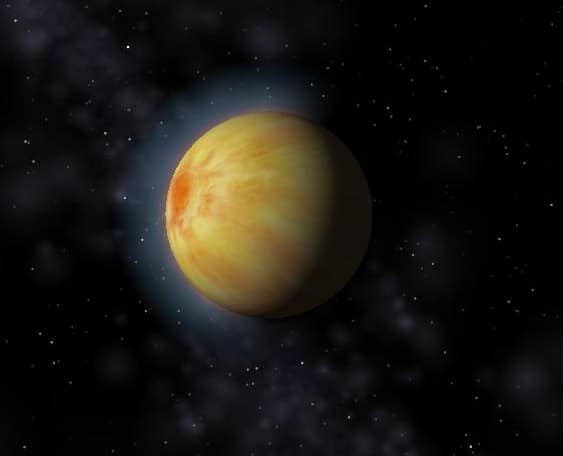

In 1995, for the first time, an extrasolar planet called 51 Pegasi b (see graphic representation), also known as Bellerophon or Bellerophon, and subsequently renamed Dimidium, was spotted around a star similar to the Sun (51 Pegasi).
Nel 1995 per la prima volta, intorno a una stella simile al Sole (51 Pegasi), viene avvistato un pianeta extrasolare denominato 51 Pegasi b (vedi rappresentazione grafica), noto anche come Bellerophon o Bellerofonte, e successivamente rinominato Dimidium.
In 2010, launch of two Chinese satellites Shijian 6-4 A and 6-4B with a CZ-4B launcher in sun-synchronous orbit (about 600 km high and an inclination of 98º), see image.
Nel 2010 lancio di due satelliti cinesi Shijian 6-4 A e 6-4B con un vettore CZ-4B in orbita eliosincrona (a circa 600 km di altezza e un’inclinazione di 98º), vedi immagine.

In 2021 the Nobel Prize for Physics was awarded to the Italian Giorgio Parisi, theoretical physicist of the Sapienza University of Rome and the National Institute of Nuclear Physics (Infn) and vice-president of the Accademia dei Lincei and was awarded for his research on complex systems. Giorgio Parisi shares the Nobel Prize for Physics in half with Syukuro Manabe and Klaus Hasselmann, researchers who were recognized for their research on climate models and global warming. Docu-film: https://youtu.be/GoYimmmFptg
Nel 2021 il Nobel per la Fisica è stato assegnato all’italiano Giorgio Parisi, fisico teorico dell’Università Sapienza di Roma e dell’Istituto Nazionale di Fisica Nucleare (Infn) e vicepresidente dell’Accademia dei Lincei ed è stato premiato per le sue ricerche sui sistemi complessi. Giorgio Parisi divide il premio Nobel per la Fisica a metà con Syukuro Manabe e Klaus Hasselmann, ricercatori che hanno avuto il riconoscimento per le loro ricerche su modelli climatici e il riscaldamento globale. Film documentario: https://youtu.be/GoYimmmFptg
To receive the Astronomy Bulletin Of the Day in your inbox, please put your email address on the contact form: https://abod.blog/contacts/
Per ricevere il bollettino per gli astronaviganti giornaliero nella tua posta elettronica, inserisci la tua mail nel form contatti: https://abod.blog/contacts/
Text, images and video source: Wikipedia, NASA, YouTube
Sostieni anche tu Wikipedia
Google translate
 Astronomy Bulletin Of the Day