
🇬🇧 – 🇮🇹

Peter Crüger, a German mathematician and astronomer, was born in 1580, known for his treatises in numerous scientific fields, contributing to the progress of trigonometry, geography and astronomy also through the development of related instrumentation. In the image we see the “Azimuthal Quadrant of Crüger”, completed by Johannes Hevelius in 1644 (the observer is Johannes Hevelius in fact, the Polish astronomer who was his student who gratefully mentioned Cruger in his treatise Machina coelestis of 1673).
Nel 1580 nasce Peter Crüger, matematico e astronomo tedesco, noto per i suoi trattati in numerosi campi scientifici contribuendo al progresso della trigonometria, geografia e astronomia anche tramite lo sviluppo della strumentazione relativa. Nell’immagine vediamo il “Quadrante azimutale di Crüger”, completato da Johannes Hevelius nel 1644 (l’osservatore é Johannes Hevelius appunto, l’astronomo polacco suo allievo il quale menzionò con gratitudine Cruger nel suo trattato Machina coelestis del 1673).
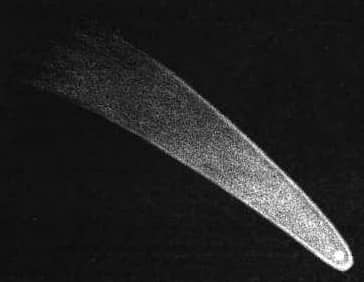
In 1811, comet C/1811 F1 known as the “Great Comet of 1811” (see artistic representation) is a comet that was visible to the naked eye for approximately 260 days, a record maintained until the appearance of Comet Hale-Bopp in 1997. In October 1811 it showed an apparent magnitude of 0, with an easily visible coma. Today the Great Comet’s closest approach was recorded
Nel 1811 la cometa C/1811 F1 conosciuta come la “Grande Cometa del 1811” (vedi rappresentazione artistica) è una cometa che fu visibile ad occhio nudo per circa 260 giorni, un record mantenuto fino alla comparsa della Cometa Hale-Bopp nel 1997. Nel mese di ottobre 1811 mostrava una magnitudine apparente pari a 0, con una chioma facilmente visibile. Oggi si registrava il massimo avvicinamento della Grande Cometa
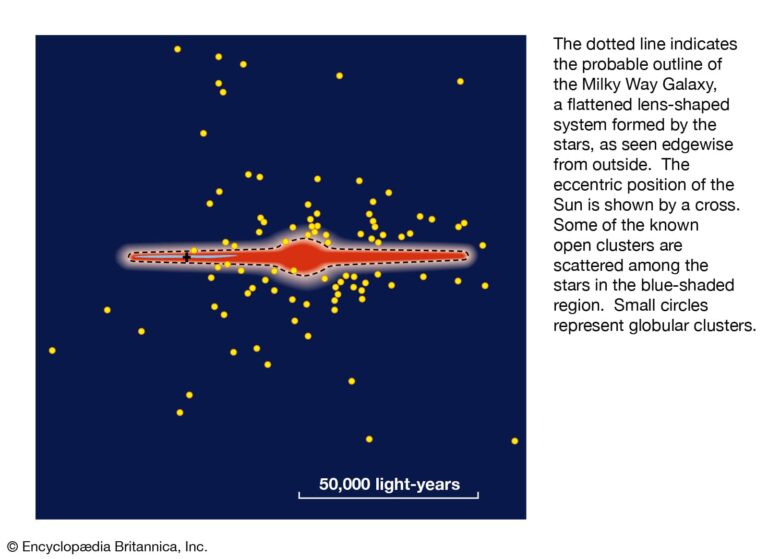
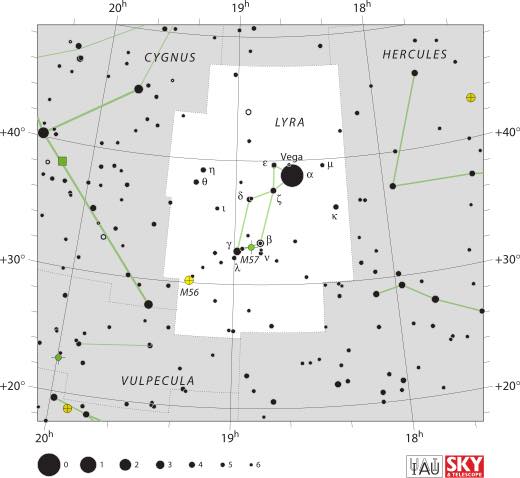
In 1972 the American astronomer Harlow Shapley died, an American astronomer, known for having used the variable stars RR Lyrae (see celestial map) to estimate the dimensions of the Milky Way, and with the parallax method he concluded that the position of the Sun within of the Galaxy was not near the nucleus, which was instead located in the direction of the constellation Sagittarius.
Nel 1972 muore l’astronomo americano Harlow Shapley un astronomo statunitense, noto per aver usato le stelle variabili RR Lyrae (vedi mappa celeste) per stimare le dimensioni della Via Lattea, e con il metodo della parallasse concluse che la posizione del Sole all’interno della Galassia non era nelle vicinanze del nucleo, che si trovava invece in direzione della costellazione del Sagittario.
To receive the Astronomy Bulletin Of the Day in your inbox, please put your email address on the contact form: https://abod.blog/contacts/
Per ricevere il bollettino per gli astronaviganti giornaliero nella tua posta elettronica, inserisci la tua mail nel form contatti: https://abod.blog/contacts/
Text, images and video source: Wikipedia, NASA, YouTube
Sostieni anche tu Wikipedia
Google translate
 Astronomy Bulletin Of the Day