
🇬🇧 – 🇮🇹
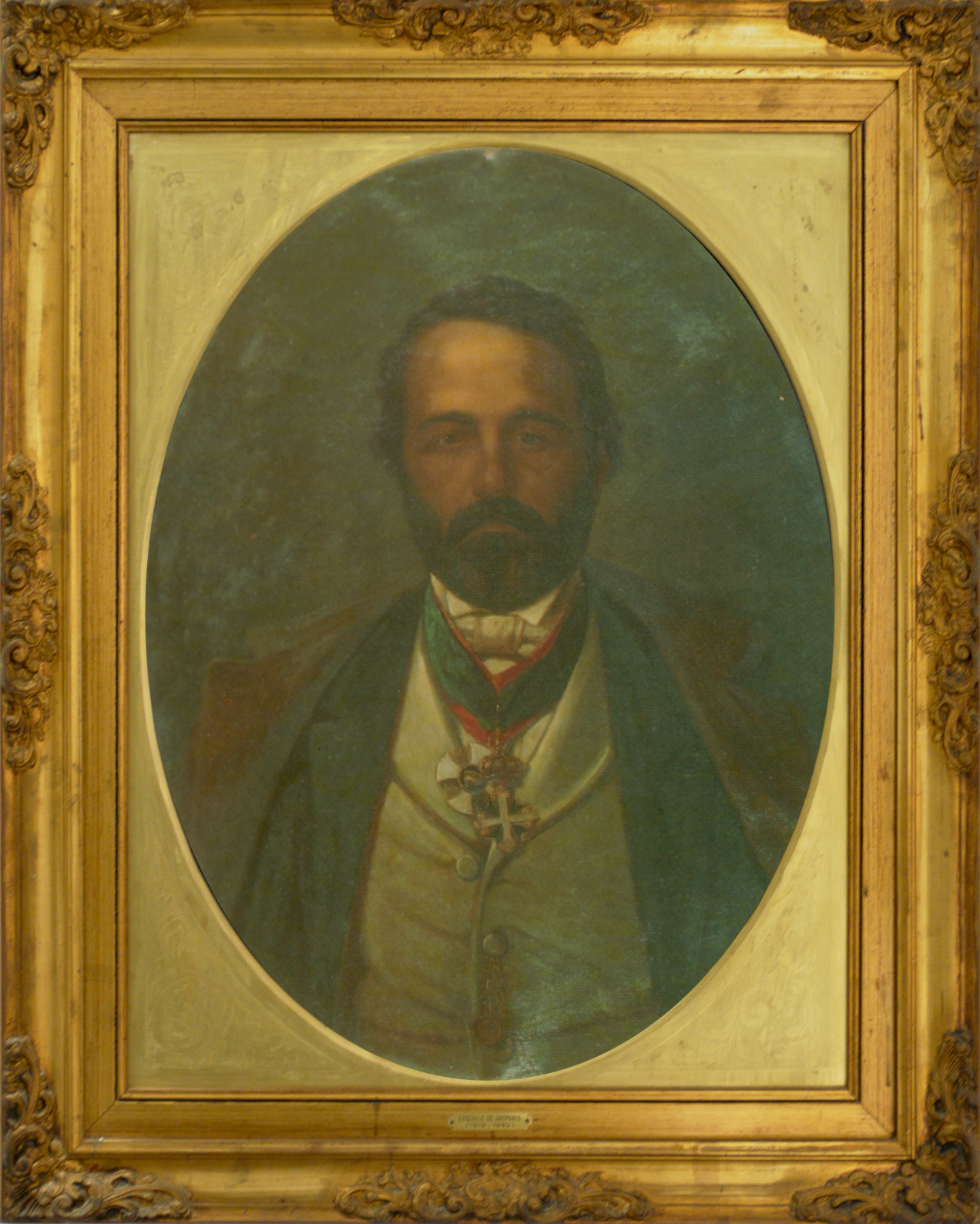
The Italian astronomer Annibale De Gasparis was born in 1819 and was director of the Neapolitan observatory from 1864 to 1889. He was responsible for the discovery of 9 small planets (Hygieia, Partenope, Egeria, Eunomia, Psyche, Massalia, Temi, Ausonia and Beatrice). In around 150 memoirs he dealt with questions of mathematical analysis, celestial mechanics (determination of the orbits of planets, comets, multiple stars, Kepler’s problem and calculation of perturbations), meteorology and magnetism.
Nel 1819 nasce l’astronomo italiano Annibale De Gasparis, direttore dell’osservatorio partenopeo dal 1864 al 1889. A lui si deve la scoperta di 9 pianetini (Igea, Partenope, Egeria, Eunomia, Psiche, Massalia, Temi, Ausonia e Beatrice). In circa 150 memorie trattò questioni di analisi matematica, di meccanica celeste (determinazione delle orbite dei pianeti, comete, stelle multiple, problema di Kepler e calcolo delle perturbazioni), di meteorologia e di magnetismo.
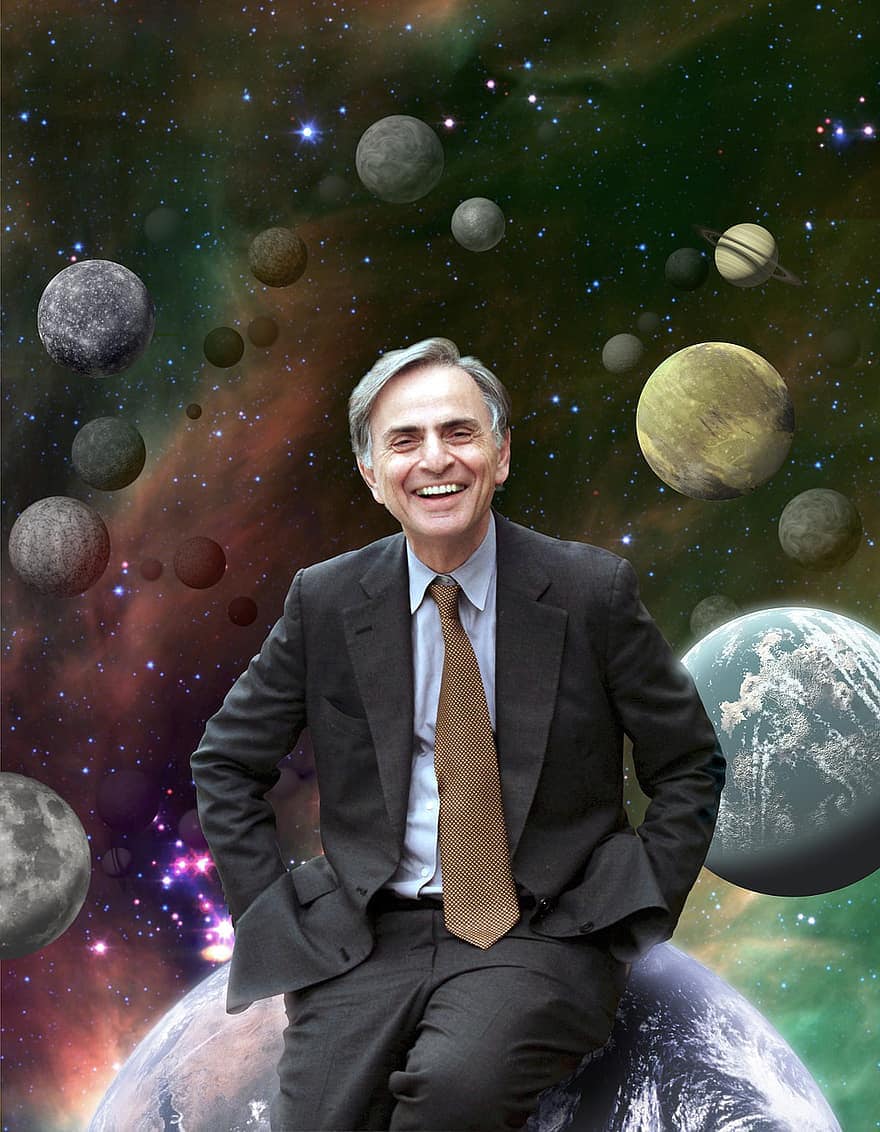
Carl Sagan (see photo) was born in 1934, one of the most famous astronomers, astrophysicists, astrobiologists and astrochemists of the twentieth century. He is also remembered as a great science communicator, as a science fiction writer (read Contact which inspired the film!) and as an epistemologist as one of the greatest exponents of scientific scepticism.
Nel 1934 nasce Carl Sagan (vedi foto), uno dei più famosi astronomi, astrofisici, astrobiologi ed astrochimici del Novecento. Lo si ricorda inoltre come grande divulgatore scientifico, come scrittore di fantascienza (leggete Contact a cui si è ispirato il film!) e come epistemologo in qualità di uno dei maggiori esponenti dello scetticismo scientifico.
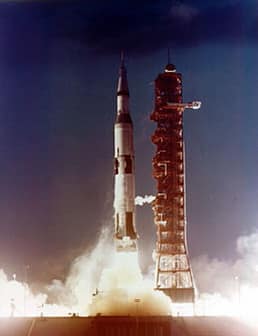
In 1967, first launch of a Saturn V rocket (see photo) with tests on thermal protection for Apollo 4.
Nel 1967 primo lancio di un razzo Saturn V (vedi foto) con test sulla protezione termica per l’Apollo 4.
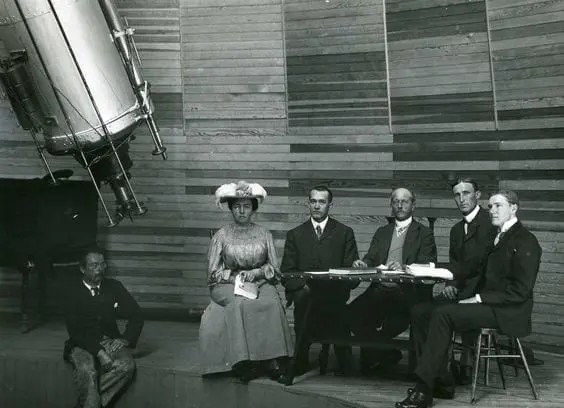
In 1969, the American astronomer Vesto M. Slipher died, known for being the first to notice the shift in the spectral lines of galaxies, therefore he was the first and real discoverer of the galactic red shift (Redshift). Through spectroscopy he investigated the dynamics of the rotation periods of the planets, and to determine the composition of planetary atmospheres. Clyde Tombaugh was hired by him and oversaw the work that led to the discovery of the planet Pluto, later reclassified as a dwarf planet.
Nel 1969 muore l’astronomo americano Vesto M. Slipher noto per esser stato il primo a notare lo spostamento delle linee spettrali delle galassie, dunque fu il primo e reale scopritore dello spostamento verso il rosso galattico (Redshift). Attraverso la spettroscopia indagó le dinamiche dei periodi di rotazione dei pianeti, e per la determinazione della composizione delle atmosfere planetarie. Clyde Tombaugh venne assunto da lui che supervisionò il lavoro che condusse alla scoperta del pianeta Plutone, poi riclassificato quale pianeta nano.

In 2003 total lunar eclipse (see photo) beginning totality at 2.07 am, ending at 2.29 am, visible in the Americas, Europe, Africa, and central Asia
Nel 2003 Eclissi totale di Luna (vedi foto) inizio totalità ore 2,07, fine ore 2,29, visibile nelle Americhe, in Europa, in Africa, e in Asia centrale
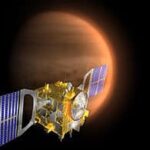
In 2005 from the Baikonur Cosmodrome (Kazakhstan), the European Space Agency launched the Venus Express space probe (see image) to explore Venus.
Nel 2005 dal Cosmodromo di Bajkonur (Kazakistan), l’Agenzia Spaziale Europea lancia la sonda spaziale Venus Express (vedi immagine) per l’esplorazione di Venere.

In 2008 Giuseppe Cocconi, an Italian physicist active in cosmic ray research, died. Together with Philip Morrison, he wrote the article Searching for Interstellar Communications, published in the journal Nature, of fundamental importance for the foundation of the SETI project (see yesterday bulletin!); In it, the two scientists proposed that the best frequency to search for extraterrestrial signals was that of the 21-centimeter line emitted by neutral interstellar hydrogen. The 1974 SETI message: the solar system, the DNA molecule, a human figure and the telescope dish in the image we see . At CERN in Geneva he contributed to the creation of the experimental Proton Synchrotron (PS) project, which led, only starting from November 1959, to the full functional operation of CERN’s first synchroton, thanks to Cocconi’s work.
Nel 2008 muore Giuseppe Cocconi, un fisico italiano, attivo nella ricerca sui raggi cosmici. Assieme a Philip Morrison, scrisse l’articolo Searching for Interstellar Communications, pubblicato sulla rivista Nature, di fondamentale importanza per la fondazione del progetto SETI; in esso, i due scienziati proposero che la frequenza migliore per cercare segnali extraterrestri fosse quella della riga di 21 centimetri emessa dall’idrogeno neutro interstellare. Il messaggio SETI del 1974: il sistema solare, la molecola del DNA, una figura umana e la parabola del telescopio nell’immagine che vediamo. Al CERN di Ginevra contribuì invece alla realizzazione del progetto sperimentale Proton Synchrotron (PS), che porterà, solo a partire dal novembre del 1959, alla piena operatività funzionale del primo sincrotone del CERN, proprio grazie al lavoro di Cocconi.
To receive the Astronomy Bulletin Of the Day in your inbox, please put your email address on the contact form: https://abod.blog/contacts/
Per ricevere il bollettino per gli astronaviganti giornaliero nella tua posta elettronica, inserisci la tua mail nel form contatti: https://abod.blog/contacts/
Text, images and video source: Wikipedia, NASA
Sostieni anche tu Wikipedia
Google translate
 Astronomy Bulletin Of the Day