🇬🇧 – 🇮🇹
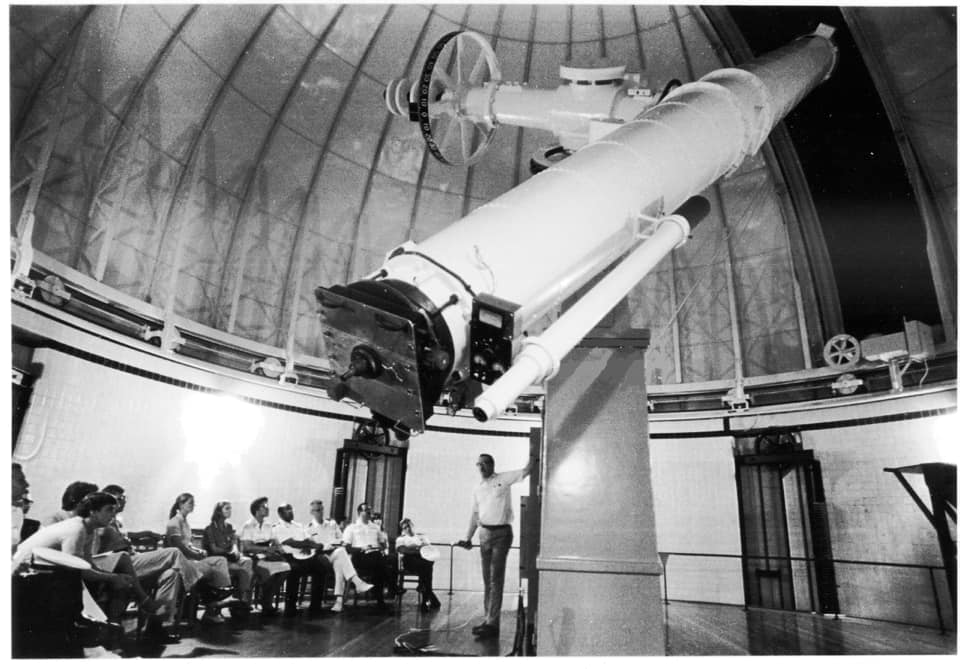
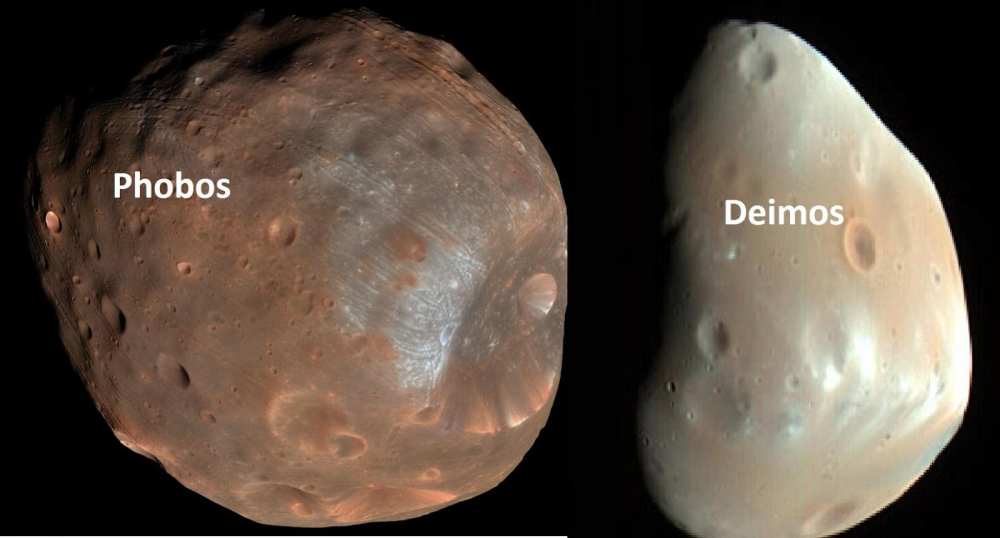
In 1907 the American astronomer Asaph Hall died, discoverer of the two satellites of Mars, Phobos and Deimos (see photo). He determined the orbits of satellites of other planets and of double stars, the rotation of Saturn and the mass of Mars. In 1875 Hall became responsible for a 66 cm telescope, the largest refracting telescope in the world at that time (see photo). He noticed a bright spot on Saturn and used it to measure the planet’s rotation period. In 1884 he demonstrated that Hyperion, one of Saturn’s moons, exhibited a retrograde orbit of about 20° per year. Hall also worked on stellar parallax and the position of stars in the Pleiades cluster.
Nel 1907 muore l’astronomo americano Asaph Hall, scopritore dei due satelliti di Marte, Phobos e Deimos (vedi foto). Determinò le orbite di satelliti di altri pianeti e di stelle doppie, la rotazione di Saturno e la massa di Marte. Nel 1875 Hall divenne responsabile di un telescopio da 66 cm, il più grande telescopio rifrattore esistente al mondo a quel tempo (vedi foto). Notò una macchia chiara su Saturno e la utilizzò per misurare il periodo di rotazione del pianeta. Nel 1884 dimostrò che Iperione, una delle lune di Saturno, mostrava un’orbita retrograda di circa 20° all’anno. Hall lavorò anche sulla parallasse stellare e sulla posizione delle stelle nell’ammasso delle Pleiadi.

In 1944, the English astronomer and astrophysicist Arthur S. Eddington died at the age of 62. He was an assistant at the Greenwich Observatory from 1906 to 1913 and professor of astronomy at Cambridge. He discovered the limit that bears his name (Eddington limit): it corresponds to the maximum brightness that a star with a given mass can have, without it starting to lose the upper layers of its atmosphere. His studies on the theory of relativity and his ability to make science known to the public made him popular as well as this nice phrase of his: «If an army of monkeys typed long enough on the keys of typewriters, sooner or later they would produce all the books in the British Museum”.
Nel 1944 muore all’età di 62 anni l’astronomo e astrofisico inglese Arthur S. Eddington. Fu assistente all’Osservatorio di Greenwich dal 1906 al 1913 e professore di astronomia a Cambridge. Scoprì il limite che porta il suo nome (limite di Eddington): corrisponde alla luminosità massima che può avere una stella con una data massa, senza che essa inizi a perdere gli strati più alti della propria atmosfera. I suoi studi sulla teoria della relatività e la sua abilità nel far conoscere le scienze al pubblico lo resero popolare così come questa sua simpatica frase: «Se un esercito di scimmie battesse per un tempo sufficiente sui tasti di macchine da scrivere, produrrebbe prima o poi tutti i libri del British Museum».
Altro interessante articolo: https://www.media.inaf.it/2019/05/29/eclisse-di-einstein/
Text source: Wikipedia
Sostieni anche tu Wikipedia
Google translate
 Astronomy Bulletin Of the Day