
🇬🇧 – 🇮🇹
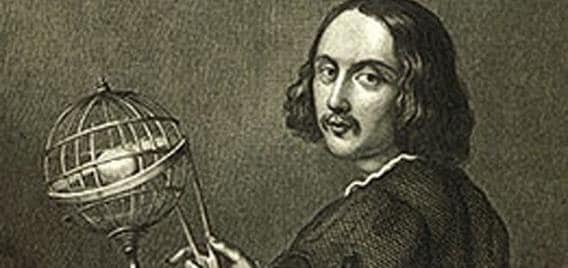
In 1574, the Austrian astronomer and mathematician Georg Joachim Rheticus (see image) died. He met Nicolaus Copernicus in person, with whom he stayed for two years to study the heliocentric theory in depth and it was probably he who induced Copernicus to finally complete and publish his studies.
Nel 1574 muore l’astronomo e matematico austriaco Georg Joachim Rheticus (vedi immagine) che conobbe di persona Niccolò Copernico, con cui restò due anni per studiare approfonditamente la teoria eliocentrica e probabilmente fu lui ad indurre Copernico a completare e a pubblicare finalmente i suoi studi.

In 1639 transit of Venus over the Sun, observed by Horrocks and Crabtree (see painting): Horrocks corrected the calculations of Kepler, who had predicted the transits of 1631 and 1761 but not that of 1639, and understood that those transits would have occurred in pairs in 8 year span. For this reason he correctly calculated the transit of 1639.
Nel 1639 transito di Venere sul Sole, osservato da Horrocks e Crabtree (vedi dipinto): Horrocks corresse i calcoli di Keplero, che aveva previsto i transiti del 1631 e 1761 ma non quello del 1639, e capì che quei transiti sarebbero avvenuti in coppie nell’arco di 8 anni. Per questo motivo calcolò correttamente il transito del 1639.
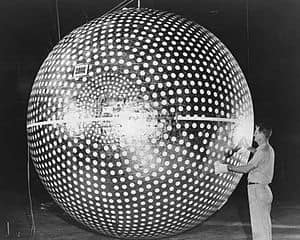
In 1960, the American space base of Wallops Island was inaugurated with the launch of the Scout carrier to bring NASA’s Explorer S-56 satellite into orbit (see photo), composed of a sphere less than 4 meters in diameter dedicated to studying aeronomy and in particular to determine the atmospheric density. Unfortunately, the failure to ignite the second stage of the carrier rocket led to the failure of the mission.
Nel 1960 inaugurazione della base spaziale americana di Wallops Island col lancio del vettore Scout per portare in orbita il satellite Explorer S-56 (vedi foto) della NASA composto da una sfera di meno di 4 metri di diametro dedicata a studiare aeronomia e in particolare a determinare la densità atmosferica. Purtroppo la mancata accensione del secondo stadio del razzo vettore portò al fallimento della missione.
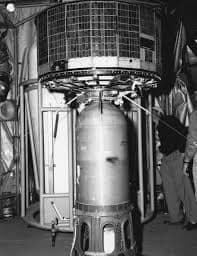
In 1961, the NASA satellite TIROS-2 (Television and Infra Red Observation Satellite, see photo) ended its operation and transmitted 36 thousand images to the ground for weather forecasts.
Nel 1961 termine dell’’operatività del satellite della NASA TIROS-2 (Television and Infra Red Observation Satellite, vedi foto) che trasmise a terra ben 36 mila immagini per le previsioni meteo.
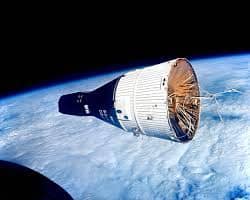
In 1965 launch of the Gemini 7 probe (see photo), on board Frank Borman and James A. Lovell.
Nel 1965 lancio della sonda Gemini 7 (vedi foto), a bordo Frank Borman e James A. Lovell.
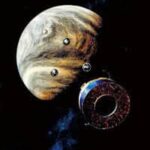
In 1978 the Pioneer Venus probe entered orbit around Venus (see image).
Nel 1978 la sonda Pioneer Venus entra in orbita attorno a Venere (vedi immagine).
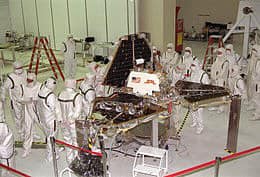

In 1996, the Mars Pathfinder probe was launched with Sojourner on board (see photo), one of the first rovers.
Nel 1996 lancio della sonda Mars Pathfinder con a bordo Sojourner (vedi foto) uno dei primi rover.
In 2009 the astronomer Zdenek Ceplecha known for his studies on comets, meteoroids, bolides and meteors died; for example in 1959 he managed to calculate the orbit, the point of fall and to have the Pribram meteorite recovered.
Nel 2009 muore l’astronomo Zdenek Ceplecha noto per i suoi studi sulle comete, meteoroidi, bolidi e meteore; ad esempio nel 1959 riuscì a calcolare l’orbita, il punto di caduta e a far recuperare la meteorite di Pribram.
Text source: Wikipedia, YouTube
Sostieni anche tu Wikipedia
Google translate
 Astronomy Bulletin Of the Day