
🇬🇧 – 🇮🇹
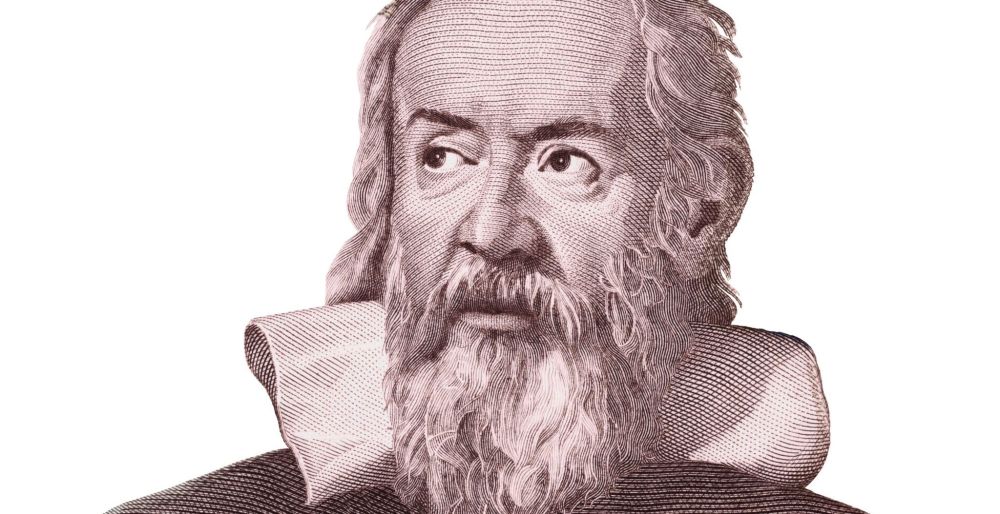
Galileo Galilei, the undisputed father of modern science, was born in 1564, a few lines of space in this blog do not do him justice! But let’s look briefly at his life path which, as well as being a supporter of the heliocentric system and the Copernican theory, will also be able to interpret nature with mathematical language and it will be thanks to the scientific method that he will be able to give answers to his questions through the experiments that they will lead him to formulate hypotheses and theories which, if confirmed, will become scientific laws! Thanks to him and the invention of his telescope, Jupiter’s satellites were discovered, which Galileo called “Medici stars” in honor of Cosimo II de’ Medici. This beautiful quote of his represents him perfectly: «It’s not enough to look, you need to look with eyes that want to see, that believe in what they see”. Next time we observe the Moon, let’s teleport ourselves for a moment to more than 400 years ago and gaze in wonder at the lunar craters through our telescope with the same wonder experienced by Galileo Galilei!
Nel 1564 nasce Galileo Galilei, il padre indiscusso della scienza moderna, poche righe di spazio in questo blog non gli rendono giustizia! Ma vediamo brevemente il suo percorso di vita che, oltre che sostenitore del sistema eliocentrico e della teoria copernicana, sarà anche in grado di interpretare la natura con il linguaggio matematico e sarà grazie al metodo scientifico che potrà dare risposte alle sue domande attraverso gli esperimenti che lo condurranno a formulare ipotesi e teorie che, se confermate, destinate a diventare leggi scientifiche! Grazie a lui e all’invenzione del suo cannocchiale, vengono scoperti i satelliti di Giove, che Galileo denominerà “stelle medicee” in onore di Cosimo II de’ Medici. Questa sua bellissima citazione lo rappresenta perfettamente: «Non basta guardare, occorre guardare con occhi che vogliono vedere, che credono in quello che vedono”. La prossima volta che osserveremo la Luna, teletrasportiamoci per un momento a più di 400 anni fa e guardiamo con meraviglia i crateri lunari attraverso il nostro telescopio con la stessa meraviglia provata da Galileo Galilei!

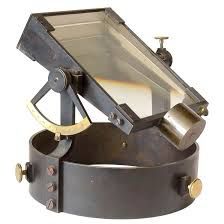
In 1869 the astronomer Lorenzo Respighi had a prism with a refracting angle of only 12 degrees applied to the equatorial of the Capitoline Observatory, of which he was director. He introduced the use of the objective prism into stellar physics after having found the defect of the apparatus used by Fraunhofer (too large refracting angle) and had MERZ build the prism with a refracting angle of only 12 degrees obtaining such clarity with which the stars could be seen spectral lines. Subsequently, Father Secchi adopted the same method of observations and the instrument spread rapidly, becoming one of the main aids in astrophysics.
Nel 1869 l’astronomo Lorenzo Respighi fece applicare all’equatoriale dell’Osservatorio del Campidoglio, di cui era direttore, un prisma ad angolo rifrangente di soli 12 gradi. Introdusse nella fisica stellare l’uso del prisma obiettivo dopo aver trovato il difetto dell’apparecchio usato da Fraunhofer (angolo rifrangente troppo grande) e fece costruire dal MERZ il prisma ad angolo rifrangente di soli 12 gradi ottenendo una tale chiarezza con cui si vedevano le righe spettrali. Successivamente il padre Secchi adottò lo stesso metodo di osservazioni e lo strumento si diffuse rapidamente divenendo uno dei principali sussidi dell’astrofisica.

In 1883 at 2.40pm a meteorite weighing over two quintals fell near Brescia
Nel 1883 alle ore 14:40 cade un meteorite di oltre due quintali vicino Brescia
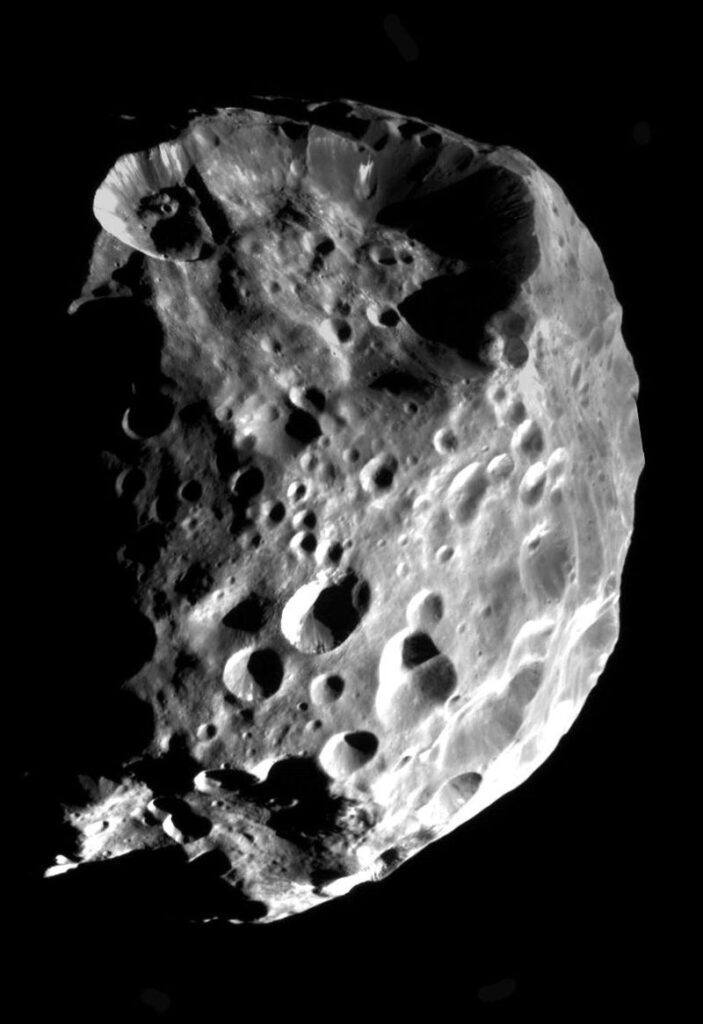
In 1858 the astronomer William Pickering was born, discoverer of Phoebe, the ninth moon of Saturn.
Nel 1858 nasce l’astronomo William Pickering scopritore di Phoebe la nona luna di Saturno.
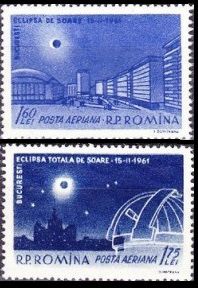
In 1961 the English BBC successfully attempted to present a total eclipse on television including various locations in France, Italy and the former Yugoslavia.
Nel 1961 la BBC inglese tenta con successo di presentare un’eclisse totale in tv tra cui varie località in Francia, Italia e dall’ ex Jugoslavia.
Richard Feynman, Nobel Prize winner in Physics for QED (Quantum Electrodynamics), died in 1988. his recognized talent for physics and mathematics earned him a place within the Manhattan Project, with which the United States government aimed to develop the first nuclear bomb.
Nel 1988 muore Richard Feynman, Premio Nobel della Fisica per la QED (Elettrodinamica quantistica). il suo riconosciuto talento per la fisica e la matematica gli valse un posto all’interno del Progetto Manhattan, con il quale il governo degli Stati Uniti si proponeva di sviluppare la prima bomba nucleare.
In 2013 a meteorite exploded in the Urals region (Russia), causing over 1000 injuries.
Nel 2013 un meteorite esplode sulla regione degli Urali (Russia) causando oltre 1000 feriti.
Text source: Wikipedia, Nasa
Sostieni anche tu Wikipedia
Google translate
 Astronomy Bulletin Of the Day