🇬🇧 – 🇮🇹
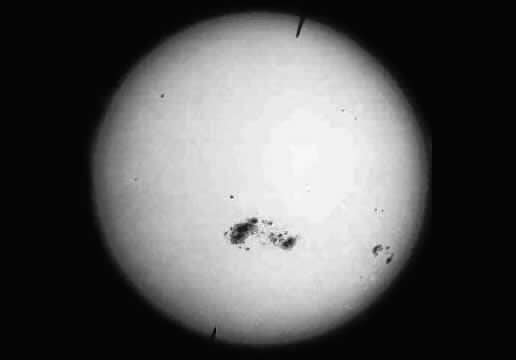
In 1947 the largest group of sunspots on the solar disk was detected: the largest sunspot AR 14886 measured 142984 km, larger than the diameter of Jupiter!
Nel 1947 viene rilevato il più grande gruppo di macchie solari sul disco solare: la macchia solare più grande AR 14886 misurava ben 142984 km, più del diametro di Giove!
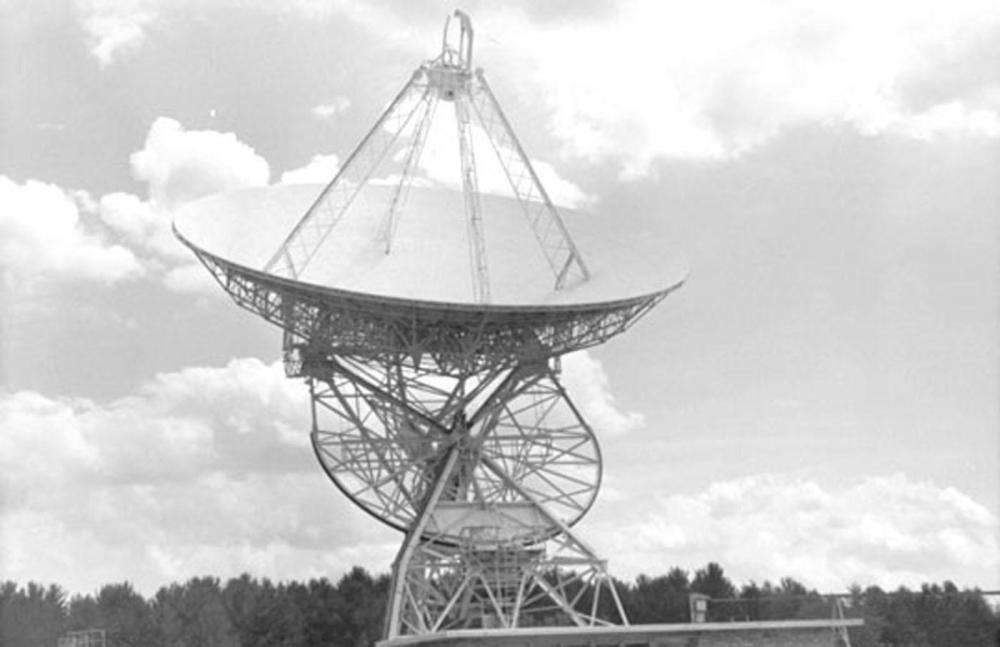
The first SETI project was launched in 1960. Astronomer Frank Drake’s Ozma Project: a project aimed at searching for artificial radio signals coming from extrasolar planets. It was named after Princess Ozma, a character in the novel The Wonderful Wizard of Oz. The experiment was conducted via a 26-meter diameter radio telescope located in Green Bank in West Virginia. The stars Tau Ceti and Epsilon Eridani were examined, both similar to the Sun and located (on an interstellar scale) in its vicinity. After four months of observations, no signals clearly interpretable as artificial were detected, and the research was suspended. A second experiment, called Ozma II, was conducted from 1973 to 1976, via the same radio telescope, by astronomers Benjamin Zuckerman and Patrick Palmer, monitoring 650 stars in the vicinity of the Sun, but it also produced no results.
Nel 1960 parte il primo progetto SETI Progetto Ozma dell’astronomo Frank Drake: progetto volto alla ricerca di segnali radio artificiali provenienti da pianeti extrasolari. Prese il nome dalla principessa Ozma, personaggio del romanzo Il meraviglioso mago di Oz. L’esperimento fu condotto tramite un radiotelescopio di 26 metri di diametro posto a Green Bank in Virginia Occidentale. Furono esaminate le stelle Tau Ceti ed Epsilon Eridani, entrambe simili al Sole e poste (su scala interstellare) nelle sue vicinanze. Dopo quattro mesi di osservazioni, non vennero captati segnali chiaramente interpretabili come artificiali, e le ricerche furono sospese. Un secondo esperimento, chiamato Ozma II, fu condotto dal 1973 al 1976, tramite lo stesso radiotelescopio, dagli astronomi Benjamin Zuckerman e Patrick Palmer, monitorando 650 stelle nelle vicinanze del Sole, ma anch’esso non produsse risultati.
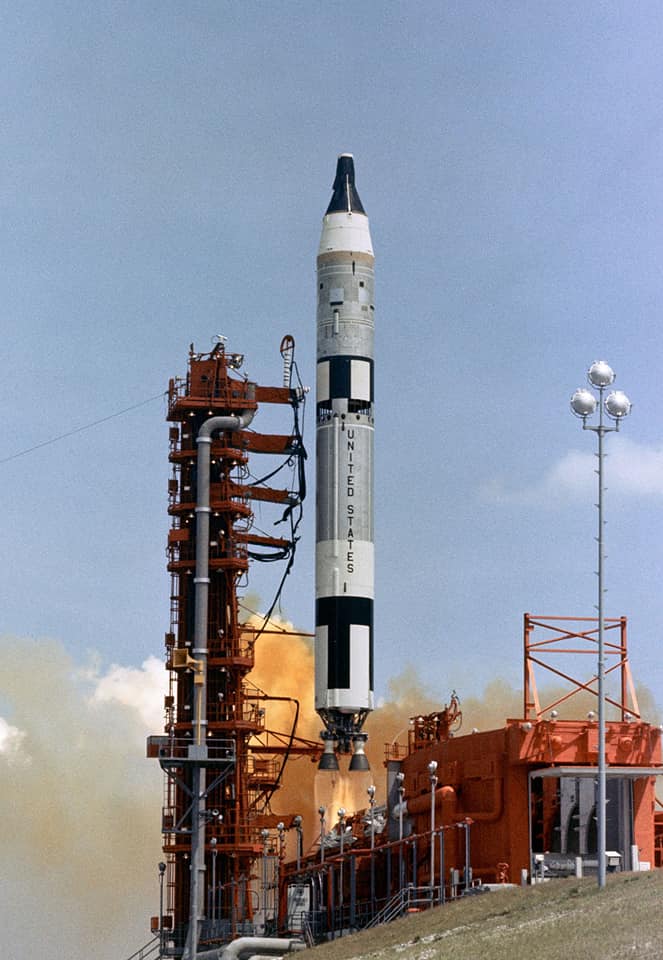
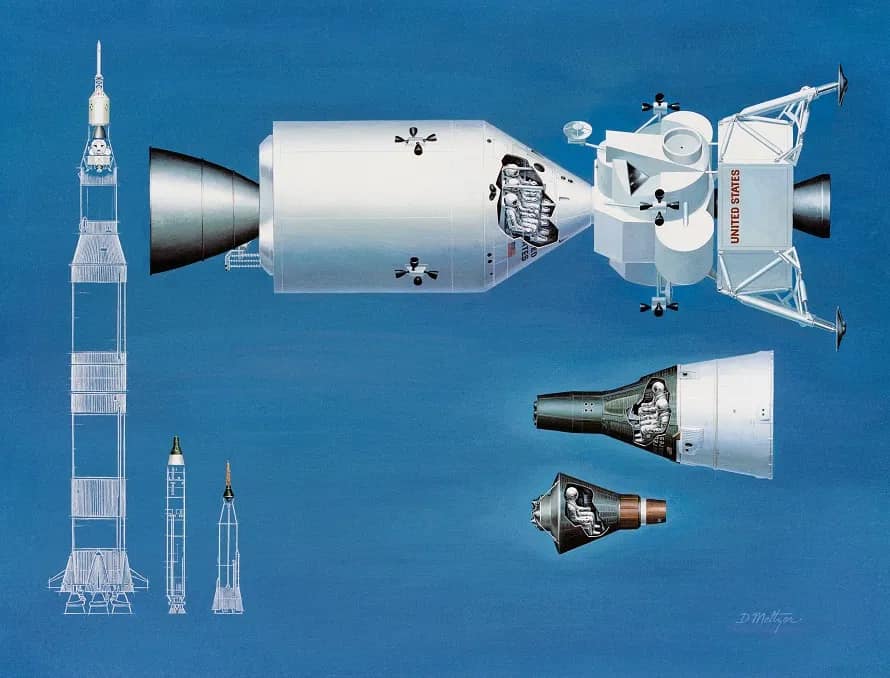
In 1964, NASA launched Gemini 1 with its Titan-type carrier rocket. It was a very successful unmanned mission as it demonstrated suitability for space flight and fully functional installed systems.
Nel 1964 la NASA lancia la Gemini 1 con il suo razzo vettore del tipo Titan. Fu una missione senza equipaggio di grande successo in quanto dimostró l’idoneità per il volo nello spazio e sistemi installati perfettamente funzionanti.

The launch of the private Axiom 1 mission takes place in 2022 with a Falcon 9 Block 5 carrier with on board Michael Lòpez-Alegrìa, Etyan Stibbe, Larry Connor (entrepreneur in the field of technology and real estate), Mark Pathy (Canadian philanthropist) from Complesso launch pad 39A at the Kennedy Space Center, a launch base owned by NASA leased to SpaceX for the Falcon 9 launches. The vehicle used was the Crew Dragon Endeavor which had previously flown two long-duration missions, the SpaceX Crew Dragon Demo 2 and Crew-2 on the International Space Station (ISS) in 2020 and 2021 respectively. Docking with the Harmony module then took place (see image) and the crew spent fifteen days on board the International Space Station. For the entire duration of the mission the crew slept on board the spacecraft as the six accommodations of the ISS were already occupied by the members of Expedition 67. At the end of the stay on the ISS, the spacecraft automatically detached from the Space Station International and returned to Earth on April 25th via a landing in the Atlantic Ocean, where the SpaceX support ship (GO Searcher) was waiting for her and recovered her, and disembarked the crew safely, to then lead it to the Kennedy Space Center.
Nel 2022 avviene il lancio della missione privata Axiom 1 con un vettore Falcon 9 Block 5 con a bordo Michael Lòpez-Alegrìa, Etyan Stibbe, Larry Connor (imprenditore nel campo della tecnologia e dell’immobiliare), Mark Pathy (filantropo canadese) da Complesso di lancio 39A del Kennedy Space Center, una base di lancio di proprietà della NASA affittata a SpaceX per i lanci del Falcon 9. Il veicolo utilizzato è stato la Crew Dragon Endeavour che aveva precedentemente volato per due missioni di lunga durata, SpaceX Crew Dragon Demo 2 e Crew-2 sulla Stazione spaziale internazionale (ISS) rispettivamente nel 2020 e 2021. Successivamente è avvenuto l’attracco al modulo Harmony (vedi immagine) e l’equipaggio ha trascorso quindici giorni a bordo della Stazione Spaziale Internazionale. Per tutta la durata della missione l’equipaggio ha dormito a bordo della navicella in quanto i sei alloggi della ISS erano già occupati dai membri dell’Expedition 67. Al termine del soggiorno sulla ISS, la navicella si è sganciata in modo automatico dalla Stazione Spaziale Internazionale e ha fatto rientro sulla Terra il 25 aprile tramite un ammaraggio nell’Oceano Atlantico, dove ad attenderla si trovava la nave di supporto della SpaceX (GO Searcher) che la ha recuperata, e ha fatto sbarcare l’equipaggio in modo sicuro, per poi condurlo al Kennedy Space Center.
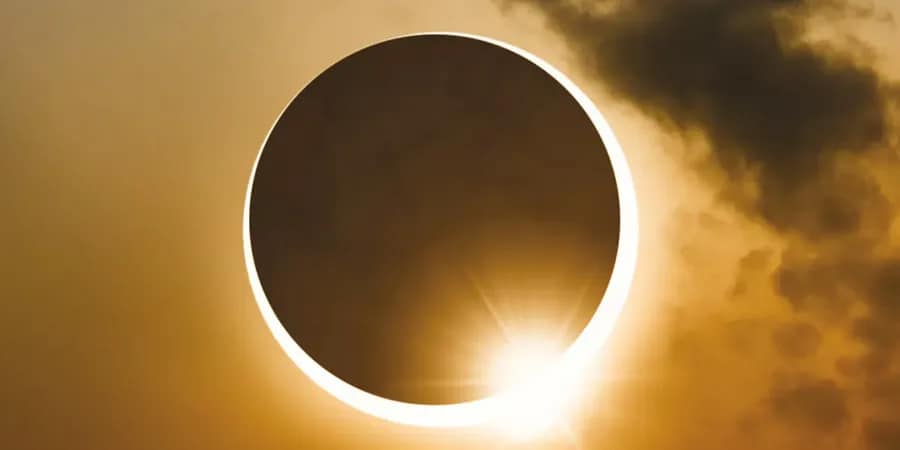
In 2024, the total solar eclipse cross North America, passing over Mexico, the United States and Canada.
Nel 2024 l’eclissi solare totale attraversa il Nord America, passando sopra Messico, Stati Uniti e Canada.

In 2024, Peter Higgs leaves us, a famous scientist who, together with two other Francois Englert and Robert Brout, hypothesized that all the particles that interacted with this field had more or less mass, depending on their interaction. The particles that were born without mass such as the photon, carrier of light, which remained massless having never interacted with the field, would have acquired it from it. So Higgs hypothesized that there was also a transporter, a boson. There were many hopes of finding it, but physicists were looking for it and had no results. The “damned particle” in English “God damned particle” could not be found because it was necessary to increase energy and therefore design a larger accelerator, the LHC precisely. With SPS transformed into a collider, rather important energies had been reached, which had given surprising results, Rubbia and Van der Meer received the Nobel for the discovery of two very important bosons W+ and – and Zo. These were at high energies and had a very large mass, but they had the same behavior as the photon, which is massless. The discovery of this “heavy light field” (it was so called by physicists due to its characteristics similar to the electromagnetic force), was a surprise and at the same time an incredible discovery. The weak force of radioactive decay, of which the two bosons were transporters, behaved like the electromagnetic force. So we talked about the weak electro force. The importance was decisive for understanding what happens in our sun and stars, i.e. fusion through beta decay. Nuclear engineer Van der Meer was rewarded together with Rubbia for having found the system to cool antiprotons (stochastic cooling). Without it we would not have reached this goal. This discovery also opened the way to the LHC project, which certainly could have achieved, at higher energies, finding the “God damned particle” and since a book was written, to sell it better, why not call it the “God particle” and remove “damned”.. And so it was the “God particle”. In that spring of 2012 all the physicists and directors of the past and present, general and engineering directors and Peter Higgs himself were present in the control room and looked at the monitor connected to the two ATLAS and CMS detectors in anxious anticipation. Finally, the photograph of the famous decay channel appeared on the screen in both detectors, which demonstrated that the famous very short-lived boson had decayed into those particles, which were precisely detected. It was effectively demonstrated that the hypothesis of the existence of a transporter of this field was tested. The Higgs boson gave life to the matter we know today, without mass we wouldn’t exist and this wonderful universe of ours wouldn’t exist either. How complex and extraordinary our existence is! A great discovery for the whole world. (text by Wilma Naia)
Nel 2024 ci lascia Peter Higgs, famoso scienziato che assieme ad altri due Francois Englert, Robert Brout ipotizzarono che tutte le particelle, che avessero interagito con questo campo, avessero avuto più o meno massa, a seconda della loro interazione. Le particelle che erano nate senza massa come il fotone, trasportatore della luce, che restò privo non avendo mai interagito col campo, la avrebbero acquisita da esso. Quindi Higgs ipotizzò che ci fosse anche un trasportatore, un bosone. C’erano molte speranze di trovarlo, ma i fisici lo cercavano e non avevano avuto risultati. La “dannata particella” in inglese “ God damned particle” non si trovava perché bisognava salire di energia e quindi progettare un acceleratore più grande, LHC appunto. Con SPS trasformato in collisore, si erano raggiunte energie piuttosto importanti, che avevano dato risultati sorprendenti, Rubbia e Van der Meer ricevettero il Nobel per la scoperta di due bosoni importantissimi W+ e – e Zo. Questi erano ad energie elevate e di massa molto importante, ma avevano lo stesso comportamento del fotone, che e’ privo di massa. La scoperta di questo “campo di luce pesante” (venne così chiamato dai fisici per le caratteristiche simili alla forza elettromagnetica), fu una sorpresa e allo stesso tempo un’incredibile scoperta. La forza debole del decadimento radioattivo, di cui i due bosoni erano trasportatori, si comportava come la forza elettromagnetica. Quindi si parlò di forza elettro debole. L’importanza fu determinante per capire cosa avviene nel nostro sole e nelle stelle cioè la fusione attraverso il decadimento beta. Van der Meer ing, nucleare fu premiato assieme a Rubbia per aver trovato il sistema di raffreddare gli antiprotoni, (raffreddamento stocastico). Senza non si sarebbe arrivati a questo traguardo. Questa scoperta aprì anche la strada al progetto di LHC, che sicuramente avrebbe potuto arrivare, a più alte energie,, a trovare la “particella dannata da Dio” e poiché si scrisse un libro, per venderlo meglio, perché non chiamarla “ particella di Dio” e togliere “dannata”’E così fu, “ particella di Dio”. In quella primavera del 2012 tutti i fisici ed i direttori del passato e del presente, direttori generali e dell’ingegneria e lo stesso Peter Higgs erano presenti nella sala di comando e guardavano il monitor collegato con i due rivelatori ATLAS e CMS in trepida attesa. Finalmente sullo schermo apparve in tutti e due rivelatori la fotografia del famoso canale di decadimento, che dimostrava che il famoso bosone di brevissima vita era decaduto in quelle particelle,, che venivano appunto rilevate. Perché Higgs e tutti gli altri applaudirono felici all’evento, che dimostrò effettivamente che l’ipotesi dell’esistenza di un trasportatore di questo campo era sperimentata. Il bosone di Higgs diede vita alla materia che oggi conosciamo, senza massa noi non ci saremmo e non ci sarebbe neanche questo nostro meraviglioso universo. Quanto e’ complessa e straordinaria la nostra esistenza! Una grande scoperta per tutto il mondo. (testo di Wilma Naia a cui vanno i più sentiti ringraziamenti)
Text source: Wikipedia, Nasa
Sostieni anche tu Wikipedia
Google translate
 Astronomy Bulletin Of the Day