🇬🇧 – 🇮🇹
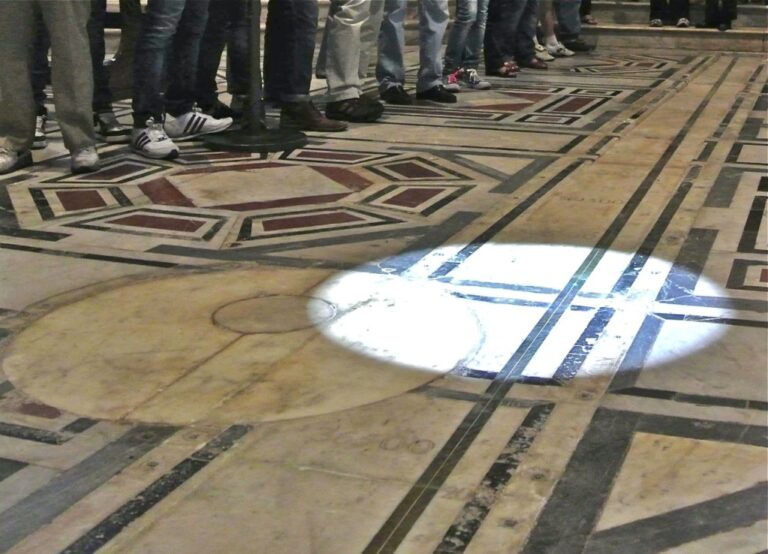
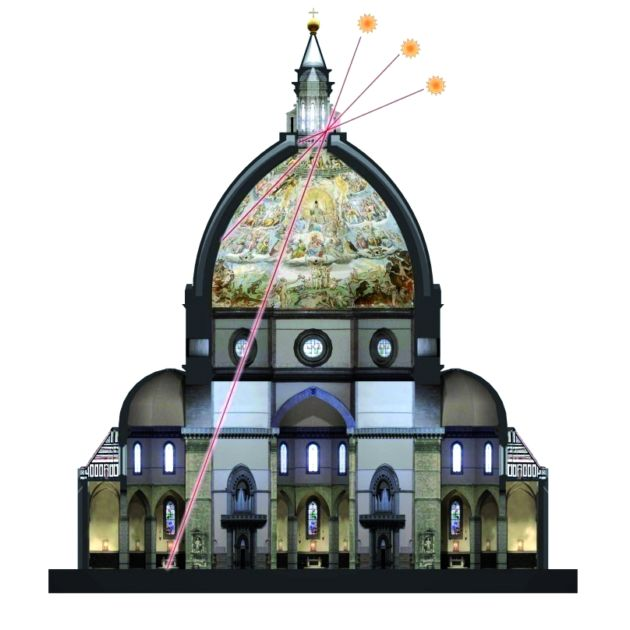
In 1482 Paolo Dal Pozzo Toscanelli, astronomer, cartographer and mathematician, died. He studied at the University of Padua. On 3 October 1453 he was consulted by the Signoria as an astrologer following the great earthquake of 28 September 1453. Toscanelli’s mathematical and astronomical works have almost all been lost. In 1468 Toscanelli had a gnomon installed in the church of S. Maria del Fiore in Florence that we see in the photo (it is said that he helped Brunelleschi with the calculations for the construction of the dome) to determine the variation of the inclination of the axis of rotation of the Earth on the plane of the orbit (fundamental for the calculation of the solar ephemeris). The height of the gnomon is such that the sun’s rays, passing through the hole, strike the floor of the church only from the end of May to the end of July and for a few minutes before and after noon. His observations of comets are the first we know of: he determined many positions of the comets of 1433, 1449-1450, 1456 (later called Halley…), 1457 and 1472, tracing their orbits on star maps he prepared. Toscanelli exerted a decisive influence on Colombo’s decision to set sail in search of the East Indies by sailing westward: we report the hypothetical reconstruction, in cylindrical projection, of the map sent by Paolo dal Pozzo Toscanelli to Christopher Columbus. The asteroid 8209 Toscanelli, a crater on the Moon with a diameter of 7 km and also on the Moon a chain of mountains 70 km long, the Rupes Toscanelli, were dedicated to him.
Nel 1482 muore Paolo Dal Pozzo Toscanelli, astronomo, cartografo e matematico. Studiò all’Università di Padova. Il 3 ottobre 1453 fu consultato dalla Signoria come astrologo in seguito al grande terremoto del 28 settembre 1453. Le opere matematiche e astronomiche del Toscanelli sono andate quasi tutte perdute. Il Toscanelli nel 1468 fece installare uno gnomone nella chiesa di S. Maria del Fiore in Firenze che vediamo in foto (si dice che aiutò il Brunelleschi con i calcoli per la costruzione della cupola) per determinare la variazione dell’inclinazione dell’asse di rotazione della Terra sul piano dell’orbita (fondamentale per il calcolo delle effemeridi solari). L’altezza dello gnomone è tale che i raggi del Sole, passanti per il foro, colpiscono il pavimento della chiesa solo dalla fine di maggio alla fine di luglio e per pochi minuti prima e dopo mezzogiorno. Le sue osservazioni di comete sono le prime di cui abbiamo notizia: determinò molte posizioni delle comete del 1433, 1449-1450, 1456 (che venne poi chiamata Halley…), 1457 e 1472, tracciandone le orbite su mappe stellari da lui preparate. Toscanelli esercitò un’influenza decisiva sulla decisione di Colombo di prendere il mare in cerca delle Indie orientali navigando verso Ovest: riportiamo la ricostruzione ipotetica, in proiezione cilindrica, della carta inviata da Paolo dal Pozzo Toscanelli a Cristoforo Colombo. Gli sono stati dedicati l’asteroide 8209 Toscanelli, un cratere sulla Luna di 7 km di diametro e sempre sulla Luna una catena di montagne di 70 km di lunghezza, la Rupes Toscanelli.


In 1900 the English astronomer Cecilia Payne was born (see photo with the telescope she built herself) to whom we owe the discovery that hydrogen and oxygen are the most common elements in the universe. This astronomer is not particularly well known but her biography is worth reading (click on the name). Women at that time were not allowed to graduate and took a back seat unfortunately: Cambridge didn’t grant them degrees until 1948! I quote this sentence of his: “The real reward for a young scientist is the thrill he feels in being the first person in the history of the world to see or understand something new. Nothing can compare to this experience”
Nel 1900 nasce l’astronoma inglese Cecilia Payne (vedi foto con telescopio da lei autocostruito) alla quale si deve la scoperta che idrogeno e ossigeno sono gli elementi più comuni dell’universo. Questa astronoma non è particolarmente conosciuta ma merita leggere la sua biografia (clicca sul nome). Le donne a quel tempo non erano autorizzate a laurearsi e passavano in secondo piano purtroppo: Cambridge non ha concesso loro lauree fino al 1948! Cito questa sua frase: “La vera ricompensa per un giovane scienziato è l’emozione che prova nell’essere la prima persona nella storia del mondo a vedere o capire qualcosa di nuovo. Niente può essere paragonato a questa esperienza”
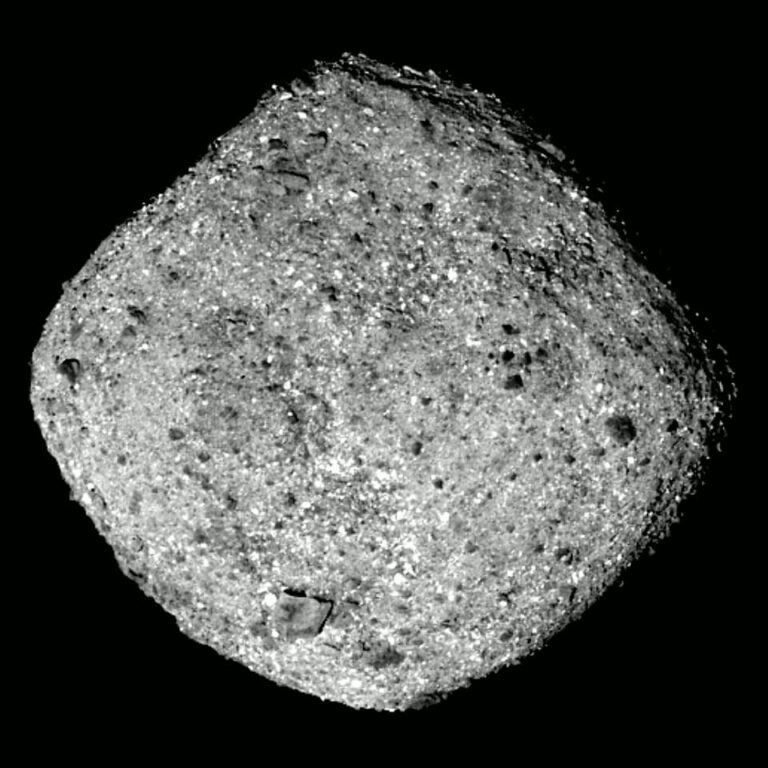
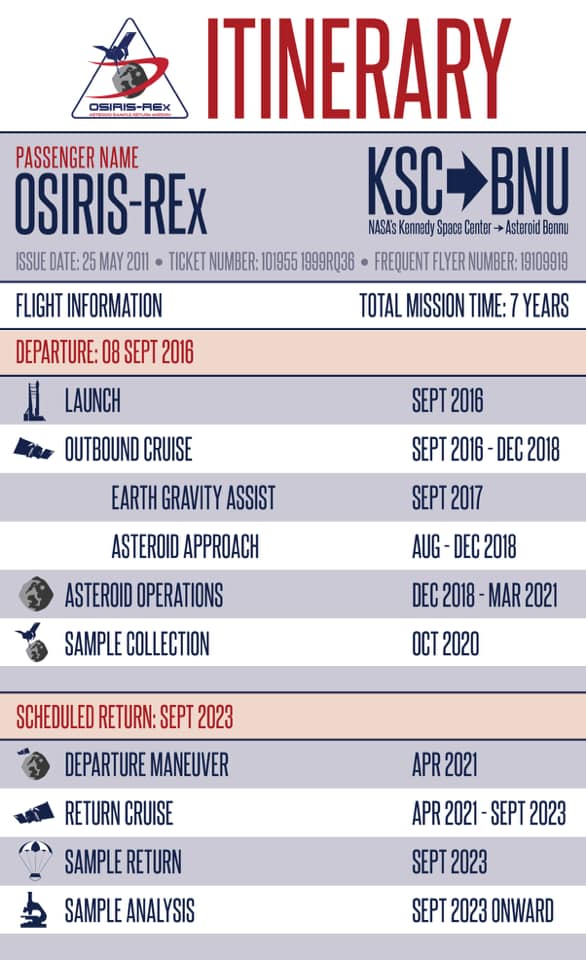
In 2021 OSIRIS-REX (see photo) return journey starts at 22:00 – 23:00 from Bennu. After traveling for more than two years, the probe arrived in the vicinity of asteroid 101955 Bennu on December 3, 2018, and on December 31, 2018, it began 505 days of surface mapping at a distance of about 5 km. The results of the mapping were used by the mission team to select the site from which to sample the asteroid’s surface. The probe took the regolith samples on 20 October 2020 at 22.12 UTC, without landing but by extending a robotic arm.
Nel 2021 inizia il viaggio di ritorno alle 22:00 – 23:00 di OSIRIS-REX (vedi foto) da Bennu. Dopo aver viaggiato per più di due anni, la sonda è arrivata in prossimità dell’asteroide 101955 Bennu il 3 dicembre 2018 e il 31 dicembre 2018 ha iniziato 505 giorni di mappatura della superficie a una distanza di circa 5 km. I risultati della mappatura sono stati utilizzati dal team della missione per selezionare il sito da cui prelevare il campione della superficie dell’asteroide. La sonda ha prelevato i campioni di regolite il 20 ottobre 2020 alle ore 22.12 UTC, senza atterrare ma estendendo un braccio robotico.
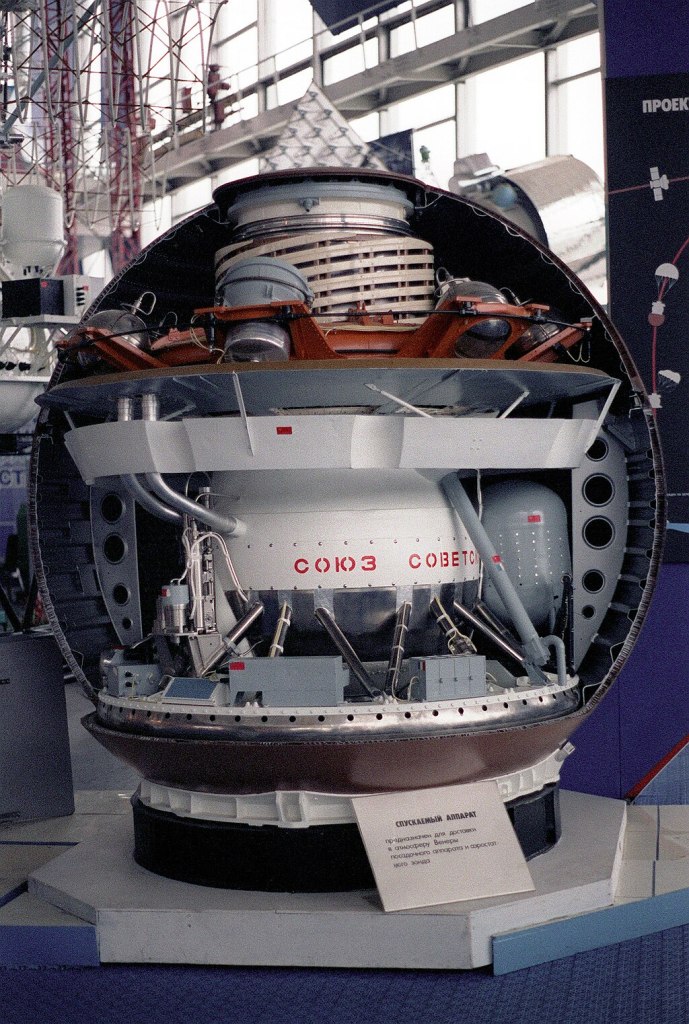
In 2025, the Kosmos 482 probe of the failed Venera mission crashed into the Indian Ocean, west of Jakarta at 8:24 am (Italian time). See the bulletin of the launch and details
Nel 2025 la sonda Kosmos 482 della missione fallita Venera è precipitata nell’Oceano Indiano, a ovest di Giacarta alle ore 8:24 (ora italiana). Vedi il bollettino del lancio e dettagli
Sostieni anche tu Wikipedia
Text source: Wikipedia, Treccani, Scienzapertutti, Infn
Google translate
 Astronomy Bulletin Of the Day
Grazie mille Laura
"Mi piace""Mi piace"