
🇬🇧 – 🇮🇹

In 1596 Johannes Kepler published the Mysterium Cosmographicum (see image of the model of the solar system) with his results of the studies carried out on the order of the solar system. The German astronomer supports the conception of a nature structured geometrically by God. From this assumption Kepler believes he can get to describe the celestial order through mathematics, however the final result rather than the outcome of observations and studies appears to be a philosophical vision of the world influenced by Pythagoreanism and Neoplatonism.
Nel 1596 Johannes Kepler pubblica il Mysterium Cosmographicum (vedi immagine del modello del sistema solare) con i suoi risultati degli studi effettuati sull’ordine del Sistema solare. L’astronomo tedesco sostiene la concezione di una natura strutturata geometricamente da Dio. Da questo presupposto Keplero crede di poter arrivare a descrivere l’ordine celeste attraverso la matematica, tuttavia il risultato finale più che l’esito di osservazioni e studi appare una visione filosofica del mondo influenzata dal pitagorismo e dal neoplatonismo.
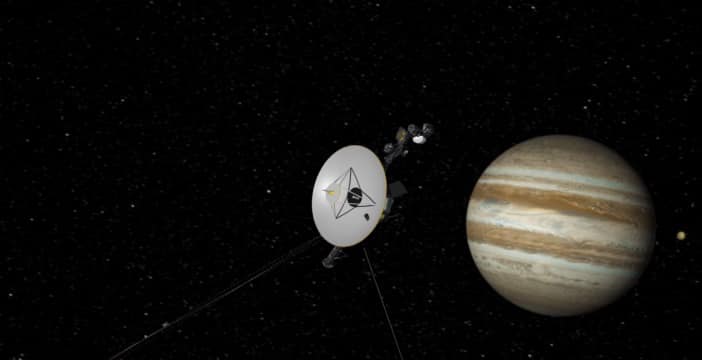
In 1979 fly-by of Jupiter by the US interplanetary probe Voyager 2. About 3 min NASA video: https://youtu.be/OgoL6g_dH3E
Nel 1979 fly-by di Giove della sonda interplanetaria statunitense Voyager 2. Video Nasa di 3 min circa: https://youtu.be/OgoL6g_dH3E
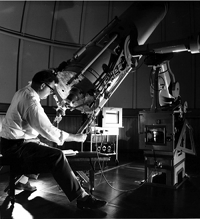
In 1919 was bord Olin Jeuck Eggen, an American astronomer, one of the best observational astronomers of his time. In 1962 he published a work with Donald Lynden-Bell and Allan Sandage, which brought him notoriety, in which the three suggested that the Milky Way had originated from the collapse of a gas cloud. He was the first to introduce the concept of stellar currents
Nel 1919 nasce Olin Jeuck Eggen un astronomo statunitense, uno dei migliori astronomi osservativi del suo tempo. Nel 1962 pubblicò un lavoro con Donald Lynden-Bell e Allan Sandage, che gli conferì notorietà, nel quale i tre suggerirono che la Via Lattea si fosse originata dal collasso di una nube di gas. Fu il primo ad introdurre il concetto delle correnti stellari
In 1963 Andrea Possenti was born, an Italian astrophysicist, author of the discovery in 2003 of the first double pulsar, together with his colleagues Nichi d’Amico and Marta Burgay; he was director of the Astronomical Observatory of Cagliari
Nel 1963 nasce Andrea Possenti un astrofisico italiano, autore della scoperta nel 2003 della prima pulsar doppia, insieme ai colleghi Nichi d’Amico e Marta Burgay; è stato direttore dell’Osservatorio astronomico di Cagliari

In 2013, Luca Parmitano’s first walk in space took place
Nel 2013 avviene la prima passeggiata di Luca Parmitano nello spazio

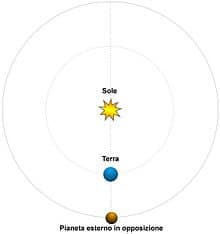
Jupiter opposition occurs in 2008. What does it mean? The opposition of one celestial body to another occurs when the first body is in the opposite direction (i.e. 180°) from the second, with respect to the observer. For example, let’s say that Jupiter is in opposition to the Sun when the planet is on the celestial sphere 12h in right ascension from the Sun (see image), a particular characteristic of the planets in opposition is their visibility for the whole night.
Nel 2008 si verifica l’opposizione di Giove. Cosa significa? L’opposizione di un corpo celeste rispetto a un altro si ha quando il primo corpo si trova nella direzione opposta (ovvero a 180°) dal secondo, rispetto all’osservatore. Ad esempio, diciamo che Giove è in opposizione rispetto al Sole quando il pianeta si trova sulla sfera celeste a 12h in ascensione retta dal Sole (vedi immagine), una caratteristica particolare dei pianeti in opposizione è data dalla loro visibilità per l’intera notte.
Text source: Wikipedia
Sostieni anche tu Wikipedia
Google translate
 Astronomy Bulletin Of the Day