
🇬🇧 – 🇮🇹

In 1762 the English astronomer James Bradley died, best known for the discovery of the aberration of light, which was announced to the Royal Society in January 1729 and which also provided the definitive experimental proof of the motion of the earth’s revolution.
Nel 1762 muore l’astronomo inglese James Bradley noto soprattutto per la scoperta dell’aberrazione della luce, che fu annunciata alla Royal Society nel gennaio 1729 e che fornì anche la prova sperimentale definitiva del moto di rivoluzione terrestre.

In 1822 the German astronomer Heinrich Louis d’Arrest was born, known for having taken part in the research team of the planet Neptune, with Johann Gottfried Galle. On September 23, 1846, he suggested that a chart of the sky that had recently been drawn, in the position predicted by Urbain Le Verrier, could be compared to the stellar configuration of the time to establish the characteristic displacement of the planet, opposite to a fixed star. Neptune was discovered that same night. He also discovered a comet named after him (formally referred to as 6P/d’Arrest, see photo) and studied asteroids, discovering 76 Freia, and some nebulae
Nel 1822 nasce l’astronomo tedesco Heinrich Louis d’Arrest noto per aver preso parte alla squadra di ricerca del pianeta Nettuno, con Johann Gottfried Galle. Il 23 settembre 1846, suggerì che una carta del cielo che era stata recentemente tracciata, nella posizione prevista da Urbain Le Verrier, si sarebbe potuta paragonare alla configurazione stellare di allora per stabilire lo spostamento caratteristico del pianeta, in maniera opposta ad una stella fissa. Nettuno fu scoperto quella stessa notte. Scoprì anche una cometa che prese il suo nome (formalmente indicata come 6P/d’Arrest, vedi foto) e studió gli asteroidi, scoprendo 76 Freia, ed alcune nebulose

In 2022 the entire scientific world (and not only) was left speechless by the splendid images given to us by the James Webb Telescope. Above is a detail of the Carina Nebula, below is the splendid photo released by ESA for the anniversary of the first photo from the JWST Telescope and the last photo of 2025 which is astonishing! To admire them all, enter through the link!
Nel 2022 tutto il mondo scientifico (e non solo) è rimasto a bocca aperta dalle splendide immagini e che ci ha regalato il James Webb Telescope. Qui sopra un dettaglio della nebulosa della Carena, sotto la splendida foto rilasciata da ESA per l’anniversario della prima foto del JWST Telescope e l’ultima foto del 2025 strabiliante! Per ammirarle tutte entra dal link!
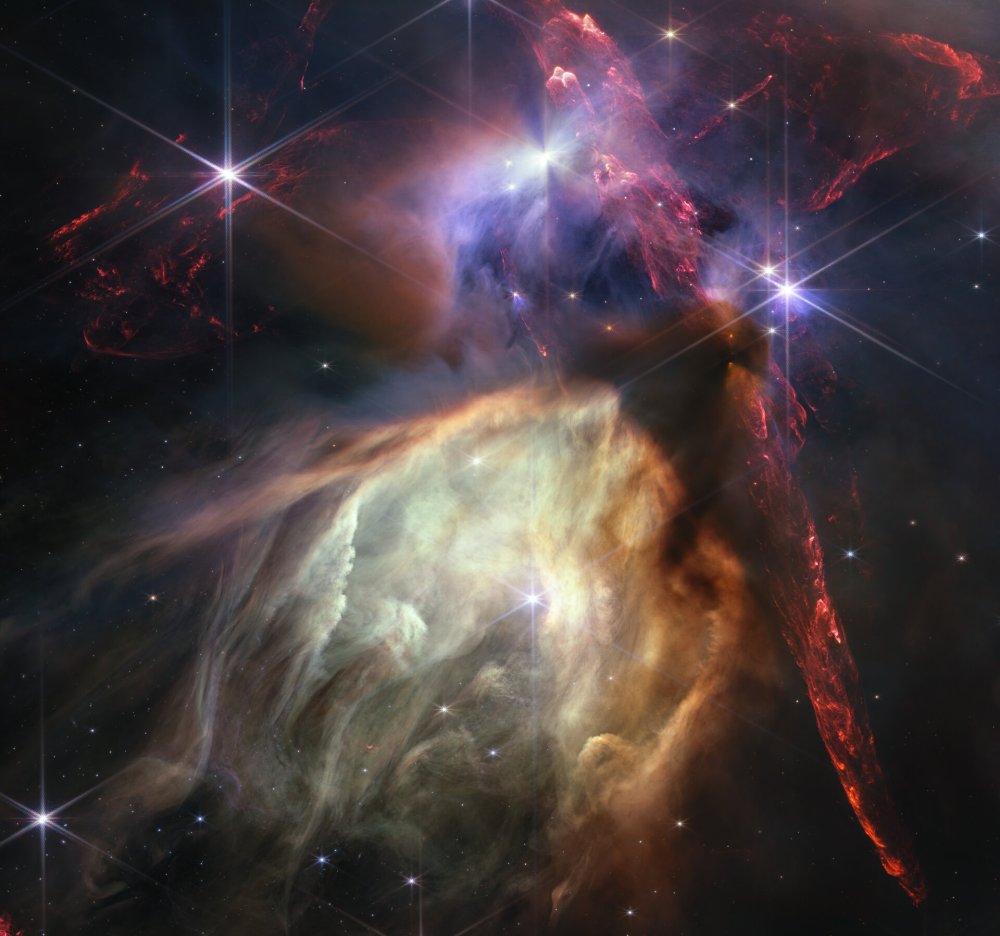


Third annual image from the James Webb Space Telescope, here we see a section of the Cat’s Paw Nebula, an immense stellar nursery located about 4000 light-years from Earth, in the constellation of Scorpius.
Text source: Wikipedia, ESA
Sostieni anche tu Wikipedia
Google translate
 Astronomy Bulletin Of the Day