
🇬🇧 – 🇮🇹
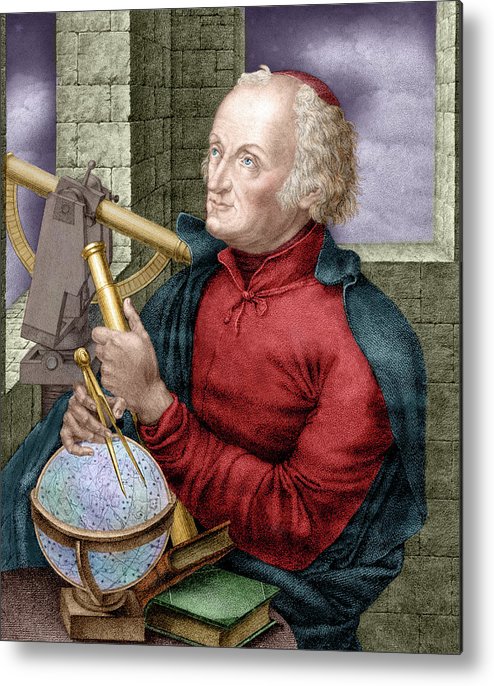
In 1746, the Italian astronomer and mathematician Giuseppe Piazzi was born. His catalogs gave the stellar places with increased precision compared to the previous and contemporary ones and therefore offered secure bases for the determination of any proper motions of the observed stars. Both catalogs were awarded by the Institut de France. The habit of calculating the observations of the previous night on a daily basis led him to the discovery, made on the evening of January 1, 1801, of the small planet, later called Ceres. In 1817 he directed the Capodimonte astronomical observatory in Naples and was appointed director general of the existing observatories in the Kingdom of the Two Sicilies.
Nel 1746 nasce l’astronomo e matematico italiano Giuseppe Piazzi. I suoi cataloghi diedero i luoghi stellari con precisione aumentata rispetto a quelli precedenti e contemporanei e offrirono pertanto basi sicure per la determinazione degli eventuali moti propri delle stelle osservate. Entrambi i cataloghi vennero premiati dall’Istituto di Francia. L’abitudine di calcolare quotidianamente le osservazioni della precedente notte, lo portò alla scoperta, fatta nella sera del primo gennaio 1801, del pianetino, poi denominato Cerere. Nel 1817 diresse a Napoli l’osservatorio astronomico di Capodimonte ed ebbe la nomina a direttore generale degli osservatori esistenti nel Regno delle due Sicilie.
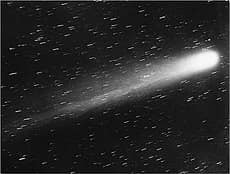
In 1862 discovery by Louis Swift, American astronomer, of a comet in the constellation of the Giraffe (which was then the same sighted three days later by Horace Parnell Tuttle). The comet, which was the third discovery in 1862, was therefore named 1862 III P/SW T-Tuttle. This celestial object became important as it was the first to be associated with a meteor shower, that of the Perseids.
Nel 1862 scoperta da Louis Swift, astronomo americano, di una cometa nella costellazione della Giraffa (che poi fu la stessa avvistata tre giorni piú tardi da Horace Parnell Tuttle). La cometa, che fu la terza scoperta nel 1862, venne perciò chiamata 1862 III P/SW T-Tuttle. Questo oggetto celeste divenne importante in quanto fu la prima ad essere associata ad uno sciame meteorico, quello delle Perseidi.
In 1945 the first atomic bomb (Trinity Test) was detonated in Alamogordo, in the desert of New Mexico (USA), as part of the Manhattan Project led by General Leslie Grooves and by the scientific head of the project, the physicist J. Robert Oppenheimer.
Nel 1945 fu fatta esplodere la prima bomba atomica (Trinity Test) ad Alamogordo, nel deserto del New Mexico (USA), nell’ambito del Progetto Manhattan capitanato dal generale Leslie Grooves e dal capo scientifico del progetto il fisico J. Robert Oppenheimer.
In 1955 at 13:07 a 10 kg meteorite fell in the valley of Camaro Superiore, a hamlet of Messina.
Nel 1955 alle ore 13:07 cade nel vallone di Camaro Superiore, frazione di Messina, un meteorite di 10 kg. Leggi l’articolo
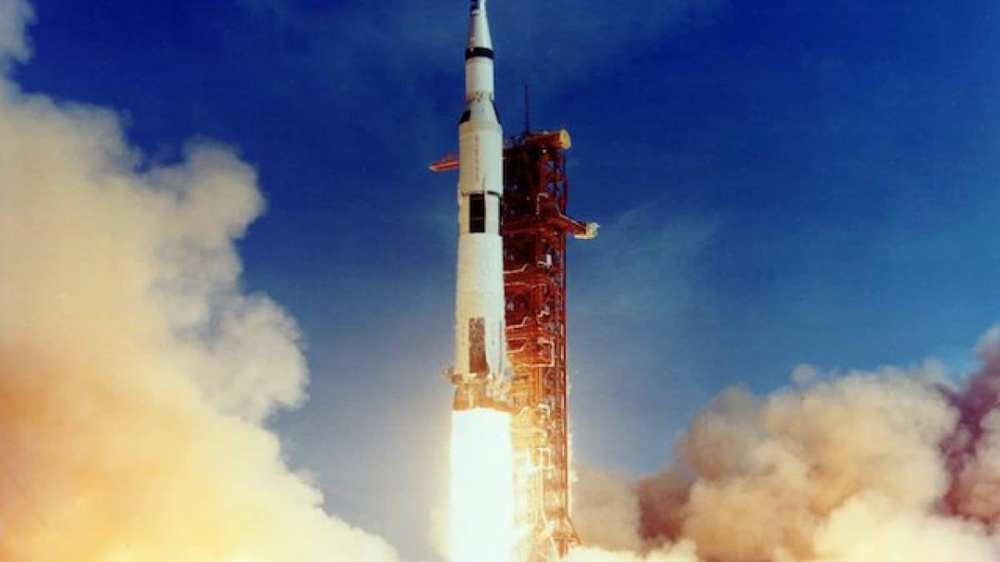
In 1969 Apollo 11 took off with a Saturn V rocket from the Kennedy Space Center with Neil Armstrong, Buzz Aldrin and Michael Collins on board: the mission that will bring man to the Moon on July 21!
Nel 1969 parte l’Apollo 11 con un razzo Saturn V dal Kennedy Space Center con a bordo Neil Armstrong, Buzz Aldrin e Michael Collins: la missione che porterà l’uomo sulla Luna il 21 luglio!
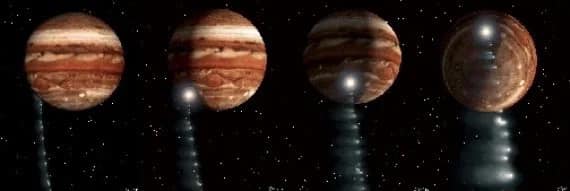
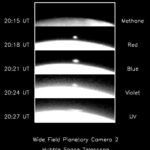
In 1994 comet Shoemaker-Levy 9 impacted Jupiter (see image and photo). Video https://youtu.be/gbsqWozEBBw
Nel 1994 impatto della cometa Shoemaker-Levy 9 su Giove (see images). Video NASA con sottotitoli in italiano https://youtu.be/gbsqWozEBBw
Text and video source: Wikipedia, NASA, YouTube
Sostieni anche tu Wikipedia
Google translate
 Astronomy Bulletin Of the Day