
🇬🇧 – 🇮🇹

In 1784, the German mathematician and astronomer Friedrich Bessel was born, remembered above all because he was the first to use parallax to measure the distance of a star. In 1838 Bessel measured the parallax of 61 Cygni, which resulted in 0.314 arc seconds; this, given the diameter of Earth’s orbit, indicated that the star was about 3 parsecs away (the Hipparcos satellite calculated the parallax at 0.28547 arcseconds).
Nel 1784 nasce il matematico e astronomo tedesco Friedrich Bessel ricordato, soprattutto, perché fu il primo ad usare la parallasse per misurare la distanza di una stella. Nel 1838 Bessel misurò la parallasse di 61 Cygni, che risultò di 0.314 secondi d’arco; questo, dato il diametro dell’orbita della Terra, indicava che la stella era lontana circa 3 parsec (il satellite Hipparcos ha calcolato la parallasse a 0.28547 secondi d’arco).
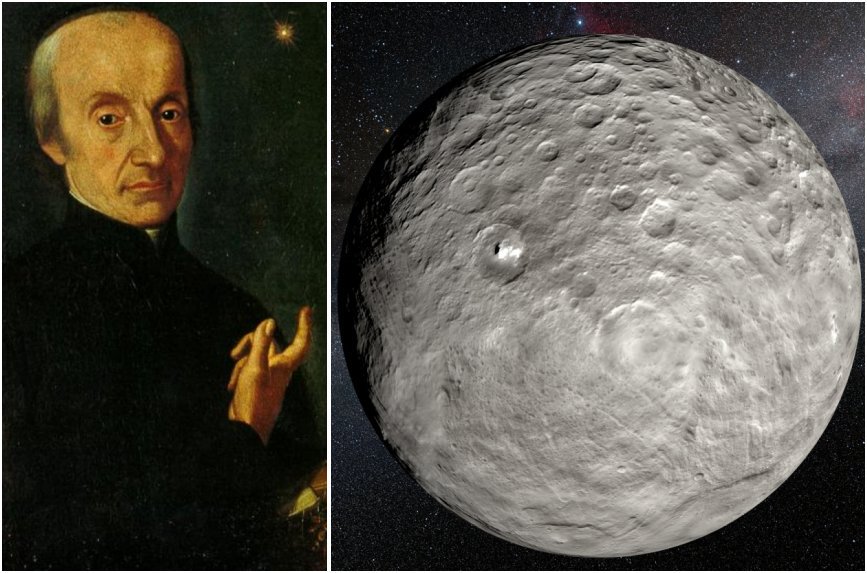
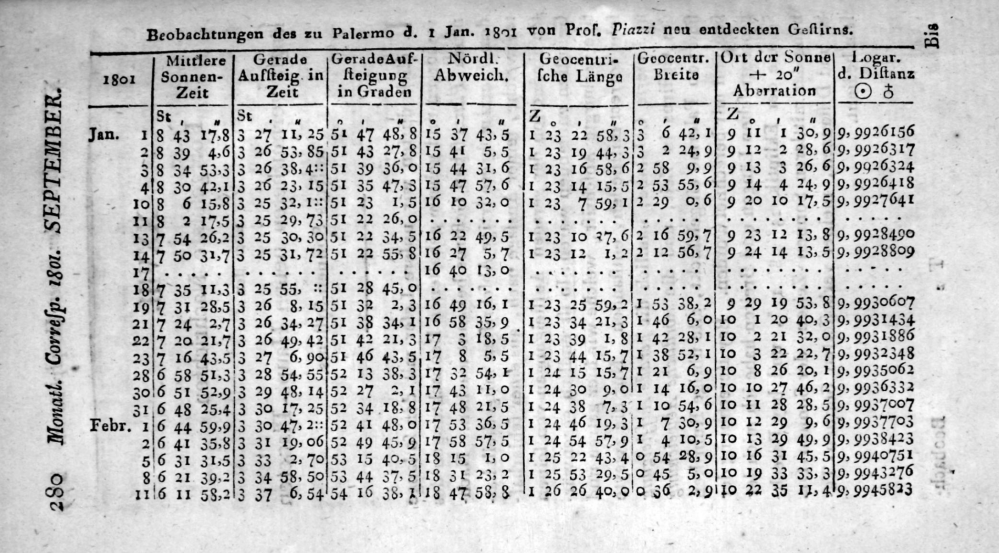
In 1826 the astronomer Giuseppe Piazzi died, known for having discovered Ceres (see photo). The first observation led him to hypothesize that it was a fixed star, not reported in the catalogues. In the following days, he noticed that the celestial body was no longer in its initial position, and he suspected that it was a different star. Subsequent observations convinced him that the new star had its own motion. Read also the bulletin of July 16th
Nel 1826 muore l’astronomo Giuseppe Piazzi, noto per aver scoperto Cerere (vedi foto). La prima osservazione lo portò a ipotizzare che si trattasse di una stella fissa, non riportata dai cataloghi. Nei giorni seguenti, notò che il corpo celeste non si trovava più nella posizione iniziale, e sospettò che si trattasse di una stella diversa. Le successive osservazioni lo convinsero che il nuovo astro fosse dotato di moto proprio. Leggi anche il bollettino del 16 luglio
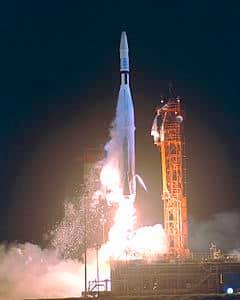

In 1962 Mariner Program: Launch of Mariner 1, the first US space probe launched from Cape Canaveral to Venus which failed due to an internal failure resulting in the transport carrier self-destructing for safety reasons
Nel 1962 Programma Mariner: lancio del Mariner 1, la prima sonda spaziale statunitense lanciata da Cape Canaveral verso Venere che fallì a causa di un guasto interno con conseguente autodistruzione del vettore di trasporto per motivi di sicurezza
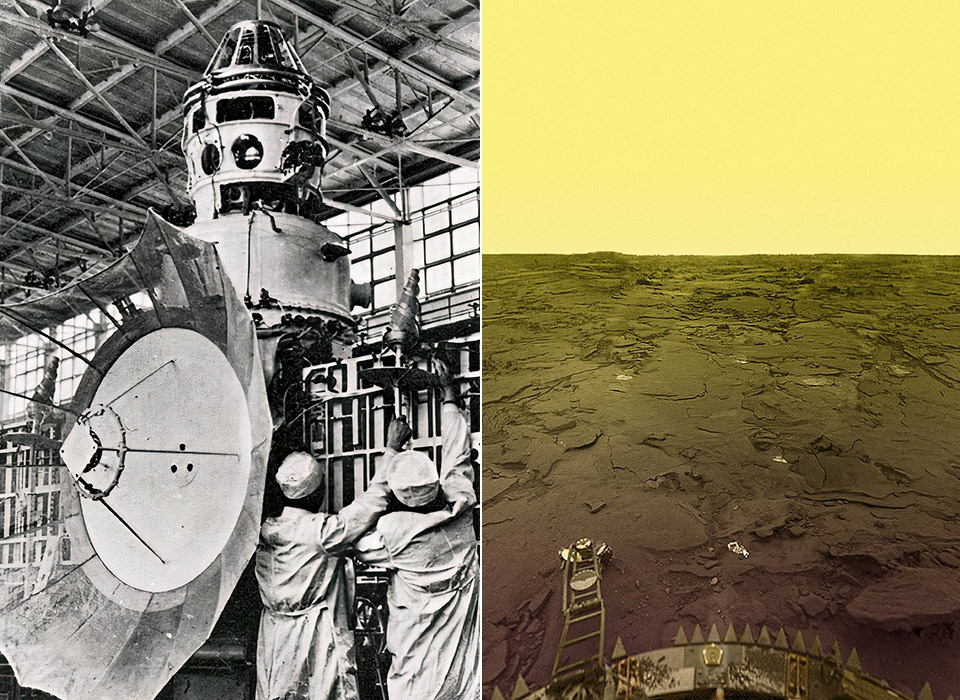
In 1972, the lander of the Soviet interplanetary probe Venera 8 entered the Venusian atmosphere at 8:37 GMT, landing and transmitting data for 50 minutes before succumbing to extreme pressure and high temperature.
Nel 1972 il lander della sonda interplanetaria sovietica Venera 8 entra nell’atmosfera venusiana alle 8:37, ora di Greenwich, atterrando e trasmettendo dati per 50 minuti prima di soccombere alla fortissima pressione e all’alta temperatura.
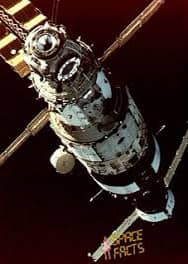
In 1987, the Soviet Union put the Soyuz TM-3 spacecraft into orbit (see photo).
Nel 1987 L’Unione Sovietica mette in orbita la navicella spaziale Soyuz TM-3 (vedi foto).
Text and video source: Wikipedia, NASA
Sostieni anche tu Wikipedia
Google translate
 Astronomy Bulletin Of the Day