
🇬🇧 – 🇮🇹
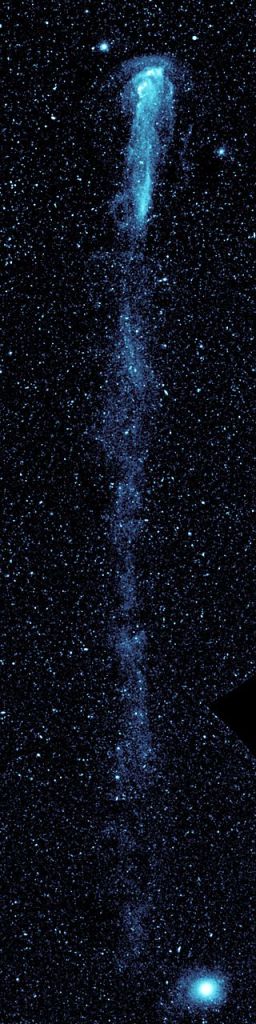
In 1596 discovery of Mira (Omicron Ceti) by the German astronomer David Fabricius (1564-1617). This star is the prototype of long-period pulsating variables. The name Mira was attributed to it by Johannes Hevelius (1611-1687) (Latin for “wonderful”) in his work Historiola Mirae Stellae of 1662. After 411 years in 2007, a study by the team of prof. Christopher Martin of the California Institute of Technology in Pasadena describing a 13 light-year tail composed of stellar gas produced in the last 30,000 years by the star (see photo). The tail was identified thanks to observations by the Galaxy Evolution Explorer space telescope. See also the bulletin of August 3rd
Nel 1596 viene pubblicata la scoperta di Mira (Omicron Ceti) ad opera dell’astronomo tedesco David Fabricius (1564-1617). Tale stella è il prototipo delle variabili pulsanti a lungo periodo. Il nome Mira gli fu attribuito da Johannes Hevelius (1611-1687) (in latino “meravigliosa”) nel suo lavoro Historiola Mirae Stellae del 1662, perché si comportava come nessun’altra stella. Tra due gg, ma nel 2007, esce sulla rivista Nature uno studio dell’équipe del prof. Christopher Martin del California Institute of Technology di Pasadena che descrive una coda di 13 anni luce composta di gas stellari prodotti negli ultimi 30.000 anni dalla stella (vedi foto). La coda è stata individuata grazie alle osservazioni del telescopio spaziale Galaxy Evolution Explorer. Vedi anche il bollettino del 3 agosto
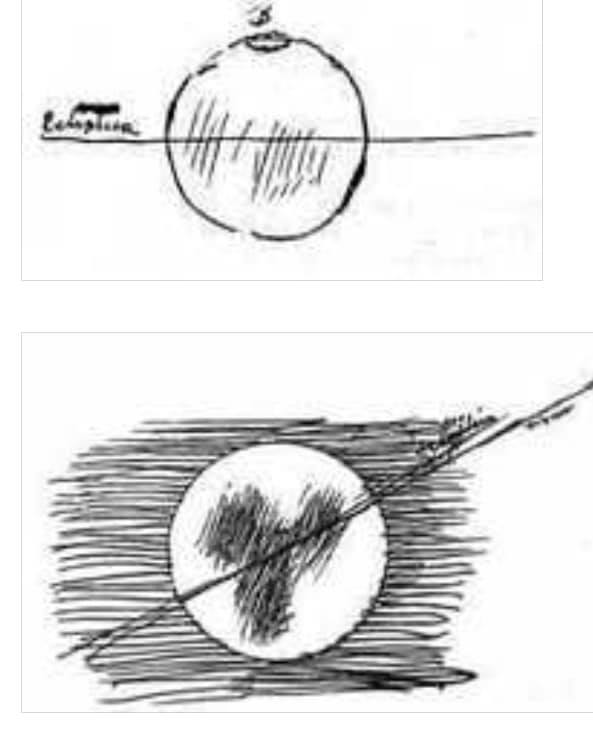
In 1642 the Dutch astronomer Christiaan Huygens was the first to observe the south polar cap of Mars (see sketches), as can be seen from his reports: “On Mars in 1656 I observed a unique area of this kind, a very large area covering the middle of the disk, as the added figure shows. Furthermore, I have sometimes noticed that a part of the disk of this planet was missing, and on Venus I saw all the phases as on the Moon. Others, on the other hand, have equally established the same phenomena with smaller lenses”
Nel 1642 l’astronomo olandese Christiaan Huygens osserva per primo la calotta polare sud di Marte (vedi schizzi), si evince dalla sua reportistica: “Su Marte ho osservato nel 1656 una zona unica di questo genere, zona molto larga e coprente la parte media del disco, come la figura aggiunta fa vedere. Di più ho notato talvolta che una parte del disco di questo pianeta mancava, e su Venere ho visto tutte le fasi come per la Luna. Altri d’altronde hanno ugualmente stabilito gli stessi fenomeni con delle lenti più piccole”
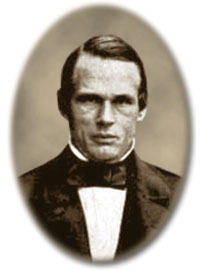
In 1814 Anders Jonas Angstrom was born, one of the founders of spectroscopy
Nel 1814 nasce Anders Jonas Angstrom, uno dei fondatori della spettroscopia
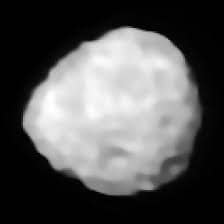
In 1847 the English astronomer John Russell Hind discovered the asteroid 7 Iris (see image) thanks to the 7-inch telescope of George Bishop’s private observatory (of which he was director) in Regent’s Park in London, United Kingdom. 7 Iris (in Italian 7 Iride) is one of the largest asteroids in the main belt. It is the third asteroid for average luminosity in opposition, after Ceres and Vesta, reaching an average magnitude of +7.8, even slightly surpassing Pallas.
Nel 1847 l’astronomo inglese John Russell Hind scopre l’asteroide 7 Iris (vedi immagine) grazie al telescopio da 7 pollici dell’osservatorio privato di George Bishop (di cui era direttore) al Regent’s Park di Londra, Regno Unito. 7 Iris (in italiano 7 Iride) è uno dei più grandi asteroidi della Fascia principale. È il terzo asteroide per luminosità media all’opposizione, dopo Cerere e Vesta, raggiungendo una magnitudine media pari a +7,8, superando seppur di poco anche Pallade.
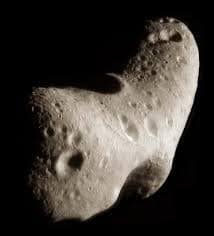
In 1898 Gustav Witt, of the Urania Society of Berlin, photographically discovered Eros (see photo), a small planet that will become very important because, as it approaches the Earth much more than the others, it will be chosen for the determination of the solar parallax.
Nel 1898 Gustav Witt, della Società Urania di Berlino, scopre fotograficamente Eros (vedi foto), un pianetino che diverrà molto importante perché, avvicinandosi alla Terra molto piú degli altri, verrà scelto per la determinazione della parallasse solare.
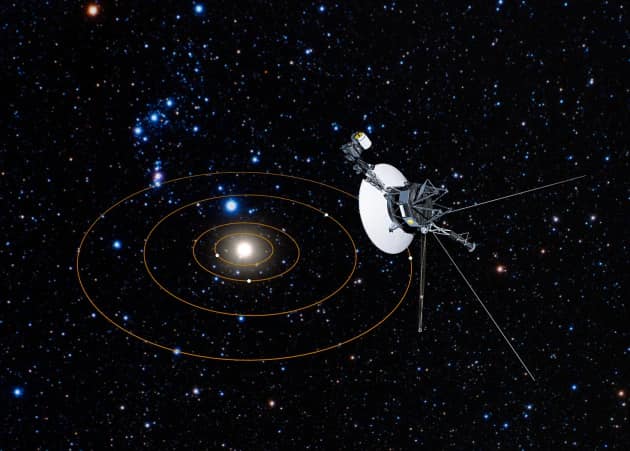
In 2012, Voyager 2 broke the longevity record. No one would have ever imagined that the probe would have communicated up to the present day except for a moment of panic when, on July 21, 2023, NASA mistakenly pointed the antenna at 2 degrees from Earth causing the probe to lose contact. Fortunately, on August 4, NASA’s Deep Space Network (DSN) was able to detect Voyager 2’s signal and return it to the correct antenna position towards Earth. Keep it up Voyager 2! Watch this interesting video (10 min.) https://www.youtube.com/watch?v=vNRHYV5IB_U
Nel 2012 la NASA comunica che la sonda Voyager 2 ha battuto il record di longevità ma nessuno avrebbe mai immaginato che la sonda avrebbe comunicato fino ai giorni nostri salvo un momento di panico quando, il 21 luglio 2023, per errore la NASA ha fatto puntare l’antenna a 2 gradi dalla Terra facendo perdere il contatto con la sonda. Fortunatamente il 4 agosto il Deep Space Network (DSN) della NASA è stato in grado di rilevare il segnale della Voyager 2 facendola riportare nella corretta posizione dell’antenna verso la Terra. Continua così Voyager 2! Condividiamo il video con sottotitoli in italiano (10 min): https://www.youtube.com/watch?v=vNRHYV5IB_U

In 2009 Planck (see image), the mission of the European Space Agency (ESA) for the study of the early Universe, in orbit in the second Lagrangian point (one and a half million kilometers from the Earth) began to map the sky in microwaves, ESA article: https://www.esa.int/Science_Exploration/Space_Science/Planck/Planck_first_light_yields_promising_results
Nel 2009 Planck (vedi immagine), la missione dell’Agenzia Spaziale Europea (ESA) per lo studio dell’Universo primordiale, in orbita nel secondo punto lagrangiano (a un milione e mezzo di chilometri dalla Terra) inizia a mappare il cielo in microonde. Video ESA: https://www.youtube.com/watch?v=FEPo2JeAWfU
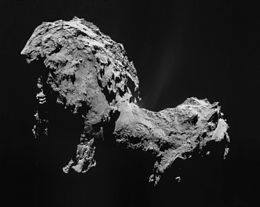
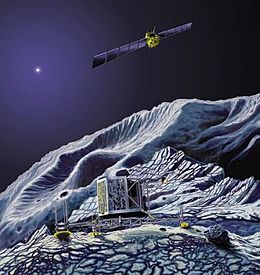
In 2015, the perihelion transit of comet 67P (Churyumov-Gerasimenko), with the European probe Rosetta in orbit and on which the Philae lander landed. A memorable mission, look this ESA video: https://youtu.be/KinazVWZ3Ag
Nel 2015 transito al perielio della cometa 67P (Churyumov-Gerasimenko), con in orbita la sonda europea Rosetta e sulla quale si è posato il lander Philae. Una missione memorabile di cui qui un’interessante conferenza ESA: https://youtu.be/Tr7lp8KVpp0

In 2022 one of the greatest scientific journalists and popularizers who made entire generations passionate about science, Piero Angela, died. I chose this photo to remember him.. thanks to him so many of us they approached astronomy… RIP.
2022: Non ci sono parole per descrivere il vuoto che lascia la perdita di Piero Angela, uno dei più grandi giornalisti e divulgatori scientifici che ha fatto appassionare intere generazioni alla scienza… Ho scelto questa foto per ricordarlo.. grazie a lui tanti di noi si sono avvicinati all’astronomia… Con la sua esperienza e dolcezza rendeva rassicuranti e semplici anche le spiegazioni più complesse. RIP.
To receive the Astronomy Bulletin Of the Day in your inbox, please put your email address on the contact form: https://abod.blog/contacts/
Per ricevere il bollettino per gli astronaviganti giornaliero nella tua posta elettronica, inserisci la tua mail nel form contatti: https://abod.blog/contacts/
Text and video source: Wikipedia, NASA, YouTube
Sostieni anche tu Wikipedia
Google translate
 Astronomy Bulletin Of the Day