🇬🇧 – 🇮🇹
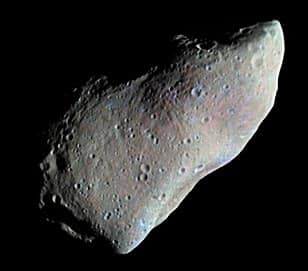
In 1710, the Danish astronomer Ole Roemer, known for the first quantitative measurement of the speed of light (corresponding to approximately 225,000 km/s) in 1676, died in Copenhagen. Asteroid 2897 (see photo), a crater and a crack on the surface moon bear his name.
Nel 1710 muore a Copenaghen l’astronomo danese Ole Roemer noto per la prima misura quantitativa della velocità della luce (corrispondente a circa 225 000 km/s) nel 1676. L’asteroide 2897 (vedi foto), un cratere e una fessura sulla superficie lunare portano il suo nome.
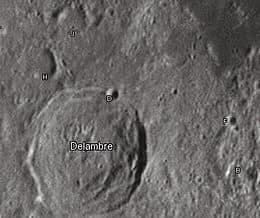
The French astronomer Jean-Batiste-Joseph Delambre was born in 1749. With Pierre Méchain he measured the length of an arc of the Paris meridian, between Dunkirk and Barcelona, with the aim of establishing the length of the meter so that the meridian was exactly 40 million meters long. The crater Delambre (see photo) on the Moon is named after him, as is the asteroid 13962 Delambre.
Nel 1749 nasce l’astronomo francese Jean-Batiste-Joseph Delambre. Con Pierre Méchain misura la lunghezza di un arco del meridiano di Parigi, fra Dunkerque e Barcellona, con l’obiettivo di stabilire la lunghezza del metro in modo che il meridiano risultasse lungo esattamente 40 milioni di metri. Il cratere Delambre (vedi foto) sulla Luna porta il suo nome, come pure l’asteroide 13962 Delambre.

In 1783 the Montgolfier brothers flew the aircraft renamed “Aerostate Révellion” (see image) with the first living beings on board: a sheep, a goose and a rooster. This demonstration took place in the Palace of Versailles, in front of King Louis XVI and Queen Marie Antoinette. The inventors’ father had agreed to let his sons build the balloons, on the condition that neither of them were part of the crew. Etienne built a 1700 m3 aerostat, which could allow flight by hosting men. On 21 November 1783 Pilâtre de Rozier and the Marquis d’Arlandes made the first flight, covering a distance of approximately 9 km over Paris in 25 minutes. The flight caused a notable sensation and in a short time the brothers became famous throughout the world.
Nel 1783 i fratelli Montgolfier fanno volare l’apparecchio ribattezzato “Aerostate Révellion” (vedi immagine) con a bordo i primi esseri viventi: una pecora, un’oca ed un gallo. Questa dimostrazione ebbe luogo nel palazzo di Versailles, di fronte al re Luigi XVI e alla regina Maria Antonietta. Il padre degli inventori aveva acconsentito che i figli realizzassero gli aerostati, a condizione che nessuno dei due facesse parte dell’equipaggio. Etienne costruì un aerostato da 1700 m3, che potesse consentire il volo ospitando degli uomini. Il 21 novembre del 1783 Pilâtre de Rozier e il marchese d’Arlandes realizzarono il primo volo, coprendo in 25 minuti una distanza di circa 9 km su Parigi. La trasvolata fece notevole scalpore e in breve tempo i fratelli divennero celebri in tutto il mondo.

In 1848 William Bond discovered Hyperion (see photo), a natural satellite of the planet Saturn; His name derives from that of Hyperion, a Titan from Greek mythology. It is also known as Saturn VII.
Nel 1848 William Bond scopre Iperione (vedi foto), un satellite naturale del pianeta Saturno; Il suo nome deriva da quello di Iperione, un Titano della mitologia greca. È anche noto come Saturno VII.
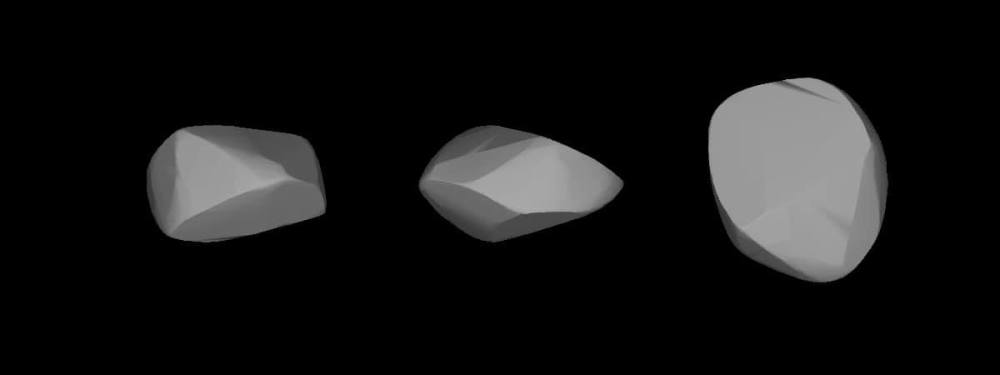
In 1852 the astronomer Annibale de Gasparis discovered the asteroid 20 Massalia (see rendering) at the north dome of the Capodimonte astronomical observatory. It is the largest of the Massalia family of asteroids and was named after the astronomer Chacornac from Marseille (or Massalia in Greek) even though it was discovered by De Gasparis the day before.
Nel 1852 l’astronomo Annibale de Gasparis scopre l’asteroide 20 Massalia (vedi rendering) alla cupola nord dell’Osservatorio astronomico di Capodimonte. È il più grande della Famiglia Massalia di asteroidi e si chiama così dall’astronomo Chacornac da Marsiglia (ovvero Massalia in greco) anche se fu scoperto da De Gasparis il giorno prima.
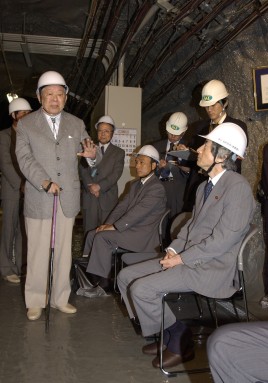
Japanese physicist Masatoshi Koshiba was born in 1926 and won the Nobel Prize for Physics in 2002 for his studies on the detection of neutrinos together with the American Raymnond Davies Jr.
Nel 1926 nasce Masatoshi Koshiba fisico giapponese, Premio Nobel per la Fisica nel 2002 per i suoi studi sulla rilevazione dei neutrini assieme all’americano Raymnond Davies Jr.
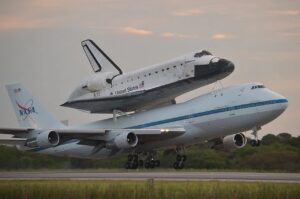
In 2012, the last flight of a space shuttle, Endeavor, took place (see photo).
Nel 2012 avviene l’ultimo volo di uno space shuttle, l’Endeavour (vedi foto).
To receive the Astronomy Bulletin Of the Day in your inbox, please put your email address on the contact form: https://abod.blog/contacts/
Per ricevere il bollettino per gli astronaviganti giornaliero nella tua posta elettronica, inserisci la tua mail nel form contatti: https://abod.blog/contacts/
Text, images and video source: Wikipedia, NASA
Sostieni anche tu Wikipedia
Google translate
 Astronomy Bulletin Of the Day