🇬🇧 – 🇮🇹
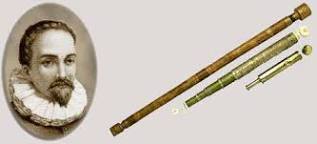
In 1608 the patent for the first reflecting telescope was filed by the optician Johannes Lippershey. The “Dutch perspective glass,” as the Lippershey telescope was called, had a magnification of just three times.
Nel 1608 viene depositato il brevetto del primo telescopio a riflessione da parte dell’ottico Johannes Lippershey. Il “vetro prospettico olandese”, come fu chiamato il telescopio di Lippershey, aveva un ingrandimento di appena tre volte.
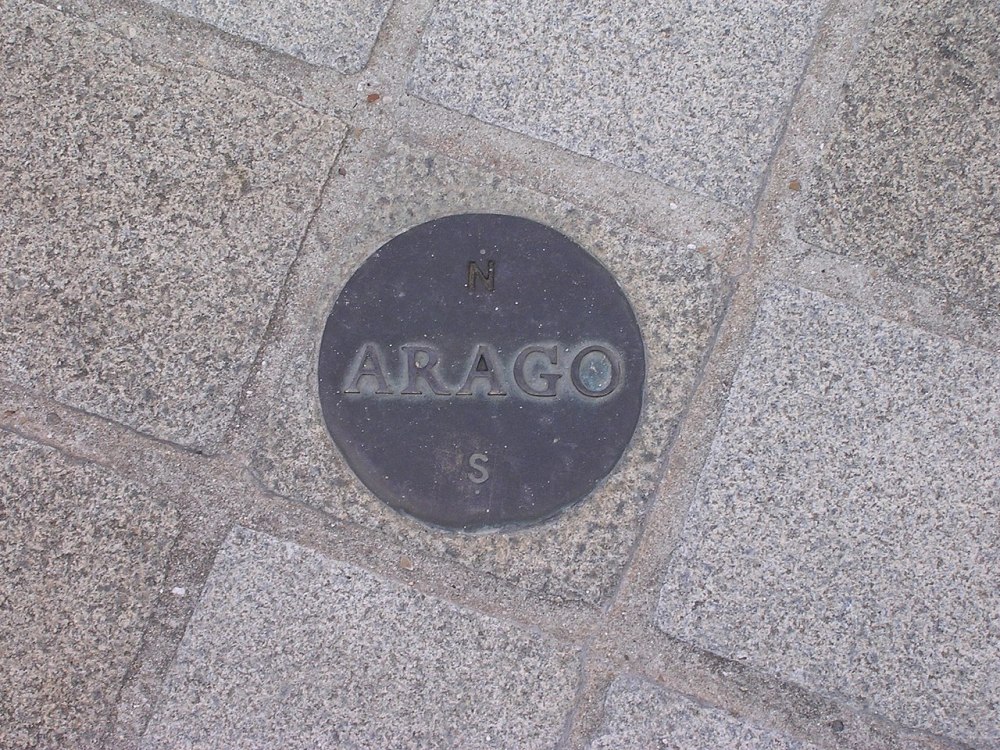
In 1853, the French physicist and astronomer François Arago, known for his studies of the pressure and speed of sound, died. He studied magnetism and how many bodies could be magnetized, research which was later carried forward by Michael Faraday. He showed that a magnetic needle, oscillated on a surface such as water, glass, copper, etc., falls more rapidly to the point of oscillation depending on how close it is to the surface. This discovery, which earned him the Copley Medal of the Royal Society in 1825, was followed by another, that a rotating plate tends to communicate its motion to a magnetic needle suspended on it (rotation magnetism). Arago is also rightly remembered for having proven the long-suspected connection between the Northern Lights and variations in magnetic field values. In the field of optics Arago not only made important discoveries on his own, but also collaborated with the genius Augustin-Jean Fresnel, Étienne-Louis Malus and Thomas Young.
Nel 1853 muore il fisico e astronomo francese François Arago noto per i suoi studi della pressione e velocità del suono. Studiò il magnetismo e di come molti corpi potessero essere magnetizzati, ricerche che in seguito furono portate avanti da Michael Faraday. Egli mostrò che un ago magnetico, fatto oscillare su una superficie come acqua, vetro, rame ecc., cade più rapidamente nel punto di oscillazione secondo che sia più o meno vicino alla superficie. Questa scoperta, che gli fece guadagnare la Copley Medal della Royal Society nel 1825, fu seguita da un’altra, che un piatto rotante tende a comunicare il suo moto ad un ago magnetico sospeso su di esso (magnetismo della rotazione). Arago è giustamente ricordato anche per aver provato la lungamente sospettata connessione tra l’aurora boreale e le variazioni di valori del campo magnetico. Nel campo dell’ottica Arago non solo fece importanti scoperte da solo, ma collaborò anche con il genio Augustin-Jean Fresnel, Étienne-Louis Malus e Thomas Young.
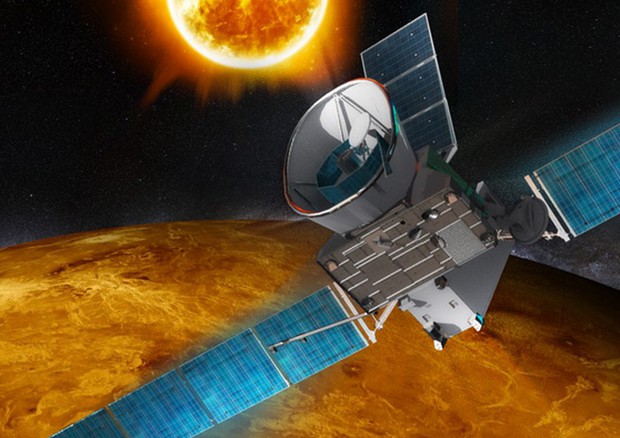
The astronomer Giuseppe “Bepi” Colombo was born in 1920, to whom the ESA dedicated the BepiColombo mission launched on 20 October 2018 and aimed at exploring Mercury. On the anniversary of his birth, 101 years later or in 2021, the flyby by the European-Japanese probe BepiColombo takes place with Mercury 200 km from its surface. Nicknamed “mechanic of the sky”, he was the designer of space orbits of which we remember: launch of the Giotto probe, which in 1986 encountered Halley’s comet (the name was proposed by him, in homage to Giotto’s Nativity in the Scrovegni Chapel, in which the comet is depicted), for planning multiple fly-bys with Mercury, for designing the Solar Probe mission… for promoting the use of a new type of radiometer and for understanding that the azimuthal brightness variation of the Saturn’s A ring is due to its spiral structure. On 23 June 2022 the second flyby of the probe took place 200 km away from Mercury, on 19 June 2023 the third close flyby at around 236 km, on 5 September 2024 the fourth flyby took place at around 165 km away from the surface of Mercury.
Nel 1920 nasce l’astronomo Giuseppe “Bepi” Colombo al quale l’ESA gli ha dedicato la missione BepiColombo lanciata il 20 ottobre 2018 e volta all’esplorazione di Mercurio. All’anniversario della sua nascita, 101 anni dopo ovvero nel 2021, avviene il flyby da parte della sonda europea-giapponese BepiColombo con Mercurio a 200 km dalla sua superficie. Soprannominato “meccanico del cielo”, fu progettista di orbite spaziali di cui si ricordano: lancio della sonda Giotto, che nel 1986 incontrò la cometa di Halley (il nome venne proposto da lui, in omaggio alla Natività di Giotto della Cappella degli Scrovegni, in cui è raffigurata la cometa), per la pianificazione di fly-by multipli con Mercurio, per aver progettato la missione Solar Probe… per aver promosso l’utilizzo di un nuovo tipo di radiometro e per aver capito che la variazione di luminosità azimutale dell’anello A di Saturno è dovuta alla sua struttura spiraliforme. Il 23 giugno 2022 avviene il secondo sorvolo della sonda a 200 km di distanza da Mercurio, il 19 giugno 2023 terzo sorvolo ravvicinato a circa 236 km, il 5 settembre 2024 avviene il quarto sorvolo a circa 165 km di distanza dalla superficie di Mercurio.
To receive the Astronomy Bulletin Of the Day in your inbox, please put your email address on the contact form: https://abod.blog/contacts/
Per ricevere il bollettino per gli astronaviganti giornaliero nella tua posta elettronica, inserisci la tua mail nel form contatti: https://abod.blog/contacts/
Text, images and video source: Wikipedia, NASA, ESA, YouTube
Sostieni anche tu Wikipedia
Google translate
 Astronomy Bulletin Of the Day