
🇬🇧 – 🇮🇹
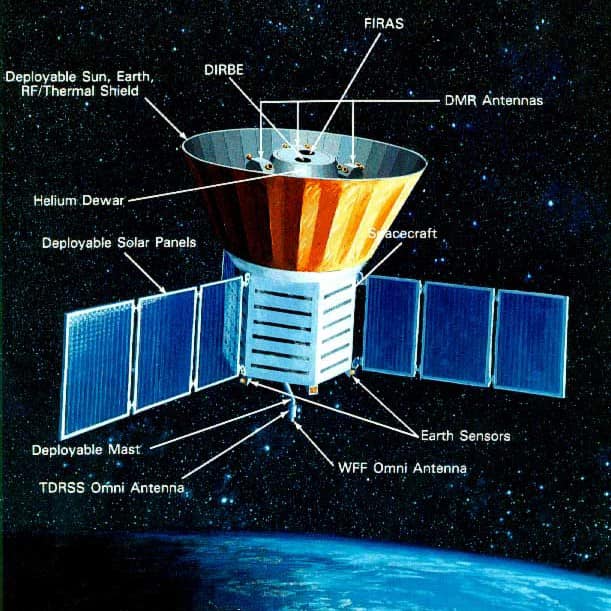
In 1989, launch of the US scientific satellite COBE (Cosmic Background Explorer); its mission was to measure the spectrum of the cosmic microwave background radiation (CMBR) and to look for any non-uniformities in this radiation. Observing the radiation from a position far above the Earth’s atmosphere, the COBE satellite was not affected by spurious variations due to atmospheric changes and performed its work with precision far superior to that of any similar experiment performed on Earth. In 2006, the two main researchers connected to the mission, John C. Mather and George F. Smoot, were awarded the Nobel Prize in Physics. Cover image: By NASA
Nel 1989 lancio del satellite scientifico statunitense COBE (Cosmic Background Explorer); la sua missione era di misurare lo spettro della radiazione cosmica di fondo a microonde (CMBR) e di cercare eventuali disuniformità in questa radiazione. Osservando la radiazione da una posizione situata molto al di sopra dell’atmosfera terrestre, il satellite COBE non era influenzato da variazioni spurie dovute a cambiamenti atmosferici e svolgeva il suo lavoro con precisione molto superiore a quella di qualsiasi analogo esperimento eseguito sulla Terra. Nel 2006 ai due principali ricercatori collegati alla missione, John C. Mather e George F. Smoot fu assegnato il Premio Nobel per la Fisica. Immagine di copertina: By NASA
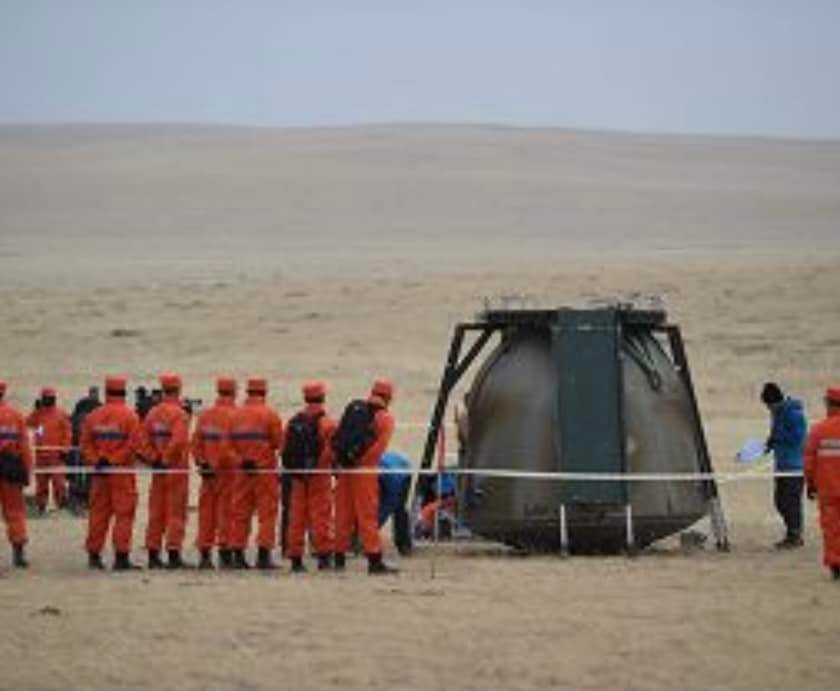
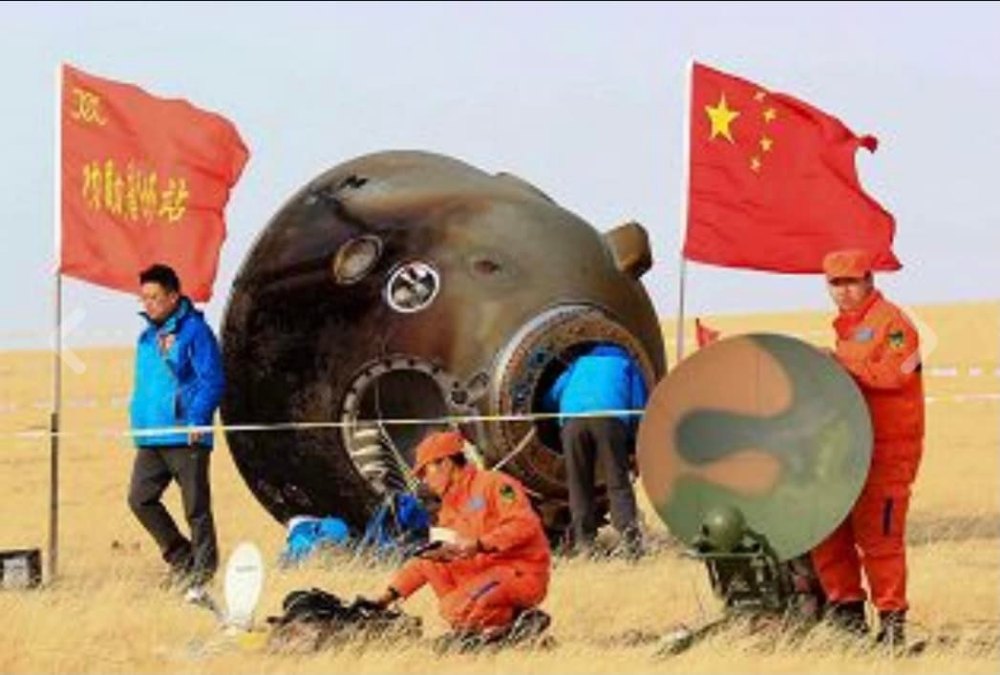
In 2016, the longest Chinese space mission (33 days) successfully ended with the landing of the Shenzhou-11 space capsule with two taikonauts (Chinese cosmonauts) on board, suspended from a parachute, in the steppes of Inner Mongolia. Jing Haipeng and Chen Dong left on October 17 on the shuttle and then resided in the Tiangong-2 space laboratory, which orbits at 393 km above sea level. During their stay in space, the two grew vegetables and carried out a series of tests.
Nel 2016 termina con successo la più lunga missione spaziale cinese (33 gg) con l’atterraggio della capsula spaziale Shenzhou-11 con a bordo due taikonauti (i cosmonauti cinesi), sospesa a un paracadute, nelle steppe della Mongolia interna. Jing Haipeng e Chen Dong erano partiti il 17 ottobre con la navetta per poi risiedere nel laboratorio spaziale Tiangong-2, che orbita a 393 km di altezza. Durante il soggiorno nello spazio, i due hanno coltivato vegetali e realizzato una serie di test.
To receive the Astronomy Bulletin Of the Day in your inbox, please put your email address on the contact form: https://abod.blog/contacts/
Per ricevere il bollettino per gli astronaviganti giornaliero nella tua posta elettronica, inserisci la tua mail nel form contatti: https://abod.blog/contacts/
Text, images and video source: Wikipedia, NASA, YouTube
Sostieni anche tu Wikipedia
Google translate
 Astronomy Bulletin Of the Day