
🇬🇧 – 🇮🇹
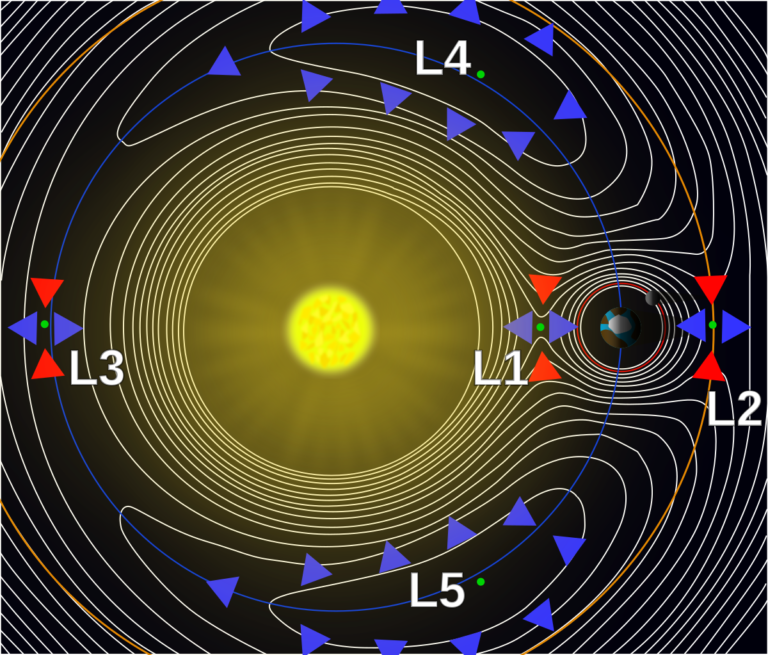
In 1813 the Italian-French mathematician Joseph-Louis Lagrange died.
Nel 1813 muore il matematico italo-francese Joseph-Louis Lagrange.
In 1968 the Luna 14 probe entered lunar orbit, see yesterday’s bulletin
Nel 1968 la sonda Luna 14 entra in orbita lunare, vedi il bollettino di ieri
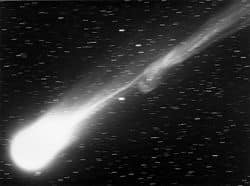
In 2002, the Japanese amateur astronomer Yuji Hyakutake died. In 1996 he discovered one of the most beautiful comets of the century, Hyakutake 2 (see photo taken by an amateur telescope from 1996).
Nel 2002 muore l’astrofilo giapponese Yuji Hyakutake che nel 1996 scoprì una delle più belle comete del secolo la Hyakutake 2 (Vedi foto ripresa da telescopio amatoriale del 1996).
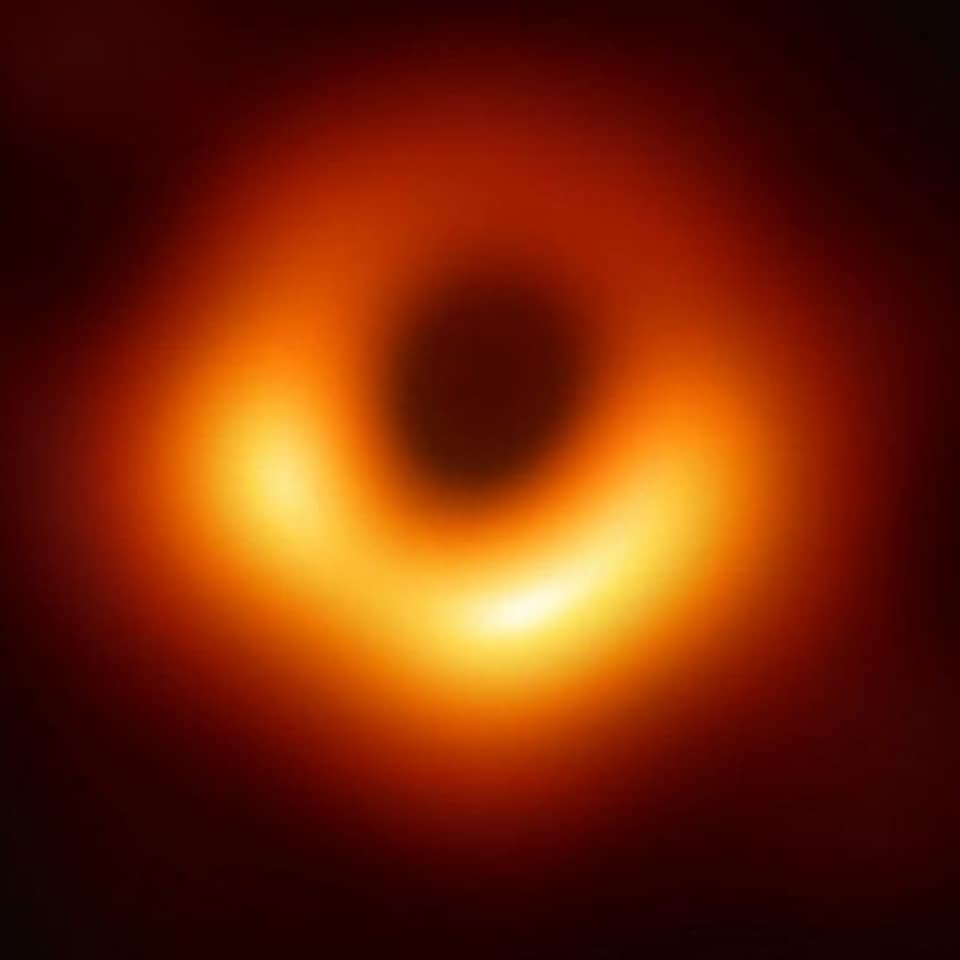
In 2019, the first real image of a black hole was published: the one in the center of the Virgo A M87 galaxy. A black hole is a celestial body whose gravity is so intense that nothing, not even light, can escape from a surface surrounding it, called the event horizon. Therefore, by definition a black hole cannot be seen. What you see in the photo is not the horizon itself, but the radiation emitted by the matter immediately before crossing the threshold of no return. It is a deformed image, due to the distortions of space-time induced by the black hole. For this reason it appears as if through a lens, and takes the shape of a ring visible at radio wave frequencies.
Nel 2019 è stata pubblicata la prima reale immagine di un buco nero: quello nel centro della galassia Virgo A M87. Un buco nero è un corpo celeste la cui gravità è talmente intensa che nulla, nemmeno la luce, può uscire da una superficie che lo circonda, detta orizzonte degli eventi. Dunque, per definizione un buco nero non si può vedere. Quello che si vede nella foto non è l’orizzonte in sé, ma la radiazione emessa dalla materia subito prima di varcare la soglia di non ritorno. Si tratta di un’immagine deformata, a causa delle distorsioni dello spazio-tempo indotte dal buco nero. Per questo appare come attraverso una lente, e prende la forma di un anello visibile alle frequenze delle onde radio.
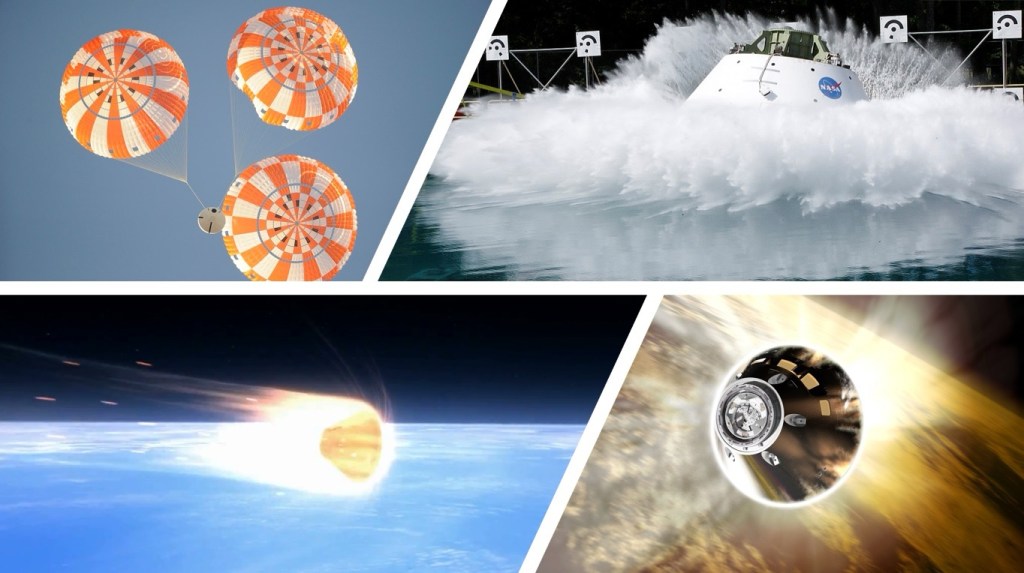
In 2026, today marks the end of a historic 10-day journey. Orion is speeding toward Earth at 25,000 mph, ready to face the searing heat of re-entry. The crew is scheduled to splash down in the Pacific Ocean at 5:07 p.m. PDT (02:07 CEST, April 11). From the lunar far side to the California coast, these four pioneers have opened the door to the next era of lunar exploration. “The Earth is a beautiful place, and it’s good to be back,” message from the crew!
Nel 2026 si conclude uno storico viaggio di 10 giorni. Orion sta sfrecciando verso la Terra a 40.000 km/h, pronta ad affrontare il calore estremo del rientro. L’ammaraggio dell’equipaggio nell’Oceano Pacifico è previsto per le 02:07 CEST dell’11 aprile. Dal lato lontano della Luna alle coste della California, questi quattro pionieri hanno aperto le porte alla nuova era dell’esplorazione lunare. “La Terra è un posto bellissimo, ed è bello tornare”, messaggio condiviso dall’equipaggio!
Text source: Wikipedia, Nasa
Sostieni anche tu Wikipedia
Google translate
 Astronomy Bulletin Of the Day