
🇬🇧 – 🇮🇹
In 1631 Fortunato Nicola Vinaccesi was born, known for the construction of optical devices such as telescopes, which made him judged by Cozzando, another scholar of the time, the greatest expert “in dioptric art”.
Nel 1631 nasce Fortunato Nicola Vinaccesi noto per la costruzione di congegni ottici quali cannocchiali, che lo fecero giudicare dal Cozzando, altro studioso dell’epoca il massimo esperto “di arte dioptrica”.
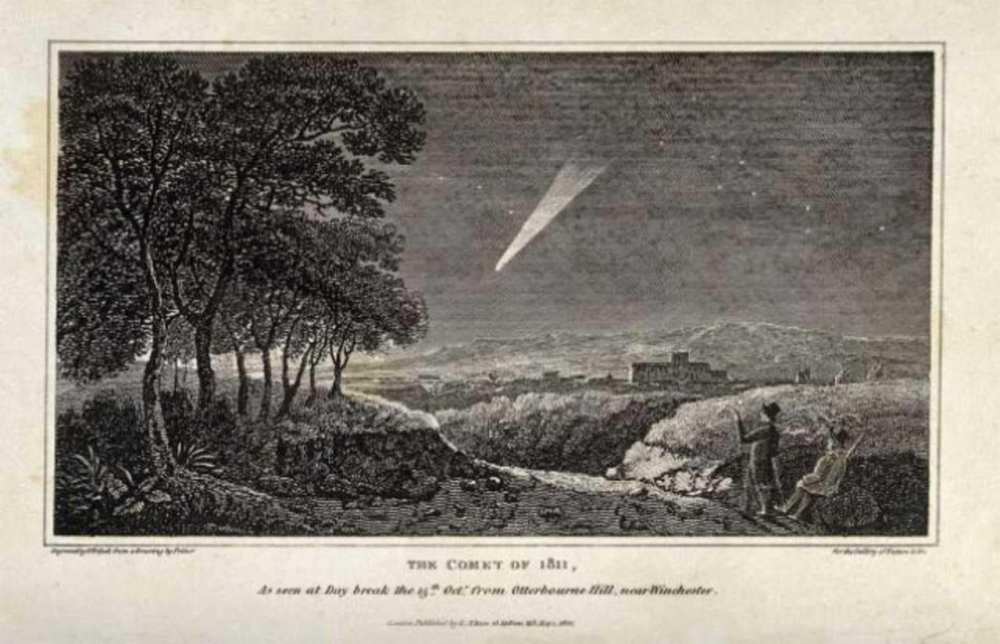
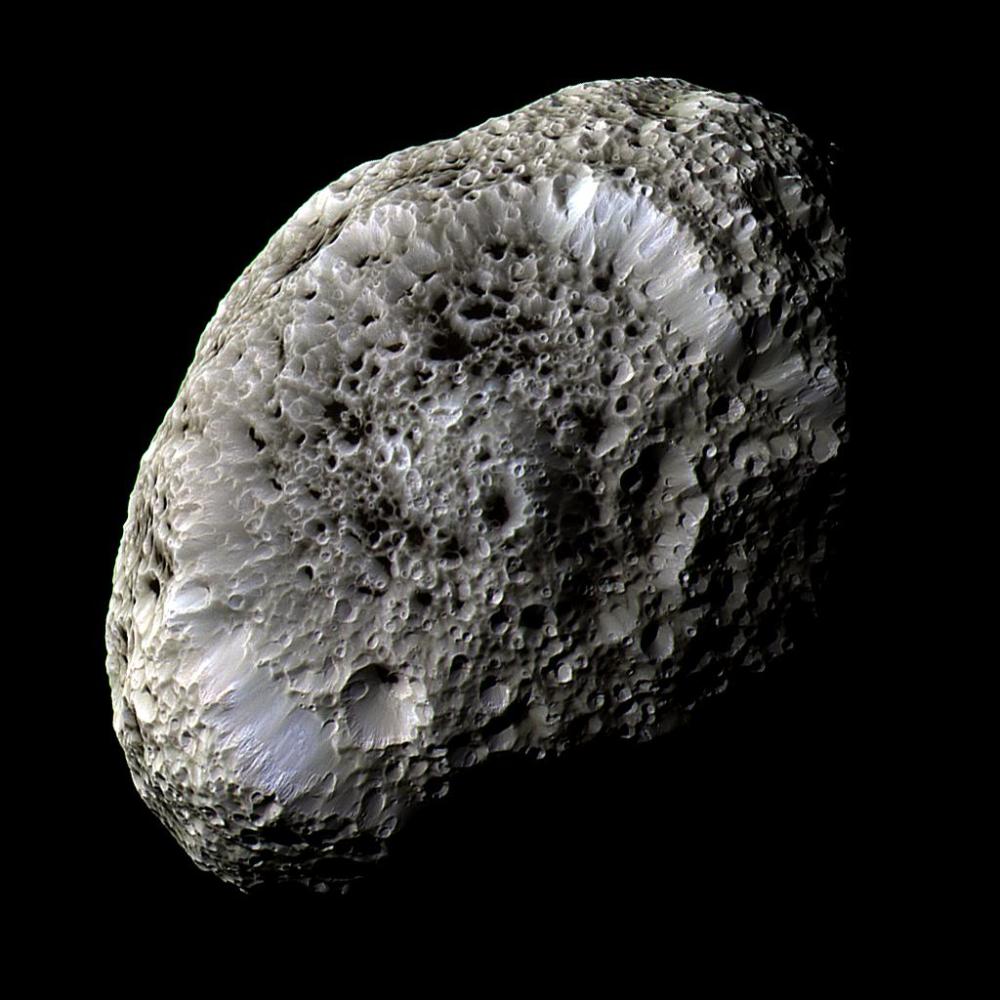
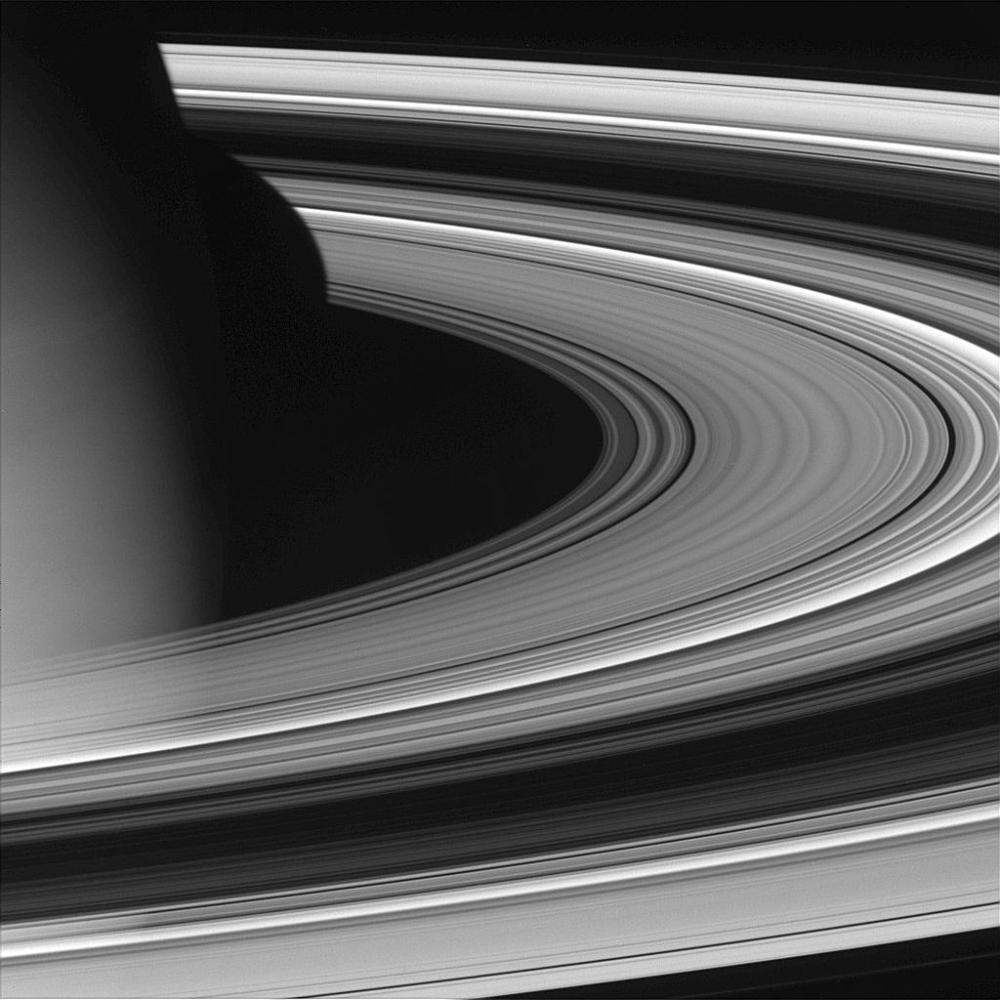
In 1789, William Cranch Bond was born, an American astronomer who independently co-discovered the great comet of 1811, in 1848, together with his son George, he discovered Saturn’s natural satellite Hyperion (also independently discovered by William Lassell) and in 1850 father and son were the first to observe Saturn’s C ring, which was the innermost known ring at the time. Working together with photographer John Adams Whipple, the Bonds were pioneers in astrophotography, taking the first daguerreotype of a star (Vega in 1850). In all, the three took between 200 and 300 photos of celestial objects.
Nel 1789 nasce William Cranch Bond astronomo statunitense che ha co-scoperto in modo indipendente la grande cometa del 1811, nel 1848, insieme al figlio George ha scoperto il satellite naturale di Saturno Iperione (scoperto in modo indipendente anche da William Lassell) e nel 1850 padre e figlio sono stati i primi ad osservare l’anello C di Saturno, che all’epoca era l’anello più interno conosciuto. Lavorando insieme al fotografo John Adams Whipple, i Bond sono stati precursori nell’astrofotografia, scattando il primo dagherrotipo di una stella (Vega nel 1850). In tutto i tre hanno realizzato tra le 200 e le 300 foto di oggetti celesti.
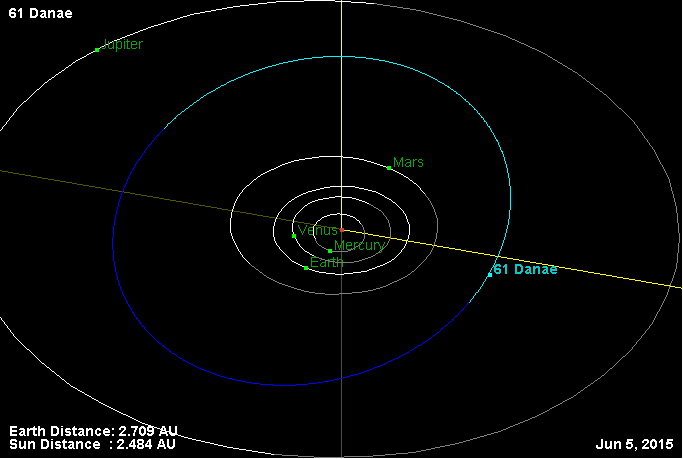
In 1860 H.M.S. Goldschmidt discovers the asteroid (61) Danae, the Astronomical Journal n° 141 of November 1860 reports:
“The sixty-first asteroid was discovered by the indefatigable Mr. Goldschmidt. It was first discovered by him on the evening of September 9th, but illness prevented him from observing it again before the 19th, and unfortunately precluded him from following up the discovery with a series of observations. The planet was located, however, by Dr. Luther, at Bilk [Düsseldorf District], at the request of Mr. Goldschmidt, and, at his suggestion, received the name of Danaë.”
Nel 1860 H.M.S. Goldschmidt scopre l’asteroide (61) Danae, l’Astronomical Journal n° 141 del novembre 1860 riporta:
“Il sessantunesimo asteroide è stato scoperto dall’infaticabile Sig. Goldschmidt. È stato individuato da lui per la prima volta la sera del 9 settembre, ma una malattia gli ha impedito di osservarlo nuovamente prima del 19, e purtroppo lo ha precluso dal far seguire alla scoperta una serie di osservazioni. Il pianeta è stato individuato, tuttavia, dal Dr. Luther, a Bilk [Distretto di Düsseldorf], su richiesta del Sig. Goldschmidt, e, su suo suggerimento, ha ricevuto il nome di Danaë.”
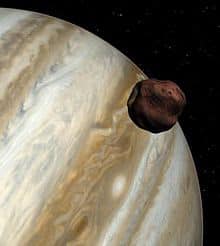
In 1892 the American astronomer Edward Barnard discovered Amalthea (see image), the third natural satellite of Jupiter in order of increasing distance from the planet; it is the most massive of the internal satellites, which are collectively referred to as the Amalthea group. However, its shape is extremely irregular. The name derives from that of Amalthea, the nymph who, according to Greek mythology, fed Zeus with goat’s milk; the satellite is also known as Jupiter V.
Nel 1892 l’astronomo americano Edward Barnard scopre Amalthea (vedi immagine) il terzo satellite naturale di Giove in ordine crescente di distanza dal pianeta; è il più massiccio dei satelliti interni, che vengono collettivamente indicati proprio come gruppo di Amaltea. La sua forma è comunque estremamente irregolare. Il nome deriva da quello di Amaltea, la ninfa che secondo la mitologia greca nutrì Zeus con il latte di capra; il satellite è anche noto come Giove V.
The physicist Hans Georg Dehmelt was born in 1922. Together with Wolfgang Paul, he won the Nobel Prize for Physics in 1989 for “the development of the ion trap technique“, the technique used to carry out high-precision measurements of the g-factor of electrons. . Dehmelt and Paul were awarded 1/4 prize each. The other half of the prize was awarded to Norman Foster Ramsey, with a different motivation.
Nel 1922 nasce il fisico Hans Georg Dehmelt vincitore, insieme a Wolfgang Paul, del premio Nobel per la fisica nel 1989, per «lo sviluppo della tecnica della trappola ionica», la tecnica utilizzata per effettuare misurazioni di alta precisione del Fattore-g degli elettroni. Dehmelt e Paul sono stati premiati con 1/4 di premio ciascuno. L’altra metà del premio è stata assegnata a Norman Foster Ramsey, con una diversa motivazione.
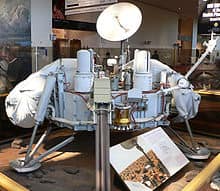
In 1975, launch of the Viking 2 probe (see photo) with the following objectives: to obtain high resolution images of the Martian surface; characterize the structure and composition of the atmosphere and surface of the planet; look for evidence of life on Mars. See also bulletin https://abod.blog/2023/09/03/september-settembre-3/
Nel 1975 lancio della sonda Viking 2 (vedi foto) con i seguenti obiettivi: ottenere immagini ad alta risoluzione della superficie marziana; caratterizzare la struttura e la composizione dell’atmosfera e della superficie del pianeta; cercare prove di vita su Marte. Vedi anche bollettino del 3 settembre
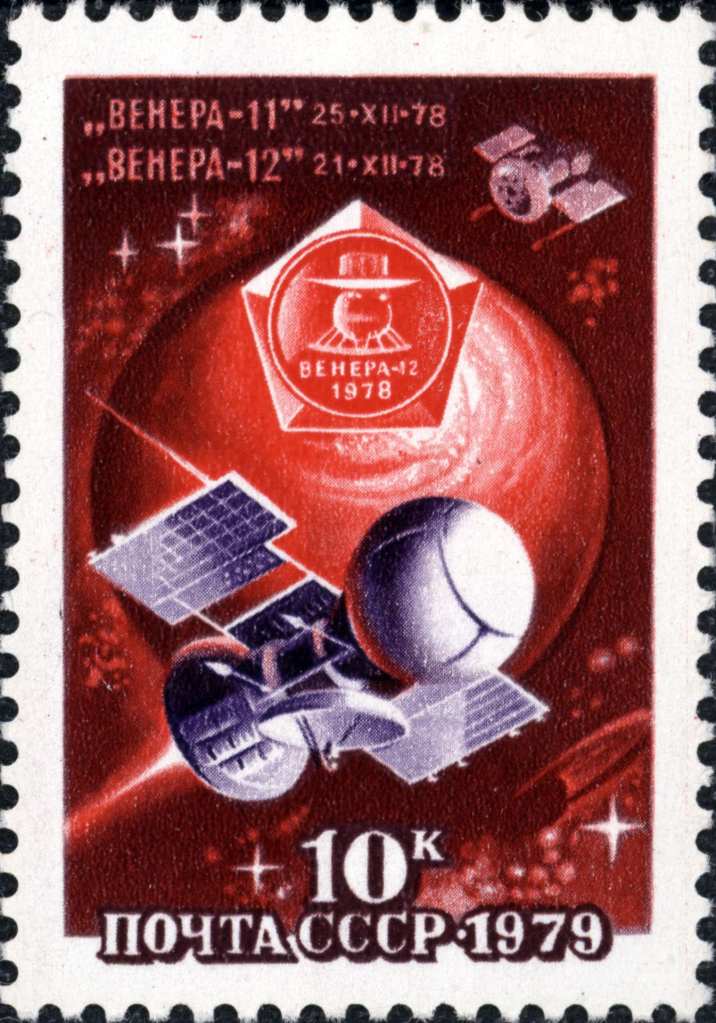
In 1978, the Soviet interplanetary probe Venera 11 was launched (see stamp image) with destination Venus.
Nel 1978 lancio della sonda interplanetaria sovietica Venera 11 (vedi immagine francobollo) con destinazione Venere.
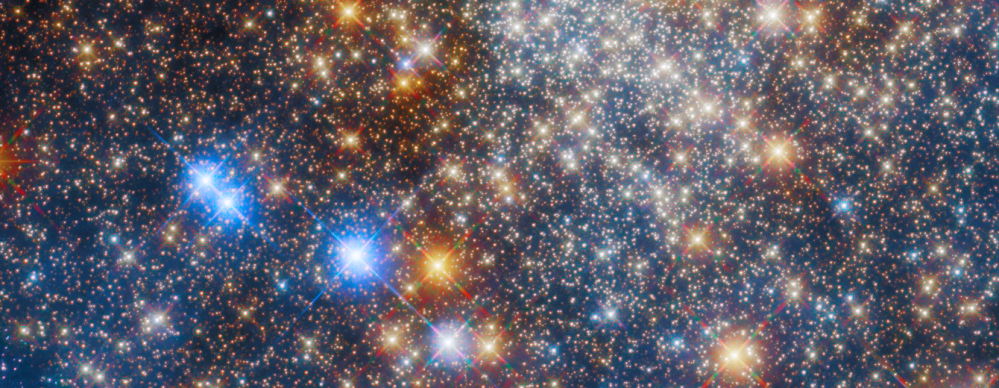
In 2009, NASA began publishing images from the Hubble Space Telescope after a series of upgrades/repairs carried out by space shuttle astronauts over 19 years. Take a look to the last news / imagine: https://hubblesite.org/contents/news-releases/2023/news-2023-021
Everything about Hubble from the NASA website: https://www.nasa.gov/mission_pages/hubble/main/index.html
Nel 2009 la NASA comincia a pubblicare le immagini dell’Hubble Space Telescope dopo una serie di aggiornamenti/riparazioni effettuata dagli astronauti dello space shuttle in 19 anni. Tutto su Hubble dal sito Nasa: https://www.nasa.gov/mission_pages/hubble/main/index.html Ultime news/immagini: https://hubblesite.org/contents/news-releases/2023/news-2023-021
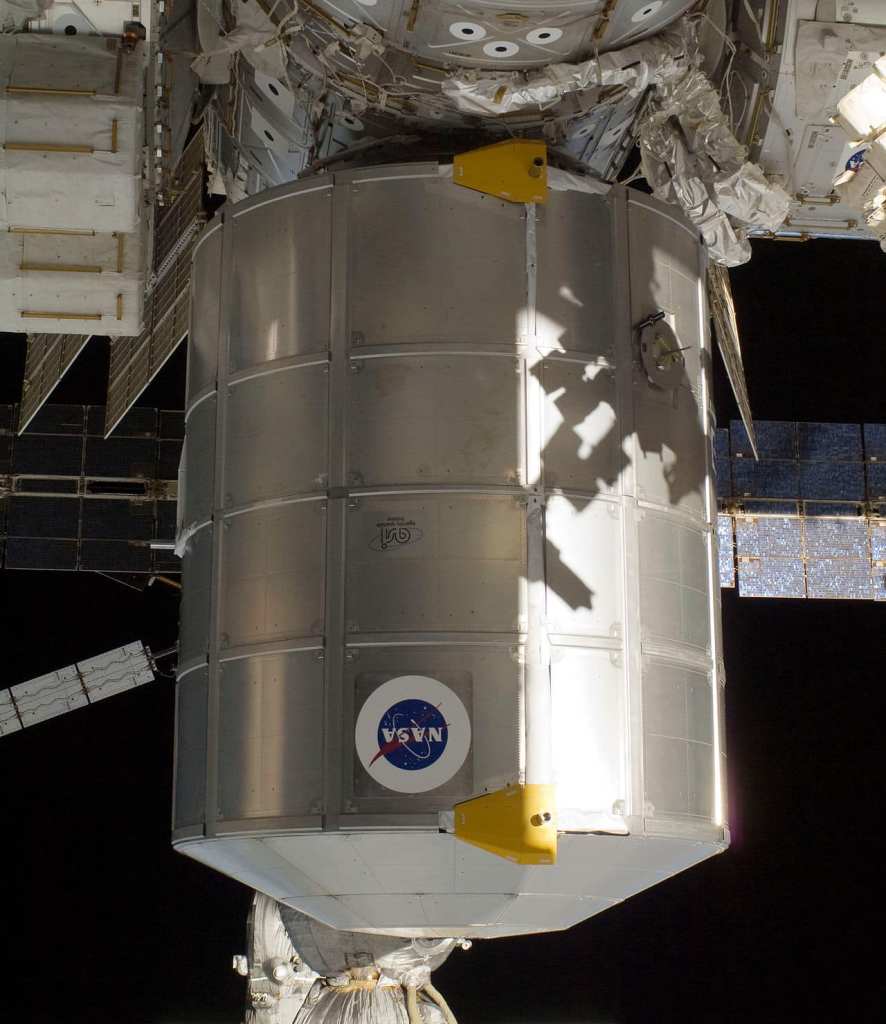
In 2010, the transformation work of the PMM “Leonardo” logistics module built by Thales Alenia Space was completed, and which was initially used as a Multi-Purpose Logistic Module (MPLM) for the transport of material for the ISS on board the Shuttles.
Nel 2010 conclusi i lavori di trasformazione del modulo logistico PMM “Leonardo” costruito da Thales Alenia Space, e che inizialmente era usato come Multi-Purpose Logistic Module (MPLM) per il trasporto di materiale per la ISS a bordo degli Shuttle.
To receive the Astronomy Bulletin Of the Day in your inbox, please put your email address on the contact form: https://abod.blog/contacts/
Per ricevere il bollettino per gli astronaviganti giornaliero nella tua posta elettronica, inserisci la tua mail nel form contatti: https://abod.blog/contacts/
Text, images and video source: Wikipedia, NASA, YouTube
Sostieni anche tu Wikipedia
Google translate

