
🇬🇧 – 🇮🇹
In 1931 the German-American physicist Albert A. Michelson died, who won the 1907 Nobel Prize for Physics and is known mainly for the fundamental experiment on the ether wind, as well as for his work on the speed of light; experiments that inspired Albert
Einstein for the formulation of the Theory of Relativity.
Nel 1931 muore il fisico tedesco-americano Albert A. Michelson che vinse il Premio Nobel per la Fisica 1907 ed è conosciuto principalmente per il fondamentale esperimento sul vento d’etere, oltre che per i lavori sulla velocità della luce; esperimenti che diedero spunto a Albert
Einstein per la formulazione della Teoria della Relatività.
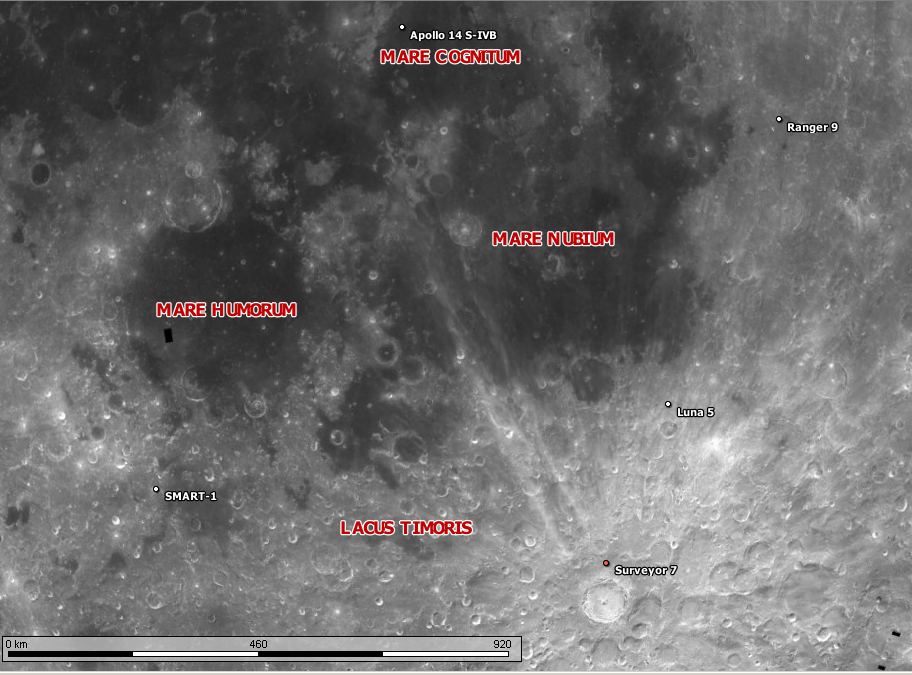
In 1965 the Soviet probe Luna 5 (unmanned) was launched; it was the eighth attempt by the USSR to perform a soft landing on the Moon. The braking rocket failed and the probe impacted the lunar surface in Mare Nubium. In this map we see the point of impact.
Nel 1965 avviene il lancio della sonda sovietica Luna 5 (senza equipaggio); fu l’ottavo tentativo da parte dell’URSS di eseguire un atterraggio morbido sulla Luna. Il razzo frenante non funzionò e la sonda impattò sulla superficie lunare nel Mare Nubium. In questa mappa vediamo il punto d’impatto.
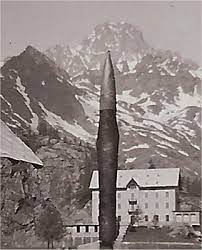
In 1952 Aurelio Robotti launched the first Italian rocket from Piemonte (Pian della Mussa)
Nel 1952 Aurelio Robotti lancia il primo razzo italiano dal Piemonte (Pian della Mussa)
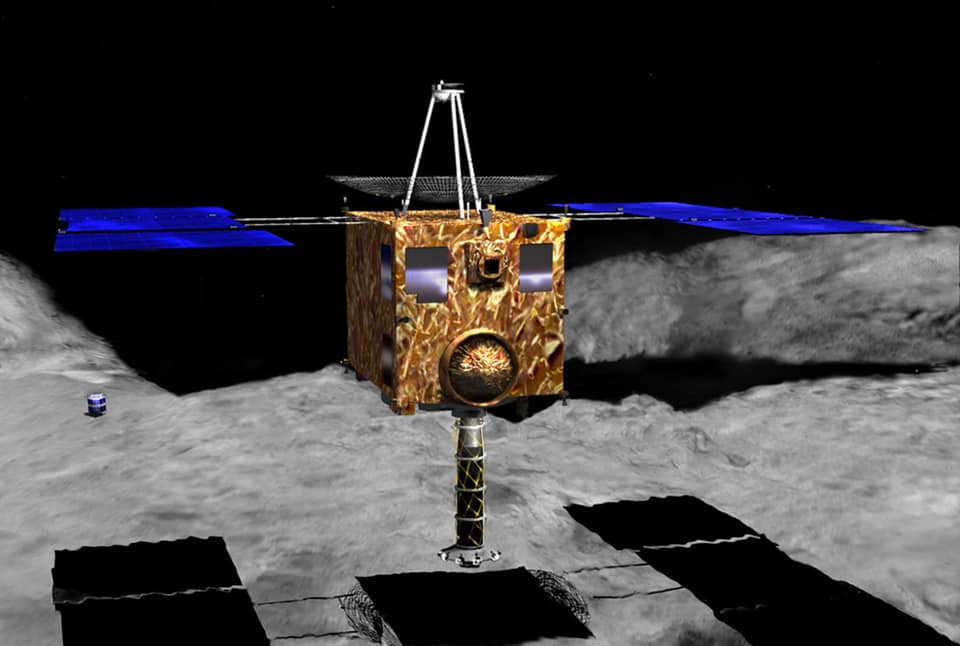
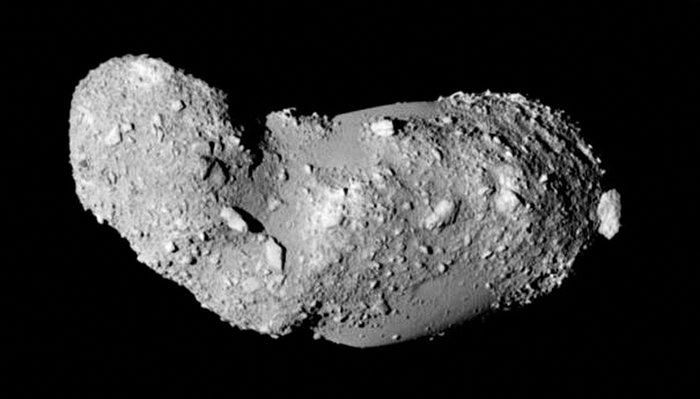
In 2003, the automatic probe Hayabusa (initially known as MUSES-C, see photo) was launched from the Uchinoura Space Center with an M-V vector by the Japanese Space Agency (JAXA) with the aim of landing on asteroid 25143 Itokawa (the size of 540 m x 270 m x 210 m) and take soil samples to bring back to Earth. It reached its goal in mid-September 2005. The spacecraft made close-up observations of the asteroid before landing on its surface on November 19 and 25, 2005. Due to attitude control problems, no further attempts were made. maneuvers for the recovery of other samples. On April 25, once the capsule containing the recovered material was sealed, Hayabusa embarked on the journey that would bring her back to Earth, where she arrived on June 13, 2010.
Nel 2003 viene lanciata con un vettore M-V dal Centro Spaziale di Uchinoura la sonda automatica Hayabusa (inizialmente nota come MUSES-C, vedi foto) dall’Agenzia Spaziale Giapponese (JAXA) con lo scopo di atterrare sull’asteroide 25143 Itokawa (delle dimensioni di 540 m x 270 m x 210 m) e prelevare dei campioni di suolo da riportare sulla Terra. Raggiunse il suo obiettivo verso la metà di settembre del 2005. La sonda ha eseguito osservazioni ravvicinate dell’asteroide prima di posarsi sulla sua superficie, il 19 ed il 25 novembre 2005. A causa di problemi nel controllo d’assetto, non furono tentate ulteriori manovre per il recupero di altri campioni. Il 25 aprile, sigillata la capsula contenente il materiale recuperato, Hayabusa intraprese il viaggio che l’avrebbe riportata sulla Terra, dove giunse il 13 giugno 2010.
Sostieni anche tu Wikipedia
Text source: Wikipedia, Nasa
Google translate


Amica mia,
ogni volta che apro il tuo blog, mi sento come se sbirciassi da una finestra verso l’immensità dell’universo e il suo incanto… Grazie perché hai trasformato l’astronomia non solo in informazioni, ma in un viaggio di ispirazione che risveglia in me la curiosità del bambino e l’ammirazione del contemplatore. Grazie a te, ho iniziato a leggere le stelle come se fossero storie, e aspetto ogni tuo articolo come un appuntamento con la tua creatività, che unisce precisione e bellezza. Grazie perché coltivi in me l’amore per questo cosmo immenso, e mi ricordi che la scienza non è arida, ma è una finestra per l’anima
"Mi piace"Piace a 1 persona
Grazie carissimo, mi fa estremo piacere!!!
"Mi piace"Piace a 1 persona