
🇬🇧 – 🇮🇹
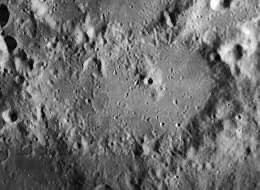
In 1436 born the German astronomer and mathematician Johann Müller von Königsberg known as Regiomontanus (see the photo of lunar crater dedicated). His “De Triangulis” was one of the first books to present in Europe the state of knowledge of the time on trigonometry, and to include lists of questions that recalled the notions presented in each of the individual chapters by writing: “Those who intend to study these magnificent things , and who are wondering about the movement of the stars, must read these theorems on triangles. Knowledge of these ideas will open the door to some geometrical problems and to all those of astronomy.” In the Epytoma he criticized the translation of the Almagest, pointing out its inaccuracies. Later Nicolaus Copernicus will recall how much this book influenced his work.
Nel 1436 nasce l’astronomo e matematico tedesco Johann Müller von Königsberg, un seguace di Tolomeo, conosciuto come Regiomontanus e al quale sarà dedicato un cratere lunare che vediamo in foto. Il suo “De Triangulis” fu uno dei primi libri a presentare in Europa lo stato delle conoscenze del tempo sulla trigonometria, e ad includere liste di domande che richiamavano le nozioni presentate in ciascuno dei singoli capitoli scrivendo: “Coloro che intendono studiare queste magnifiche cose, e che si interrogano sul movimento delle stelle, devono leggere questi teoremi sui triangoli. La conoscenza di queste idee aprirà la porta ad alcuni problemi geometrici e a tutti quelli dell’astronomia.” Nella Epytoma criticò la traduzione dell’Almagesto, indicandone le inesattezze. Più tardi Niccolò Copernico ricorderà quanto questo libro abbia influenzato il suo lavoro.
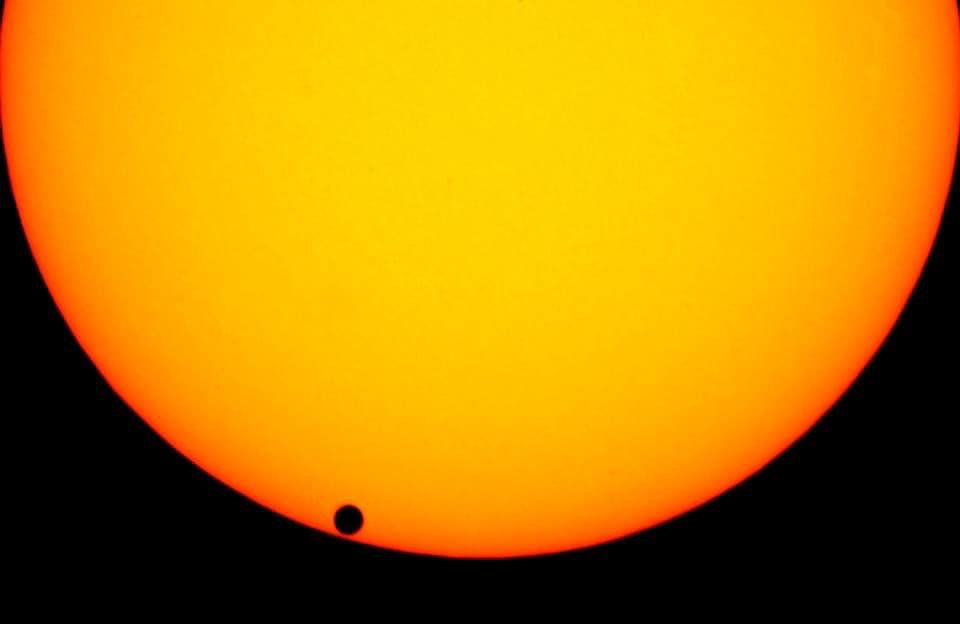
In 1761 the French astronomer Joseph-Jerôme Lefrançais de Lalande observed the transit of Venus on the solar disk from the Luxemburg Palace in Paris and carried out numerous measurements of the position and distance of the Sun and the planet, noting the phenomenon of the “black drop” which it consists of an optical illusion observable with a telescope and due to the diffraction undergone by the light as it passes through the lens. Venus can appear as a bright ring before it enters or exits the edge of the solar disk. The next transits were in 2004 and in 2012. The next one will be enjoyed by future generations of amateur astronomers in 2117😅
Nel 1761 l’astronomo francese Joseph-Jerôme Lefrançais de Lalande osserva il transito di Venere sul disco solare dal Palazzo del Luxemburg, a Parigi ed effettua numerose misure di posizione e distanza del Sole e del pianeta, notando il fenomeno della “goccia nera” che consiste in un’illusione ottica osservabile con un telescopio e dovuta alla diffrazione subita dalla luce nell’attraversare l’obiettivo. Venere può apparire come un anello luminoso prima che entri o che esca dal bordo del disco solare. I successivi transiti furono nel 2004 e oggi del 2012. Il prossimo se lo gusteranno le future generazioni di astrofili nel 2117😅
Text source: Wikipedia, Nasa, Esa
Sostieni anche tu Wikipedia
Google translate

