
🇬🇧 – 🇮🇹
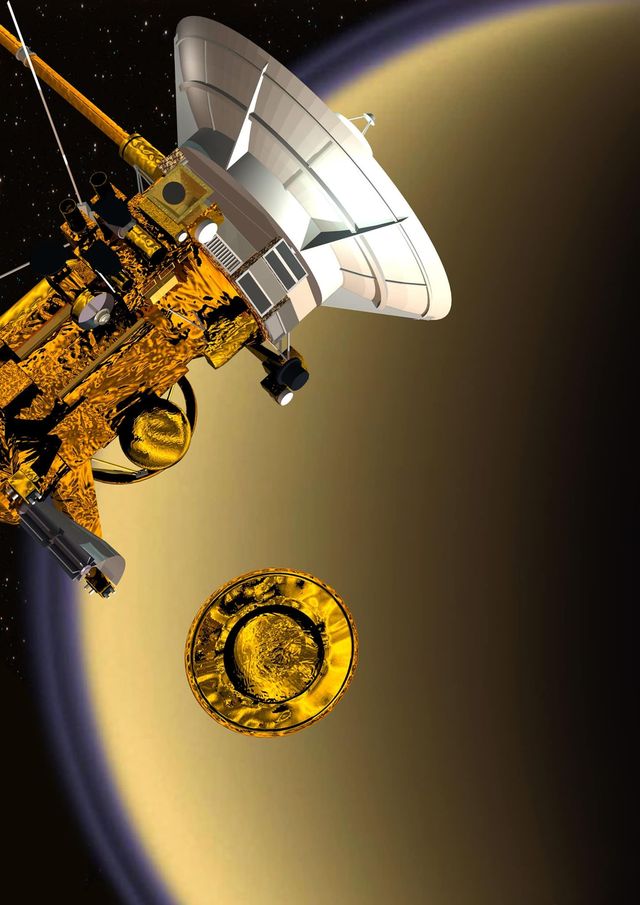
In 1695 the Dutch mathematician, astronomer and physicist (one of the protagonists of the scientific revolution), Christiaan Huygens, died. In 1655, using a refracting telescope of his own manufacture, he discovered Saturn’s largest moon, Titan, and theorized that Saturn was surrounded by a thin and flat ring, not connected to the planet, inclined with respect to the ecliptic (Annulo cingitur, tenui, plano nusquam cohaerente, ad eclipticam inclined). In the same year he observed the Orion Nebula. Thanks to his telescope he was able to divide the nebula into individual stars. The lighter inner region of the Orion Nebula is called the Huygens Region in honor of this work. Many of Huygens’ astronomical observations were collected in Systema Saturnium (1659). He also dealt with optics, considerably improving astronomical instruments, building an eyepiece for telescopes formed by two plano-convex lenses, suitable for reducing chromatic aberration, which today takes its name from him. He also proposed new lens manufacturing techniques. An asteroid, 2801 Huygens, a crater on Mars and a mountain on the Moon, Mons Huygens, which is the highest peak of the Montes Apenninus range, have been named after him. In addition, the lander that landed on Titan during the Cassini-Huygens space mission in 2005 also took its name
Nel 1695 muore il matematico, astronomo e fisico olandese (uno dei protagonisti della rivoluzione scientifica), Christiaan Huygens. Nel 1655, adoperando un telescopio rifrattore di propria fabbricazione, scoprì la maggiore luna di Saturno, Titano, e teorizzò che Saturno fosse circondato da un anello sottile e piatto, non collegato al pianeta, inclinato rispetto all’eclittica (Annulo cingitur, tenui, plano, nusquam cohaerente, ad eclipticam inclinato). Nello stesso anno osservò la Nebulosa di Orione. Grazie al suo telescopio fu in grado di suddividere la nebulosa in singole stelle. La regione interna più chiara della Nebulosa di Orione è chiamata Regione di Huygens in onore di questo lavoro. Molte delle osservazioni astronomiche di Huygens furono raccolte nel Systema Saturnium (1659). Si occupò anche di ottica, migliorando notevolmente gli strumenti astronomici, costruendo un oculare per cannocchiali formato da due lenti pianoconvesse, adatto a ridurre l’aberrazione cromatica, che oggi da lui prende il nome. Propose inoltre nuove tecniche di lavorazione delle lenti. Gli è stato dedicato un asteroide, 2801 Huygens, un cratere su Marte e un monte sulla Luna, Mons Huygens, che è la cima più alta della catena dei Montes Apenninus. Inoltre ha preso il suo nome anche il lander atterrato su Titano durante la Missione spaziale Cassini-Huygens nel 2005

In 1842, during a solar eclipse, astronomers observed surprised (although it was not the first time) pink protrusions in some points around the dark disk of the Moon eclipsing the Sun. These protrusions were the solar prominences. On the same day, at 5:38 a mother wakes up her seven-year-old son to show him the eclipse…that fascinated child was none other than the famous Giovanni Virgilio Schiaparelli (1835-1910) and the event took place in Savigliano (CN) his native country.
Nel 1842 durante un’eclissi solare gli astronomi osservano sorpresi (anche se non era la prima volta) sporgenze rosa in alcuni punti intorno al disco oscuro della Luna eclissante il Sole. Queste sporgenze erano le protuberanze solari. Lo stesso giorno, alle ore 5:38 una madre sveglia il proprio figlio di sette anni per fargli vedere l’eclissi…quel bambino tanto affascinato altro non era che il celebre Giovanni Virgilio Schiaparelli (1835-1910) e il fatto avvenne a Savigliano (CN) suo paese natale.

In 1947 the so-called Roswell case was born. The local newspaper Roswell Daily Record reports that in Roswell, New Mexico, the 509th Bomb Group allegedly captured an unidentified flying object (see image). A UFO would have crashed to the ground and the recovered parts would have been taken to Wright Petterson Air Force Base
Nel 1947 nasce il cosiddetto Caso Roswell. Il quotidiano locale Roswell Daily Record riporta che a Roswell, nel Nuovo Messico, il 509º Gruppo Bombardieri avrebbe catturato un oggetto volante non identificato (vedi immagine). Un UFO si sarebbe schiantato al suolo e le parti recuperate sarebbero state portate alla base aerea di Wright Petterson

In 2011 the last Space Shuttle mission (see image) launched at 11:29 EDT (17:29 CEST) and landed on July 21 at 05:57 EDT (09:57 UTC). Duration 13 days it transported the four crew members to the International Space Station together with the Multi-Purpose Logistics Module Raffaello and the Lightweight Multi-Purpose Carrier, using the Space Shuttle Atlantis as carrier.
Nel 2011 lanciata l’ultima missione dello Space Shuttle (vedi immagine) alle 11:29 EDT (17:29 CEST) e atterrata il 21 luglio alle 05:57 EDT (09:57 UTC). Durata 13 giorni ha trasportato sulla Stazione Spaziale Internazionale i quattro membri dell’equipaggio insieme al Multi-Purpose Logistics Module Raffaello e al Lightweight Multi-Purpose Carrier, utilizzando come vettore lo Space Shuttle Atlantis.
Text source: Wikipedia
Sostieni anche tu Wikipedia
Google translate
 Astronomy Bulletin Of the Day
Che mistero il caso Roswell del 1947 La notizia del Roswell Daily Record e l’intervento del 509 Gruppo Bombardieri ancora oggi ci fanno chiedere: cosa successe davvero
"Mi piace"Piace a 2 people