
🇬🇧 – 🇮🇹

In 1869, during a solar eclipse, Baily’s beads were photographed for the first time (see demonstration photo) by C. F. Hines and by members of the Philadelphia Photographic Corps who observed them from Ottawa (USA), these are optical-luminous effects such as small flares like pearls of light scattered on the edge of the lunar disk.
Nel 1869 durante un eclisse solare vengono fotografati per la prima volta i grani o perle di Baily (vedi foto dimostrativa) da C. F. Hines e da membri del Philadelphia Photographic Corps che le osservarono da Ottawa (USA), questi sono effetti ottici-luminosi come piccoli brillamenti tipo perle di luce sparse sul bordo del disco lunare.
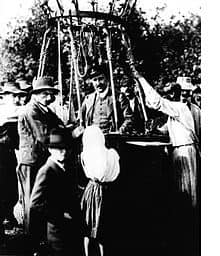
In 1912 a non-automatic balloon with the German physicist Victor Franz Hess on board (see photo) and three of his electroscopes, led to the discovery of cosmic rays, i.e. energetic particles coming from outer space, to which the Earth and any other celestial body, as well as satellites and astronauts in space orbit. Victor F. Hess won the 1936 Nobel Prize in Physics for his research in the field of cosmic radiation
Nel 1912 un pallone non automatico con a bordo il fisico tedesco Victor Franz Hess (vedi foto) e tre suoi elettroscopi, portò alla scoperta dei raggi cosmici, ovvero particelle energetiche provenienti dallo spazio esterno, alle quali è esposta la Terra e qualunque altro corpo celeste, nonché i satelliti e gli astronauti in orbita spaziale. Victor F. Hess vinse il Premio Nobel per la Fisica 1936 per le sue ricerche nel campo della radiazione cosmica
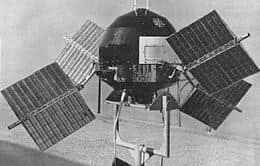
In 1959, the United States of America launched the Explorer 6 probe from the Cape Canaveral missile base in Florida to study cosmic rays, geomagnetism, radio propagation in the upper atmosphere and the flow of micrometeorites.
Nel 1959 gli Stati Uniti d’America lanciano la sonda Explorer 6 dalla base missilistica di Cape Canaveral, in Florida per lo studio dei raggi cosmici, del geomagnetismo, della propagazione radio nell’alta atmosfera e del flusso di micrometeoriti.
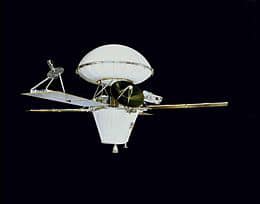
Nel 1976 – Viking Program: Viking 2 enters orbit around Mars
Nel 1976 – Programma Viking: la Viking 2 entra in orbita attorno a Marte
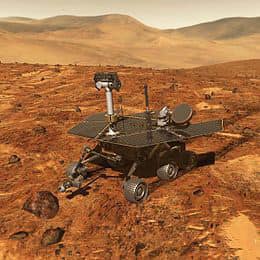
In 2012 Opportunity (see image), twin of the Martian rover Spirit, reached 3,035 Sol (Martian days) of operation on the Red Planet with 34,639.45 meters covered on the Martian soil
Nel 2012 Opportunity (vedi immagine), gemello del rover marziano Spirit, raggiunge i 3.035 Sol (giorni marziani) di operatività sul Pianeta Rosso con 34.639,45 metri percorsi sul suolo marziano
To receive the Astronomy Bulletin Of the Day in your inbox, please put your email address on the contact form: https://abod.blog/contacts/
Per ricevere il bollettino per gli astronaviganti giornaliero nella tua posta elettronica, inserisci la tua mail nel form contatti: https://abod.blog/contacts/
Text and video source: Wikipedia, NASA
Sostieni anche tu Wikipedia
Google translate
 Astronomy Bulletin Of the Day